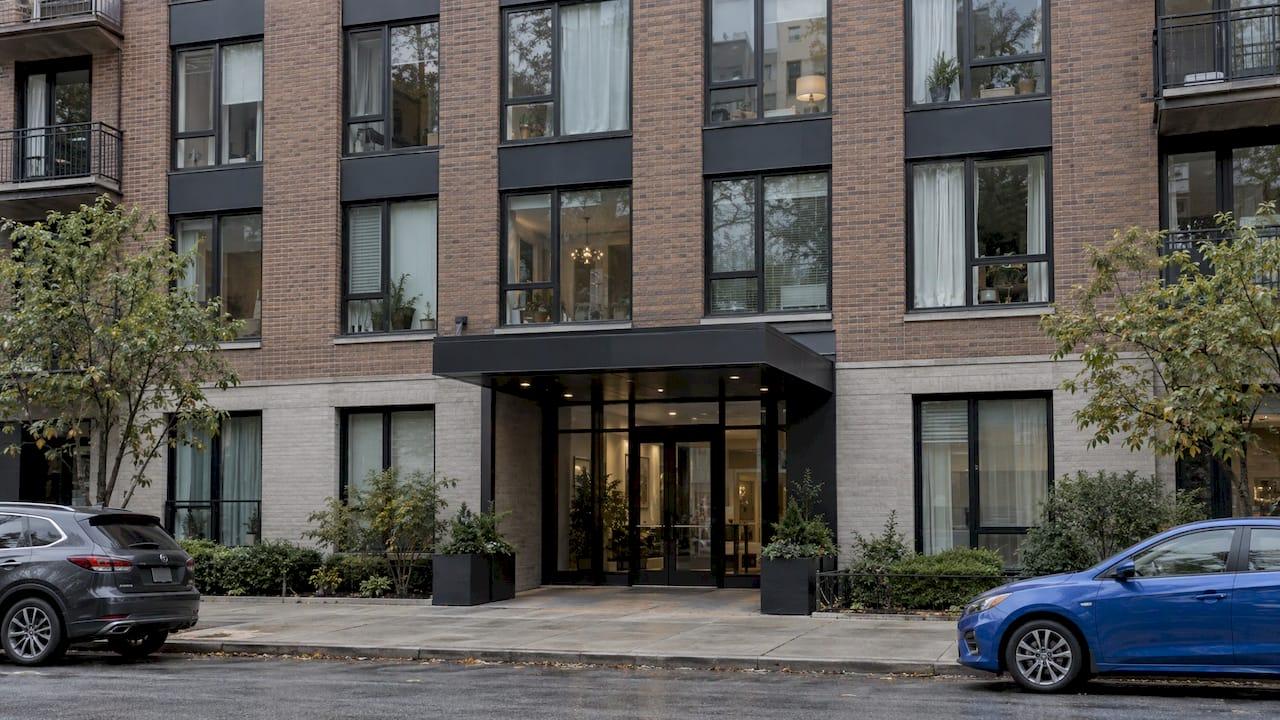
Stabilization is the point where something stops swinging and holds steady. In commercial real estate, it means a property has reached sustained, market-level occupancy and income after a transition such as lease-up, ground-up development or repositioning. Once a property is stabilized, its current performance is a reliable basis for valuation and permanent financing. A stabilized asset is usually a different loan, with different lenders, than one that is still leasing up.
TL;DR
- Stabilization is the end of a transitional phase: occupancy, rents and expenses have settled at a sustainable, market-appropriate level.
- Many sources put the occupancy benchmark at roughly 90% or higher, but the exact test depends on property type, market and the loan documents.
- Lenders look at more than a headline occupancy number. They want sustained occupancy, normalized income, and debt service coverage at a stated margin.
- Stabilized, near-stabilized and transitional deals go to different capital sources, so classifying the deal correctly saves you rejections.
- American spelling is "stabilization"; "stabilisation" is the British form.
Table of Contents
- The plain-English definition
- What it means when a commercial property is stabilized
- Typical stabilized occupancy thresholds
- How lenders decide a property is stabilized
- Stabilized, near-stabilized and transitional: why the label matters
- How to tell a stabilized property from one still in lease-up
- Other meanings you may be searching for
- Perspective: why classification is the broker's real edge
- Put it to work on your next deal
- FAQ
- Sources
The plain-English definition
Outside real estate, to stabilize something is to make it steady and keep it from fluctuating. A government stabilizes prices. A medic stabilizes a patient so their condition does not get worse before treatment. In both cases the idea is the same: stop the movement, hold the level.
Commercial real estate borrows that idea and attaches numbers to it. A property is stabilized when its occupancy, income and operating costs have reached the level the market considers normal for that asset, and when that level has held long enough to be trusted. Adventures in CRE describes it as the point when a property reaches its market potential for occupancy, income and expenses, commonly expressed as Stabilized NOI. CRE Daily adds an important caution: the exact meaning and its financial effect can vary with deal structure, property type, market conditions and the governing documents.
That last point matters for brokers. There is no single legal definition that applies to every deal. The definition that counts is the one in the lender's term sheet, the loan agreement or the partnership document in front of you.
What it means when a commercial property is stabilized
The shortest working definition: a property is stabilized when it reaches sustainable occupancy, typically 90% or more, and hits its target rent performance, which ends the lease-up phase.
A fuller checklist looks like this:
- Occupancy at a market-typical level. Not a peak, and not a one-month spike.
- Rents at market. Concessions such as free rent have burned off.
- Normal operating expenses. Recurring costs reflect a normal year, with no deferred maintenance backlog distorting the picture.
- Collections that have normalized. Tenants are paying on schedule.
- Leasing momentum flattened into renewals. The building is no longer chasing a first wave of tenants.
The best way to think about it: a stabilized asset is not just "not broken." Adventures in CRE frames it as an asset consistently performing at its expected level and generating enough NOI to support its obligations and returns. A steady building whose income cannot cover its capital stack is consistent, but not sufficient, and it would be hard to call stabilized in an investment context.
Typical stabilized occupancy thresholds
The number most people quote is 90 to 95%. Beyond that, the right benchmark depends on the asset class, and different documents use different tests. One published roundup of common definitions includes a completed property at 80% occupancy for one full calendar quarter, a property that has reached 85% occupancy or has been in use for nine months, and simply any property that is not a development property.
By asset class, one Florida underwriting reference lists these stabilized occupancy benchmarks:
| Asset class | Stabilized occupancy benchmark |
|---|---|
| Multifamily, Class A | 93 to 95% |
| Industrial, Class A bulk | 94 to 96% |
| Retail, anchored | 92 to 95% |
| Office, Class A | 84 to 90% |
| Hotel, select-service | 68 to 75% |
| Self-storage | 90 to 94% |
These are Florida benchmarks from one underwriting glossary, so treat them as a starting point and not a national rule. Hotels are the clearest example of why one number never fits everything: a select-service hotel at 70% can be fully stabilized, while a multifamily property at 70% is nowhere near it.
How lenders decide a property is stabilized
Lenders rarely accept "it's 92% full" as the end of the conversation. Several criteria usually work together, so no single noisy metric can declare a property stabilized too early:
- Sustained occupancy held for a defined number of consecutive months.
- Normalized income, where concessions have burned off.
- Debt service coverage at a stated margin.
- A holding period at the target level.
- Expense normalization.
A real example: Fannie Mae multifamily
Agency lending shows how specific these tests get. Fannie Mae's Conventional Properties Term Sheet calls for stabilized occupancy, typically 90%, for 90 days before funding, with a minimum DSCR of 1.25x and a maximum LTV of 80%. For properties with 10 or more units, the Multifamily Guide requirement, as summarized by LegalClarity, is at least 90% physical occupancy by qualified occupants for the 90 days before the commitment date. Smaller properties, with fewer than 10 units, have their own test, covering vacancy at commitment and average occupancy over the prior 12 months.
That is one program. A bank, a debt fund or a life company will each have its own thresholds, so always check the term sheet.
Physical versus economic occupancy
Physical occupancy counts occupied units or space. Economic occupancy counts the income actually collected. Economic occupancy is always less than or equal to physical occupancy because of bad debt, model units, employee units and concessions. The Linton Global Solutions glossary gives a clean example: a 200-unit property with 192 units occupied is 96% physically occupied, yet $5,000 of monthly bad debt and $3,000 of concessions against $300,000 of gross potential rent bring economic occupancy to 93.5%.
This is why a building can be physically full and still be treated as unstabilized: heavy concessions, a key tenant in a free-rent period or collections that have not normalized all count against it.
How stabilized NOI is calculated
Stabilized NOI is stabilized effective gross income minus operating expenses. Adventures in CRE walks through a worked example, Magnolia Gardens: potential gross income of $3,000,000, vacancy of $150,000, effective gross income of $2,850,000, expenses of $1,080,000 and Stabilized NOI of $1,770,000. In that example, the value-add plan reaches stabilization in Year 3, after occupancy rises to 95% with higher rents and lower expenses.

Once the lender has a normalized NOI, sizing typically runs through three metrics: loan-to-value, debt service coverage ratio and debt yield. If you want the broker-side detail on how those interact, see our guides on DSCR versus NOI and debt yield versus LTV.
Stabilized, near-stabilized and transitional: why the label matters
Stabilization carries financial consequences. It is usually defined precisely in a pro forma, loan agreement or partnership document, because it can trigger a loan conversion, a change in pricing, the release of reserves or a shift in a partnership's economics.
For a broker, the label decides which lenders will even read the submission.
| Stage | What it looks like | Typical financing direction |
|---|---|---|
| Construction or lease-up | New or recently completed, still leasing, concessions common | Construction loans, bridge loans |
| Near-stabilized | Leasing is well underway but not yet at the lender's threshold | Programs built for this gap, or bridge financing |
| Value-add or transitional | Renovation or repositioning in progress | Bridge loans, sometimes with holdbacks |
| Stabilized | Sustained occupancy, normalized income, covered debt service | Permanent debt: agency, bank, life company, CMBS |
The near-stabilized stage has its own products. Fannie Mae's Near-Stabilization execution provides permanent, non-recourse financing for newly constructed multifamily properties that have started leasing but have not yet reached stabilized physical occupancy, with rate locks up to 120 days before that point, typically a minimum of 75% of units.
If the deal is still in the build phase, our construction lender requirements guide shows what those lenders expect. If a bridge loan carries a renovation budget, loan holdbacks are worth understanding before you quote timing.
How to tell a stabilized property from one still in lease-up
Before you pick lenders, run the property through a few questions.
Is the occupancy sustained? A property is not stabilized because it touched a high number for one month. Look at the trailing months. Stabilized occupancy is the level a property is expected to hold through a normal market cycle, distinct from both current in-place occupancy and peak occupancy.
Is the income real? Ask for the rent roll and trailing operating statements. Check free-rent periods, concessions and delinquencies. A key tenant in a free-rent period means the income is not yet in place.
Are expenses normal? Look for one-time costs, deferred maintenance or unusually low expenses that will rise after a sale or refinance.
Is the income durable? For stabilized assets, lenders focus on tenant identity, lease expirations and income concentration, including what happens if the largest tenant leaves or market rents stay flat. Tenant estoppel certificates help confirm what tenants say they owe and pay.
Does the loan test pass? If the property cannot reach the lender's DSCR at the in-place NOI, it will be treated as transitional whatever the occupancy figure says.
A good habit is to write the classification at the top of your deal summary, with the lender's own definition next to it. It prevents a submission from being filed under the wrong program.

Other meanings you may be searching for
Stabilization or stabilisation?
In American English it is "stabilization." Cambridge Dictionary lists stabilization as an American English noun and notes that UK speakers usually write "stabilise" for the verb. Use the "z" spelling for US lenders and clients.
Stabilization versus stability
Stability is the state of being steady. Stabilization is the process of getting there. A property has stability once it is stabilized.
What does it mean to stabilize someone?
In a medical setting, stabilizing a person means taking immediate steps so their condition stops getting worse and they can be treated. It is a holding action, not a cure. That is the same core idea as in real estate, steady first, then move to the next stage. If you are asking about a real person in an emergency, call 911.
Perspective: why classification is the broker's real edge
We built BrokersConnect around a simple observation: most wasted time in commercial lending comes from sending a deal to the wrong capital source. A lease-up property pitched to a permanent lender, or a stabilized asset pitched to a bridge shop, goes nowhere, however good the sponsor is.
That is why we think stabilization should be the first question you answer on every scenario, before anyone picks up the phone. Property type, loan amount, location, leverage, credit profile, loan purpose and transaction structure all feed the match, and the stage of the asset ties them together.
Our platform is designed to match each scenario against our database of 289+ verified lenders, so you spend your hours packaging and advising and not scrolling lender lists. Because we charge a flat monthly fee with no commissions or transaction fees, every deal you place is yours to keep.
Theron
Put it to work on your next deal
Once you know whether a deal is stabilized, near-stabilized or transitional, the next job is finding lenders who actually lend on that profile. BrokersConnect is a subscription platform for commercial real estate brokers, with AI-powered lender matching, deal scenario submission, batch lender outreach, a deal pipeline CRM and a secure document vault. It costs $50 per month, with a free trial and no commission or transaction fees.

You can start with BrokersConnect and enter your next scenario by property type, loan amount, location and leverage. When the deal moves toward closing, our loan document checklist and commercial loan closing checklist keep the file complete.
FAQ
What does stabilization mean in real estate?
It means a property has reached sustained, market-level occupancy and income after a transition such as lease-up, construction or renovation. At that point its current performance is a dependable basis for valuation and financing. The exact thresholds depend on the deal documents and the lender.
What occupancy rate makes a property stabilized?
Many sources use 90% or higher, with multifamily often in the low to mid 90s. Other asset classes differ: office and hotels commonly stabilize at lower levels. Lenders also require the level to hold for a set period, as in Fannie Mae's 90-day test for multifamily.
What is stabilized NOI?
Stabilized NOI is the net operating income a property is expected to produce once occupancy, rents and expenses have settled at normal levels. It equals stabilized effective gross income minus operating expenses. Lenders use it to size loans through DSCR, LTV and debt yield.
Can a property be full and still not stabilized?
Yes. If rents are being supported by heavy concessions, a key tenant is in a free-rent period or collections have not normalized, the building can be physically full but treated as unstabilized. Lenders test income as well as occupancy.
Is it stabilization or stabilisation?
Use "stabilization" in American English and "stabilisation" in British English. For US commercial real estate documents and lender communication, the "z" spelling is standard.
Sources
- Stabilization in CRE: Definition, Lease-Up Path
- Stabilization, CRE Daily
- Stabilization, Adventures in CRE glossary
- Understanding Stabilization Through the Lens of Operating Expense Ratio
- Property Stabilization, Walker & Dunlop
- What is a Stabilized Commercial Property?
- Stabilized Occupancy, Florida CRE Underwriting Benchmark
- Conventional Properties Term Sheet, Fannie Mae
- Near-Stabilization Financing, Fannie Mae
- What Is a Stabilized Property: Definition and Metrics, LegalClarity
- CRE Loan Underwriting: A Practical Guide, PropertyMetrics
- How Lenders Underwrite CRE Loans, Alkaline Advisors
- STABILIZE, Cambridge Dictionary