
A bridge-to-perm strategy pairs a short-term, asset-based loan with a planned refinance into permanent debt once the property stabilizes. It fits acquisitions, lease-ups, and value-add repositions where cash flow isn't yet clean enough for a permanent lender to underwrite on day one. Expect 12 to 36 months of floating-rate, interest-only debt, followed by a fixed-rate takeout once occupancy, NOI, and DSCR hit the permanent lender's thresholds.
TL;DR:
- The typical bridge loan lasts 12 to 36 months, carries floating interest rates above permanent debt costs, and is interest-only during its term.
- Sponsoring a successful refinance requires starting lender engagement at least six months before maturity, with detailed trailing financials and clear stabilization thresholds.
- Permanent financing options vary by property type, with agency multifamily, CMBS, bank loans, SBA 504, and life insurance debt serving different asset profiles and deal sizes.
- Fund the carry reserve to cover interest, taxes, and insurance for the actual stabilization period, adding three to six months of buffer for lease-up delays and market shifts.
- Exit strategies such as extensions, sales, recapitalizations, or alternate lenders should be negotiated upfront to avoid last-minute challenges or costly extensions.
Table of Contents
- What Bridge to Perm Financing Actually Means
- Bridge Loan Terms, Timeline, and When to Start the Perm Takeout
- Stabilization Thresholds and Perm Refi Underwriting
- Permanent Financing Options by Property Type
- Sizing the Bridge and Funding the Carry Reserve
- Exit Planning: Contingencies Before You Need Them
- Worked Example: Bridge Origination to Permanent Refinance
- How BrokersConnect Speeds Lender Matching for Bridge-to-Perm Deals
- Practitioner Perspective: Why Sponsors Blow the Exit
- Get Your Bridge-to-Perm Deals Matched Faster
- Sources
- FAQ
What Bridge to Perm Financing Actually Means
Bridge-to-perm is two distinct loans, executed in sequence, not one facility that morphs into another. A bridge lender funds the acquisition or repositioning based on projected stabilized value. Once the asset hits performance targets, the sponsor refinances into permanent debt from a separate lender under new terms.
That's different from construction-to-perm, where a single facility converts automatically from the construction phase into permanent financing without a second closing. Construction-to-perm makes sense when you're building from the ground up and want to lock terms early. Bridge-to-perm makes sense when you're buying an existing asset with a fixable problem.
Typical bridge features include:
- Floating rates tied to SOFR, often several hundred basis points above what permanent debt eventually costs
- Interest-only payments for the full term
- Terms running 12 to 36 months, occasionally with extension options built in
Bridge Loan Terms, Timeline, and When to Start the Perm Takeout
Bridge pricing runs meaningfully higher than permanent debt because the lender is underwriting a business plan, not a stabilized asset. That spread compresses once the property qualifies for permanent financing, which is the entire point of the strategy.
Pro Tip: Treat your bridge maturity date like a countdown clock that starts on day one, not a deadline that appears six months out.
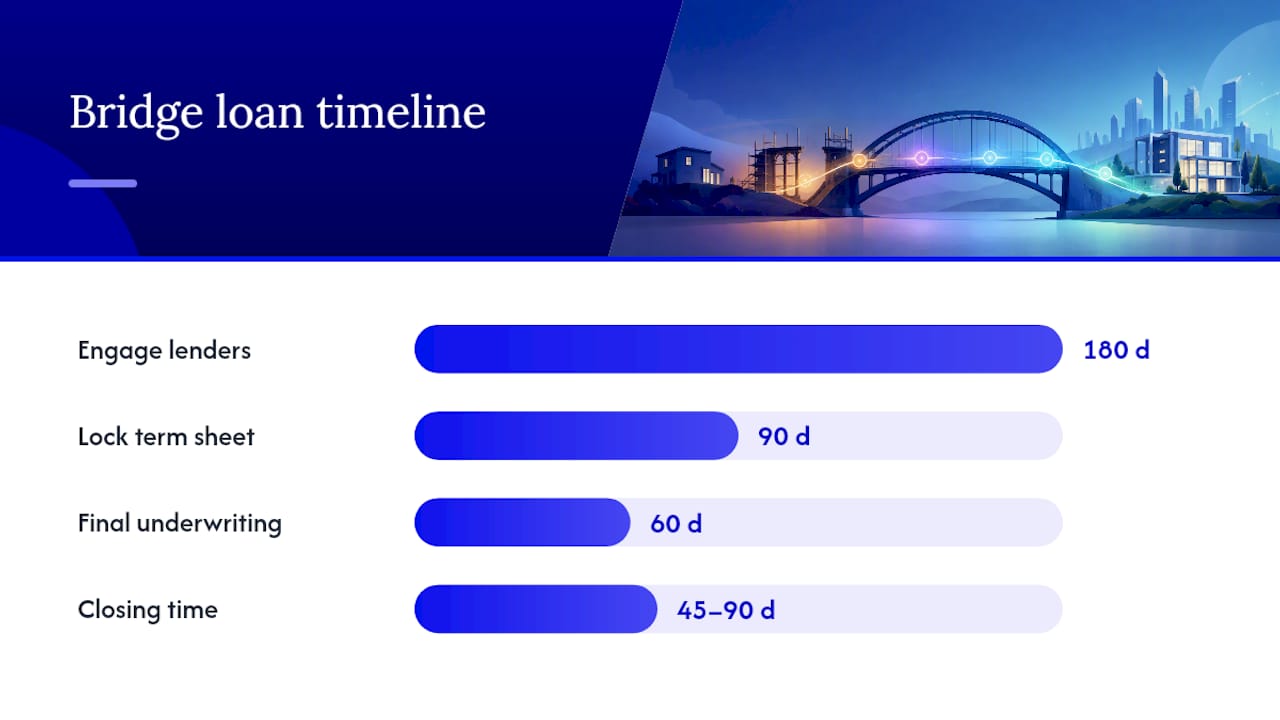
A workable schedule looks like this:
- Six months before maturity: engage permanent lenders and get preliminary feedback on your trailing financials.
- Three months before maturity: lock a term sheet, order the appraisal, and start title work.
- Sixty days before maturity: be in final underwriting with reports delivered and conditions cleared.
Permanent loan closings typically take 45 to 90 days once the application is in, which is why the six-month runway matters more than most sponsors assume. Waiting until 90 days out to start calling lenders is the single most common way a clean deal turns into a rushed extension.
Stabilization Thresholds and Perm Refi Underwriting
Permanent lenders underwrite trailing performance, not projections. A bridge lender will fund based on where the deal is headed; a perm lender wants to see where it actually landed, usually across three to six months of trailing operating statements.
The numbers that matter most:
- Occupancy: many asset types need 85% or higher, sustained, before a perm lender will engage seriously
- Trailing NOI: three to six months of stabilized income, not a single strong month
- DSCR: commonly 1.25x or better for conduit and agency products, though it shifts by property type and product
- Documentation: rent rolls, trailing financials, a capital expenditure completion summary, and updated insurance and tax records
Pro Tip: Start compiling your trailing financial package the day your bridge loan closes, not the day you start shopping the refinance. Lenders move faster when the numbers are already organized.
Permanent Financing Options by Property Type
The takeout product depends heavily on asset type and deal size, and picking the wrong target early wastes months.
- Agency multifamily (Fannie Mae, Freddie Mac, HUD): the default path for stabilized multifamily with five or more units, generally offering the most competitive long-term pricing
- CMBS and conventional bank balance-sheet loans: the standard route for stabilized office, retail, and industrial assets outside the multifamily agency world
- SBA 504: built for owner-occupied properties where the borrower runs a business inside the building, and often a strong long-term cost alternative to a conventional commercial mortgage
- Life insurance company debt: reserved largely for large, high-quality, well-located assets where long amortization and low leverage matter more than speed
Each product carries its own LTV ceiling, recourse expectations, and closing timeline, which is exactly why the six-month runway from the previous section exists. You need time to figure out which bucket your deal actually falls into before you start submitting.
Sizing the Bridge and Funding the Carry Reserve
Size the bridge against what the permanent lender will actually approve, not against the maximum leverage available today. Sponsors should model the takeout lender's LTV and DSCR requirements first, then size the bridge to match rather than working backward from a shortfall at refinance.
A carry reserve should cover:
- Interest payments through the realistic stabilization period, not the optimistic one
- Property taxes and insurance for that same window
- Any projected operating shortfall while occupancy climbs
Pro Tip: Add three to six months of buffer on top of your projected stabilization date. Lease-up always takes longer than the pro forma says, and rate environments shift.
A fully funded reserve sized to the realistic business plan is the cheapest insurance you'll buy on the deal.
Exit Planning: Contingencies Before You Need Them
Exit planning belongs at origination, not at month 30 of a 36 month loan. If stabilization runs behind schedule, you want options already negotiated, not options you're begging for.
- Extensions: negotiate extension windows and fees when you close the bridge, not when you're staring at a maturity date. Late-cycle extensions cost more and come with less leverage.
- Sale: if stabilization is stalling and the market is soft, selling can beat forcing a refinance that doesn't clear DSCR.
- Recapitalization: bringing in equity to pay down bridge debt can close an occupancy or NOI gap without a full sale.
- Alternate lenders: keep a second permanent lender relationship warm in case your primary target tightens credit before you close.
Watch for early warning signs: leasing pace running 20% or more behind projection by month six of a stabilization period, or comparable sales suggesting your exit appraisal will land short.
Worked Example: Bridge Origination to Permanent Refinance
Here's a simplified model for a 60-unit value-add multifamily acquisition.
If occupancy lags, say the property hits only 82% by month 18 instead of 90%, the carry reserve covers the shortfall while management pushes leasing another quarter. If the gap is structural rather than temporary, a partial recapitalization can bring the permanent loan sizing back in line with DSCR requirements without forcing a fire sale. The lender engagement clock still starts at month 18, six months ahead of a 24-month maturity, regardless of whether occupancy is on target.
How BrokersConnect Speeds Lender Matching for Bridge-to-Perm Deals
Execution risk inside that six-month takeout window usually comes down to slow lender responses and disorganized submission packages. A platform built for lender matching and deal packaging cuts both problems by surfacing permanent lenders that actually fit the asset type and leverage profile, then organizing the trailing financials, rent rolls, and reports into a package ready for submission. Batch outreach and a lender responsiveness leaderboard mean brokers aren't guessing which lenders answer emails, which matters most when 60 days is the difference between a clean refinance and a scramble.
Practitioner Perspective: Why Sponsors Blow the Exit
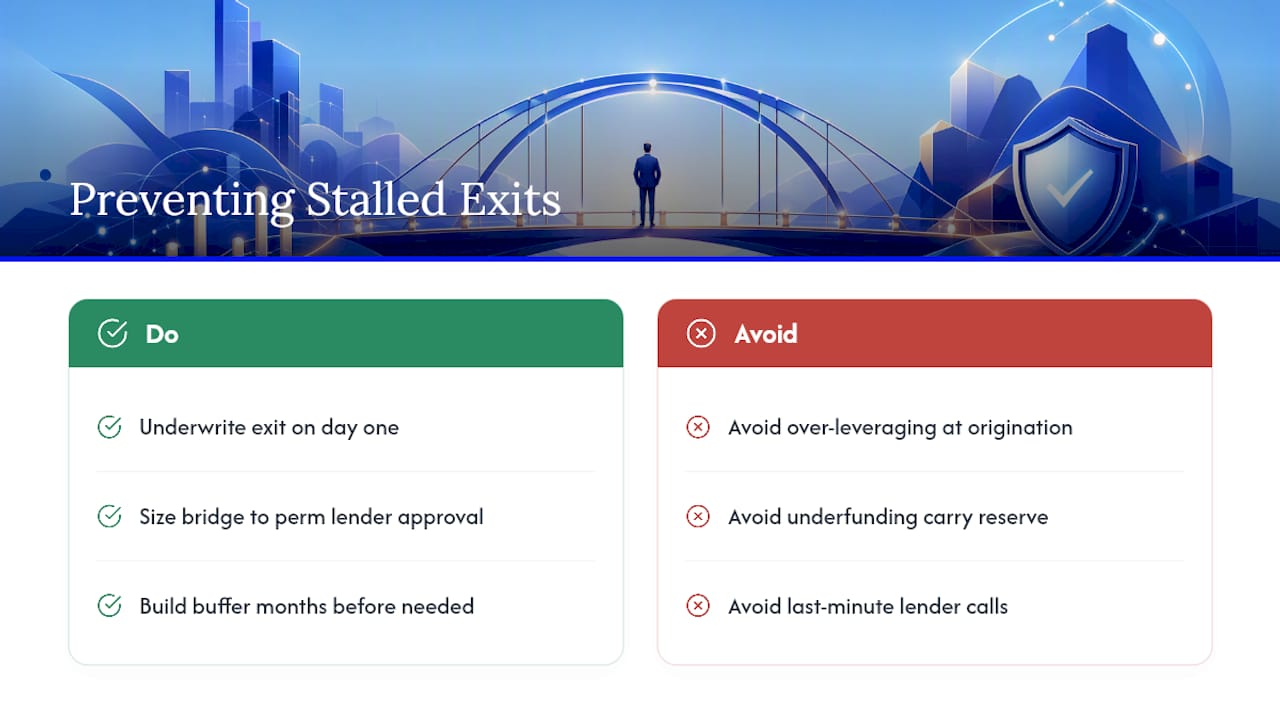
The deals that stall almost always share the same root cause: the sponsor underwrote the acquisition but never underwrote the exit. Over-leveraging at origination, underfunding the carry reserve, and calling permanent lenders with 60 days left instead of 180 are the three mistakes I see repeated across cycles.
The fix isn't complicated. Underwrite the exit on day one, size the bridge to what a perm lender will actually approve, and build in buffer months before you need them. Sponsors who adopt those three habits rarely find themselves negotiating an expensive extension from a position of weakness.
— Theron
Get Your Bridge-to-Perm Deals Matched Faster
Sourcing the right permanent takeout lender inside a tight six-month window usually means hours of cold calls and lender lists that go stale. A suitable platform replaces that grind with lender matching built specifically around property type, leverage, and loan purpose, so brokers spend time closing instead of dialing.

A platform's document vault keeps trailing financials, rent rolls, and reports organized in one place, ready to submit the moment a lender bites. Batch outreach lets you put a refinance scenario in front of multiple qualified permanent lenders at once instead of working through a list one call at a time, and a lender responsiveness leaderboard shows which ones actually answer. If you're managing a bridge maturity in the next year, start a trial and submit your next takeout scenario on Thecrebrokersconnect to see which lenders respond first.
Sources
- Bridge-to-Permanent Financing: Exit Your Bridge Loan Into Long-Term Debt | PeerSense
- Bridge-to-Permanent Refinance: Converting Bridge Loans into Long-Term CRE Debt | Avana Capital
- Bridge loan exit strategies | CapitalXO
FAQ
Is Bridge Financing a Good Idea?
It's a strong fit when a property has a clear path to stabilization within 12 to 36 months and the sponsor has a funded carry reserve and a realistic exit plan; it's a poor fit for deals hoping the market bails them out.
Is It Difficult to Qualify for a Bridge Loan?
Bridge loans are underwritten on the asset and the business plan rather than trailing financials, so qualification is often easier than a permanent loan, but lenders still expect a credible stabilization plan and sponsor experience.
How Much Would a $350,000 Bridging Loan Cost?
Costs vary by lender and rate environment, but bridge loans typically carry a floating rate several hundred basis points above what comparable permanent debt costs, plus origination fees; get a specific quote rather than relying on a generic estimate.
What Are the Risks of a Bridge Loan?
The biggest risk is a hope-based exit, sizing the loan around expected appreciation instead of measurable stabilization metrics, which can lead to appraisal shortfalls or an inability to meet DSCR at refinance. Rate movement during the bridge term and delayed lease-up are the other two failure points sponsors underestimate most often.