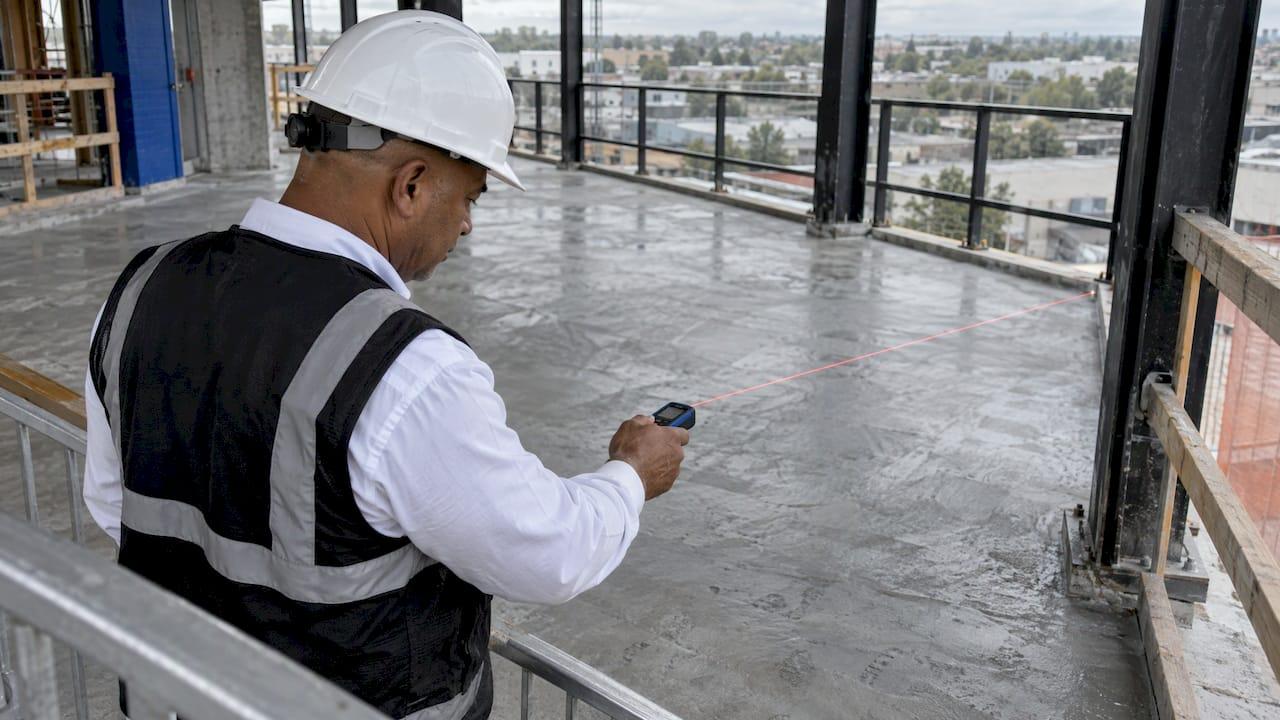
The construction draw process is how a lender pays out a commercial construction loan in stages. The borrower submits a draw request, the lender checks the paperwork and inspects the site, and money is released only for work that is actually in place, less retainage. Then the cycle repeats until the project closes out. For brokers, knowing each step is what separates a deal that funds on schedule from one that stalls in month three.
TL;DR
- A draw is a partial advance of an approved loan, released against verified progress and the approved budget, never a lump sum.
- Each request is a document bundle: a draw form by cost category, invoices, an updated schedule of values, change orders and lien waivers.
- A third-party inspector compares the work on site with the percentage claimed, and the lender funds only if the numbers agree.
- Plan for roughly a week per draw at best. Missing paperwork, budget changes and an out-of-balance loan cause most delays.
- Retainage, commonly 5% to 10%, is held back until the end of the job.
Table of Contents
- What a construction draw is
- The draw process step by step
- Setting up the draw schedule
- What goes in a draw request package
- What the inspector verifies
- How long a draw takes
- Retainage, change orders and overruns
- Draw process checklist for brokers
- Perspective
- Keep construction deals organized with BrokersConnect
- FAQ
- Sources
What a construction draw is
A commercial construction-loan draw is a scheduled, partial advance of the approved loan, released against verified construction progress and the approved budget. Holland & Knight's overview of U.S. construction loan transactions notes that commercial loans are generally advanced monthly or bimonthly on borrower draw requests certified by the lender's construction consultant.
The logic is simple. The lender has money at risk on a building that does not exist yet. Paying in installments tied to finished work keeps the loan balanced against the value actually created on the site. The borrower gets liquidity as work progresses, and the lender keeps control of the budget.
The draw process step by step
Lender forms differ, but the sequence is consistent across commercial deals.
- Closing and initial funding. The loan closes, the budget is approved and any required borrower equity goes in first. Many lenders require equity to be spent before loan proceeds are advanced. Confirm the order in the term sheet.
- Work is completed. The general contractor and subcontractors finish a phase and bill for it against the schedule of values.
- Draw request is assembled. The borrower (usually with the contractor) prepares the request and its supporting documents.
- Lender review. The lender or its construction consultant reviews the package against the approved budget and prior draws.
- Site inspection. An inspector visits the property and measures observed progress against the amount requested.
- Title update. Many lenders also run a title date-down before funding, to confirm no new liens have attached since the last advance.
- Approval and disbursement. If the work checks out, the lender releases funds, typically by wire, less the holdback.
- Repeat. The cycle runs for each subsequent draw until completion, followed by final retainage release.
Under a progress payment plan, the borrower requests payment by construction phase and cost category, certifies loan conditions and project use, and includes supplier and subcontractor waivers showing payment for completed work. The bank confirms progress and disburses incurred construction costs less the holdback.
Setting up the draw schedule
The draw schedule is agreed before the first shovel hits dirt. It ties the loan budget to the stages of the project, and it is built from the schedule of values. A typical commercial schedule breaks the work into line items such as:
- Site work and utilities
- Foundations and concrete
- Structural framing or steel
- Roofing and building envelope
- Mechanical, electrical and plumbing rough-ins
- Interior finishes
- Final completion, punch list and closeout
Two habits keep a schedule workable. First, make the line items match the lender's budget categories exactly, so a request does not need re-mapping at review. Second, make sure the contractor's billing format and the lender's draw form reconcile to the same totals. If you work with AIA-style payment applications, our walkthrough on making G702/G703 totals match in a draw schedule template shows how to build the spreadsheet so the numbers tie out.
Lender requirements on frequency, minimum draw size and stored-materials funding vary, so read them before you quote a timeline to a client. Our guide to construction lender requirements for CRE brokers covers what lenders usually ask for up front.
What goes in a draw request package
A draw request is a bundle of documents supporting completed work and its costs. Typical documents include invoices and receipts, an updated schedule of values, change orders, lien waivers and an overview of project progress.
| Document | What it proves | Common trouble spot |
|---|---|---|
| Draw request or certification of payment | Amount requested by phase and cost category; borrower certifies loan conditions | Categories that do not match the lender budget |
| Contractor payment application | Work billed to date against the schedule of values | Totals that differ from the draw form |
| Invoices and receipts | Costs actually incurred | Missing backup for stored or off-site materials |
| Change orders | Approved scope or price changes | Changes not approved by the lender |
| Lien waivers | Payment for work already funded | Wrong waiver type or missing subcontractors |
| Progress photos and summary | Visible progress | Photos that do not match the claimed percentage |
Lien waivers deserve extra attention. Conditional waivers cover the current draw, and unconditional waivers confirm that prior draws were actually paid. One industry source argues that lien waivers are the most critical documents in the package. Waiver forms and rules differ by state, so have the borrower's counsel confirm the form for the project's jurisdiction.
For a fuller list of what to gather across the whole loan, see our loan document checklist for CRE brokers.
What the inspector verifies
Lenders confirm completion through independent third-party site inspections that compare visible work against the percentage of completion claimed in the draw request.
In practice, the inspector reviews the request and project documents, visits the site, and compares observed progress with the amount requested. The report can also flag delays, deficiencies, change orders and safety or housekeeping issues. One boundary matters: the same source says a loan inspector does not guarantee workmanship or replace municipal code inspections. The inspector supports the lender's funding decision, nothing more.

A monitoring firm describes its review as checking whether requested payments fairly reflect completed work, along with the amount needed to complete, retainage, contingency and draw history. That is a good mental model of what any lender's reviewer is asking: is the money requested proportional to the work done, and is there enough left to finish?
For how inspections and other reports fit into a financing package, see our broker's guide to third-party reports for CRE financing.
What a draw inspection costs and who pays
Pricing varies by project type, location, travel distance and complexity. One inspection provider says residential inspections often cost a few hundred dollars, while complex commercial or remote inspections may cost considerably more. The same page says the borrower commonly pays the fee as a construction loan expense even though the lender usually orders the service, and that fees are usually charged per site visit or report. The loan agreement and the lender's fee schedule decide it, so build inspection fees into the budget as a recurring line, multiplied by the number of expected draws.
How long a draw takes
The approval process ideally takes about seven business days, but it can run longer depending on the request's size, complexity and documentation. Requests for additional information slow payment.
A safe way to set expectations with a borrower and contractor:
- Quote a week as the best case, not the norm.
- Tell the contractor to carry the cash flow gap for the first draw cycle, because subcontractors still expect payment on their own terms.
- Submit the package a few days before month-end, not on it, if the lender funds on a monthly cycle.
Industry commentary from one construction finance software company claims that 30% to 40% of first draw submissions are rejected, each adding one to three weeks. That is a vendor's figure, not a regulator's, so treat it as a reason to over-prepare the first draw rather than as a benchmark.
The usual causes of delay
- Budget categories on the request do not match the lender's.
- Missing or incorrect lien waivers.
- Contractor billing and the draw form disagree on totals.
- Unapproved change orders.
- Inspector findings that do not support the percentage claimed.
- A loan that is out of balance (more on this below).
Our piece on what underwriters check first in construction loan submissions helps you catch several of these before the loan even closes.
Retainage, change orders and overruns
Retainage
Retainage is a percentage of each draw withheld until the end. Holland & Knight's overview says it is usually 10% of construction costs and held until the final advance, although it may sometimes be released with a trade's final advance. Another source puts the commercial standard at 5% to 10%, withheld until substantial completion, certificate of occupancy and the final lien waiver. Final release generally follows the certificate of occupancy, final unconditional lien waivers and an inspection confirming the punch list is done.
When a borrower asks why the last 5% to 10% is so slow, this is the answer: it is the lender's leverage to get the project fully finished. Our explainer on loan holdbacks goes deeper on how holdbacks affect deal timing.
Change orders
The lender controls revisions to the approved budget. Per the same Holland & Knight overview, construction loans may include retainage, reserves and lender-controlled reallocations, and lenders are sensitive to schedule delays. In practice that means a change order that moves money between lines should be submitted and approved before the work is billed against it.
Contingency and overruns
A properly sized contingency line absorbs the surprises that would otherwise trigger a budget conversation mid-project. Read our guide on how much construction contingency to set aside before you finalize a budget with a sponsor.
When the loan goes out of balance
If undisbursed loan funds plus committed borrower equity do not cover the remaining costs, the lender declares the loan out of balance and halts draws until the borrower injects cash. The fix is usually fresh equity or a revised scope. Some sponsors also look at separate equipment financing for contractors so machinery costs do not compete with the building budget for the same dollars. Whatever route a borrower takes, raise the shortfall with the lender early, before it blocks the next draw.
Draw process checklist for brokers
- Confirm the draw frequency, minimum size and inspection requirements before the term sheet is accepted.
- Align the contractor's schedule of values with the lender's budget lines.
- Agree on the lien waiver forms and who collects them from each subcontractor.
- Put inspection fees and title date-down charges into the budget.
- Set a calendar for submission, review and funding for each month.
- Track every change order and its approval status.
- Re-run the balance (remaining loan plus equity versus remaining cost) before each submission.
For what happens at the other end of the loan, our commercial loan closing checklist is a useful companion, and the guide to construction lenders for CRE brokers helps you choose where to place the deal in the first place.
Perspective
Most draw problems are born at placement, not at the first request. A broker who sends a construction deal to a lender whose draw process does not fit the sponsor's cash flow has created the delay already. Frequency, inspection timing, retainage and change order flexibility are lender traits, and they belong in the matching decision alongside rate and leverage.
That is how we built BrokersConnect. We match a scenario with verified lenders by property type, loan amount, location, leverage and transaction structure, then give you a pipeline, a document vault and lender conversation tracking so the draw package, the budget and the lender's answers sit in one place instead of five.
The brokers who keep construction clients are the ones whose borrowers get paid on time. We designed the platform to help you be that broker.
Theron
Keep construction deals organized with BrokersConnect
If you place construction loans, you are managing lender conversations, documents and deadlines at the same time. BrokersConnect is a commercial real estate broker platform with AI-powered lender matching across a database of 289+ verified lenders, a deal pipeline CRM, a secure document vault, deal templates and batch lender outreach. It is a flat $50 per month with a free trial and no commissions or transaction fees.

Start with BrokersConnect and take your next construction scenario from lender search to submission in one workspace.
FAQ
How long does a construction draw request take?
The process ideally takes about seven business days, according to a construction industry guide. Larger requests, complex projects and incomplete documentation can stretch it. Your lender's own timeline is the number to plan around.
How much does a draw inspection cost?
It depends on the project, location and complexity. One provider says residential inspections often cost a few hundred dollars, with complex commercial work costing more, and the borrower commonly pays. Check the lender's fee schedule for the exact amount.
What documents are needed for a draw request?
Expect a draw request by cost category, invoices and receipts, an updated schedule of values, change orders, lien waivers and a progress overview, as described in this bankers' association guide. Your lender may add items, so request its checklist at closing.
What is retainage in a construction draw?
Retainage is a portion of each draw held back until the project is complete. Sources put it at 5% to 10% in commercial work. It is released after final inspection, certificate of occupancy and final lien waivers.
Sources
- Construction Loan Transactions (Holland & Knight)
- Disbursement of Construction Loans (Texas Bankers)
- How Does the Construction Draw Process Work?
- Construction Draw Package Standard
- Construction Draw Inspections: How They Work and What They Cost
- How Do Third-Party Construction Loan Inspectors Operate?
- Construction Loan Monitoring
- Draw Inspection Cost and Turnaround FAQs
- The Construction Loan Draw Request Process, Explained
- Accelerating Receipt of Capital on Construction Projects
- Construction Draw Inspections, Title Date-Down and Retainage
- Construction Draw Denied? Why Lenders Stop Funding