
A successful commercial construction loan submission is a complete, audit-ready package that proves project feasibility, sponsor capacity, and a credible exit. Lenders scan five items first: the executive summary, the construction budget and draw schedule, sponsor financials, contractor credentials, and evidence of take-out financing. The checklist below draws on OCC and FDIC guidance and reflects how Theron packages deals to get faster lender responses.
TL;DR:
- Providing verified equity funding documentation, credible take-out evidence, and contractor credentials upfront reduces delays and improves approval chances.
- Organizing the submission in an order that answers underwriters’ questions quickly, starting with sponsor strength and feasibility, speeds up review processes.
- Securing third-party reports, detailed cost estimates, and a solid construction draw protocol is essential to avoid common red flags that slow approval.
- Most lender rejections stem from unverifiable equity, missing or weak take-out plans, or unsupported cost estimates, which can be addressed before submission.
- Using standardized templates, a clear attachments map, and submission tracking tools like BrokersConnect can streamline deal packaging and sourcing.
Table of Contents
- What documents belong in a commercial construction loan package?
- How should you order the package so underwriters move faster?
- What underwriting red flags cause the most delays?
- How do lenders control draws and disbursements during construction?
- What counts as a credible take-out or permanent financing plan?
- How do you shop the deal and submit faster?
- A broker's priority checklist for construction submissions
- How BrokersConnect speeds up construction loan packaging and matching
- FAQ
- Sources
What documents belong in a commercial construction loan package?
A lender's file review starts with a cover sheet and a one-page executive summary covering the loan request, amount, intended use of funds, key dates, and the planned take-out. Everything after that exists to support the claims made on that first page.
The construction budget needs a full breakdown of hard costs, soft costs, and contingency, ideally on a signed cost schedule rather than a rough estimate. Pair it with a draw schedule tied to construction milestones, inspection triggers, and a lien-waiver collection plan, since FDIC examination guidance treats disbursement controls as a core part of the loan file, not an afterthought.
- Architectural plans, permits, surveys, and geotechnical or environmental reports where the project scope calls for them
- Sponsor and guarantor financial statements, credit reports, and documented liquidity
- Evidence of permanent financing or a credible take-out strategy, such as a term sheet, letter of intent, or draft tri-party agreement
- Builder's risk and liability insurance, a title report, and contractor or subcontractor credentials
- Leases, tenant letters of intent, rent rolls, or presale contracts when the project's repayment depends on income or unit sales
Note that lenders, not brokers, typically engage the appraiser to preserve valuation independence, so a broker-ordered appraisal can create a compliance problem rather than save time. Our loan document checklist breaks each category down further with a downloadable attachments map.
Pro Tip: Label every exhibit with the same numbering scheme the lender uses internally when one is available; it cuts review time more than almost any other single change.
How should you order the package so underwriters move faster?
Order determines how fast an underwriter forms a first impression, and a disorganized file invites the same follow-up questions from every lender you approach. Structure the submission so each section answers the question the previous one raised.
- Cover letter and executive summary stating the ask, the sponsor, and the exit
- Sponsor and guarantor financial package, including liquidity schedules and credit history
- Feasibility analysis and pro forma showing projected cash flows under the proposed structure
- Construction budget and draw schedule, with inspection protocol and lien-waiver timing attached immediately after
- Third-party reports: plans, permits, surveys, and environmental or geotechnical findings
- Contractor documentation: licenses, bonding, performance history, and sample lien waiver forms
- Appendices and a one-page attachments map that tells the reviewer exactly where each exhibit lives
This order mirrors how OCC guidance frames loan administration: feasibility and sponsor strength first, mechanics of disbursement second, third-party verification last. A consistent template across every submission also means your team spends less time rebuilding the same file for the next lender. Our cover letter and attachment map templates are built around this exact sequence.
Pro Tip: Keep a single table of contents page at the front of the PDF or portal upload; reviewers use it to jump straight to the section they care about.
What underwriting red flags cause the most delays?
Most submission delays trace back to a short list of recurring problems, and each one has a straightforward fix if you address it before the lender asks.
- Unverified equity: attach escrow instructions, certified wire confirmations, or a staged equity funding schedule instead of a stated capital commitment
- Weak take-out evidence: secure a letter of intent or draft tri-party language and document the permanent lender's capacity to fund
- Unrealistic cost estimates: include a third-party cost report, show the contingency math, and explain how cost overruns get funded if they occur
- Contractor risk: add performance references, subcontractor payment history, bonding information, and sample lien waiver language
- Weak market assumptions: supply comparable sales or rents, absorption data, and a sensitivity analysis covering base, downside, and stress scenarios
Our construction lender requirements guide walks through how different lender types weigh each of these factors.
How do lenders control draws and disbursements during construction?
Construction loans fund in stages, and the mechanics of that process are where most lender scrutiny lands after initial approval.
- Draws follow either fixed milestone schedules or monthly progress billing, with retainage held back until completion and final lien releases
- Each draw request typically needs architect or engineer inspection reports, receipted invoices, and signed lien waivers before funds release
- Lenders separate the person approving a draw from the person disbursing funds, a control regulatory exam guidance treats as standard for avoiding overpayment
- A mechanic's lien prevention workflow collects partial lien waivers with every draw and a final waiver at project completion, not just at closeout
Lenders commonly require inspection reports paired with receipted bills and lien waivers before releasing each draw, a practice detailed in examination guidance on construction lending. Submitting a sample inspection protocol with your initial package signals that your deal is ready for this level of control. Our closing checklist covers the final disbursement and lien release sequence in more detail.
What counts as a credible take-out or permanent financing plan?
A take-out commitment, whether a formal term sheet or a tri-party buy-sell agreement between the construction lender, the permanent lender, and the borrower, is what lets a construction lender treat the loan as temporary risk rather than a permanent hold. OCC guidance notes that lenders prefer submissions following secondary-market standards, including a documented exit, when permanent commitments are scarce.
- A signed or drafted term sheet from the permanent lender, including rate lock and extension terms
- Financial statements from the permanent lender confirming capacity to fund at takeout
- Draft tri-party language specifying the handoff conditions and timing
When the same institution provides both loans, underwriters still expect a documented internal commitment; when a separate lender takes out the loan, they verify that lender's financial capacity independently.
How do you shop the deal and submit faster?
Speed comes from targeting the right lenders first, not from submitting to everyone at once.
- Build a lender credit box before you submit, filtering for leverage, asset class, and take-out appetite so you only approach lenders likely to say yes
- Batch submissions using a standardized cover letter and attachments map so you answer the same questions once instead of five times
- Keep one master file of lender Q&A responses and update it as new questions come in, rather than re-answering the same point for each lender
An AI lender-matching tool that filters by deal factors, a shared document vault, and submission tracking all remove the manual lookup work from this process. Our guide to construction lenders breaks down how different lender types fit different deal profiles.
Pro Tip: Send your three strongest-fit lenders first and hold the rest back a day; early feedback often reveals a packaging gap you can fix before the next round.
A broker's priority checklist for construction submissions

My own priority order rarely changes: verified equity first, take-out evidence second, contractor verification third, and a clean draw schedule last before submission. Deals that follow this order tend to move through committee without a second request for documents, because the questions a committee would ask are already answered on the page they're reading.
A submission with a signed cost schedule, a documented take-out letter, and contractor references attached up front avoids the two-week back-and-forth that an incomplete file almost always triggers. Standardized templates and a submission-tracking workflow are what make that consistency repeatable across a full pipeline rather than a one-off win.
— Theron
How BrokersConnect speeds up construction loan packaging and matching
We built BrokersConnect around the packaging and matching work this article describes, so a broker moving a construction deal from scenario to submission has one place to do it instead of five.
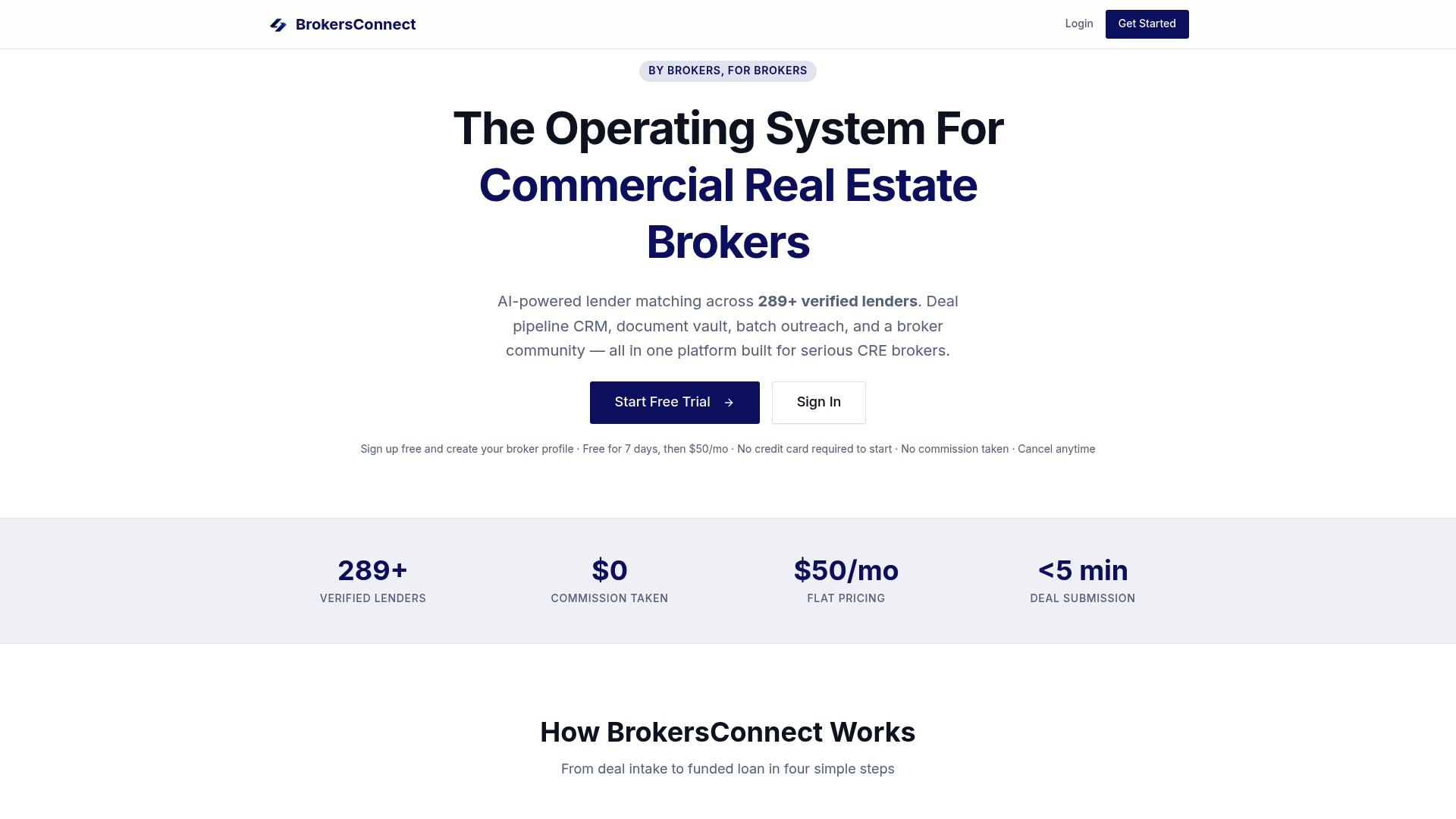
- AI lender matching that filters our extensive database of verified lenders by property type, leverage, loan amount, and take-out expectations
- A secure document vault for storing the budget, draw schedule, and sponsor financials in one place
- Pipeline and submission tracking so you know which lenders have responded and which still need a follow-up
- Batch outreach tools for sending a standardized package to a pre-screened lender shortlist at once
This fits best once you've assembled the core document set and are ready to shop the deal to multiple lenders at once. Start a free trial on BrokersConnect to see how the matching and tracking tools work with a live deal.
FAQ
What is the typical timeline for a construction loan submission?
Timelines vary by lender type and deal complexity, but a complete package with verified equity and take-out evidence generally moves through initial underwriting faster than one missing those items. Private lenders often respond within days of a complete submission, while bank committees typically take longer due to internal approval layers.
What is the minimum equity a sponsor needs to show?
Equity requirements are set by each lender's credit box and the project's risk profile rather than a single industry figure, so the stronger practice is documenting whatever equity you have with escrow instructions or a staged funding schedule. OCC guidance frames adequate sponsor equity as part of prudent underwriting rather than a fixed threshold.
Do banks and private lenders require different submission documents?
Both require the same core categories: budget, draw schedule, sponsor financials, and take-out evidence, but banks tend to apply more rigid documentation standards tied to regulatory exam expectations, while private lenders often move faster with a leaner file if the sponsor and take-out are strong. Matching the package depth to the lender type reduces unnecessary back-and-forth.
How does BrokersConnect help with construction loan submissions specifically?
BrokersConnect matches construction deal scenarios against our database of verified lenders by factors including leverage and take-out structure, then lets you track submissions and manage documents in one workflow. The platform is a $50 per month subscription with a free trial, listed on the BrokersConnect site.
What causes a lender to reject a construction loan submission outright?
The most common reasons are unverifiable equity, no credible take-out plan, and cost estimates without third-party support. Addressing those three items before submission resolves most outright rejections before a lender even reaches the contractor or insurance documentation.