
A loan package cover letter is a one-page summary that leads your submission and tells the lender exactly what they're looking at before they open a single attachment. It should run half a page to one page as a letter, or three to five sentences as an email, and it earns its place only if it states the ask, the property, the sponsor, and your contact information without making the reader hunt for any of it.
TL;DR:
- Providing a clear and concise loan request with key metrics like LTV, DSCR, and debt strategy upfront saves time and aligns with lender expectations.
- Tailoring the opening line to lender type emphasizes the most important financial indicators for banks, private lenders, or agencies.
- Inconsistencies between the cover letter and supporting documents risk immediate trust issues, so precise matching of figures is essential.
- Finalizing the package before writing the cover letter ensures accurate summarization and reduces repetitive work.
- Using templates, document management tools, and lender matching engines accelerates submission speed and improves targeting.
Table of Contents
- What Goes Into a Loan Package Cover Letter
- Ready-to-Send Templates You Can Adapt Today
- Attachments and How to Label Them for Underwriting
- Tailoring the Letter to Different Lender Types
- Mistakes That Slow Down or Kill a Submission
- Why the Cover Letter Should Be the Last Thing You Write
- Submit Faster With BrokersConnect's Package Tools
- Sources
What Goes Into a Loan Package Cover Letter
Every sentence in this document has a job. Skip the pleasantries and get to the deal.
Start with the request itself: loan amount, facility type, and purpose. "We are seeking a bridge loan to acquire a 62 unit multifamily property in [market]" tells the underwriter in one line whether this deal fits their book. Bury that in paragraph three and you've already lost momentum.
The property gets one line, not a paragraph. Type, size, and a market signal that matters to underwriting.
Sponsor credibility comes next, and it should be equally tight. Name the entity, then the track record that's relevant to this specific deal. A sponsor with five prior multifamily exits in the same submarket is a different risk profile than a first-time buyer, and the letter should make that obvious without bragging.
Then hit your headline underwriting numbers. Lenders evaluate financings around the borrower's ability to service debt from cash flow, the strength of the collateral, and the credibility of management, according to Investmentbank. Your cover letter should surface the numbers that speak to all three:
- Requested LTV or LTC
- Projected DSCR at stabilization
- Loan term and anticipated exit or refinance strategy
- Any time sensitivity (rate lock, closing deadline, purchase contract expiration)
Close with what's attached and what you need from them. A short line like "Full underwriting package attached, including trailing 12 month operating statements, third-party appraisal, and sponsor financials. Happy to jump on a call this week" does more work than a formal closing paragraph.
Ready-to-Send Templates You Can Adapt Today
Most brokers rewrite this letter from scratch every time, which wastes time on a document that should be mechanical. Build one template and swap the variables.
- Submission email (3 to 5 sentences). "Hi [Lender Contact], attached is a loan package for a [loan type] on [property type] located in [market]. The sponsor is [entity name], with [track record detail]. We're targeting leverage with projected DSCR, closing soon. Full underwriting package attached, please let me know if you need anything else to move forward."
- One-page cover letter. Paragraph one states the ask (amount, type, purpose). Paragraph two covers the property and sponsor in two or three sentences each. Paragraph three lists attachments and next steps. Keep the whole thing under 400 words.
- Subject line and file naming. Use "[Property Name] – [Loan Amount] [Loan Type] Submission" for the subject line, and name your files with a numeric prefix so they sort correctly in a lender's inbox: "01_CoverLetter_PropertyName.pdf," "02_ExecSummary_PropertyName.pdf," "03_Appraisal_PropertyName.pdf."
Cover letters work best when they're brief and, where possible, addressed to a specific reviewer rather than a generic desk, based on guidance from Creek Road Financial's loan package overview.
Pro Tip: Match your tone to the relationship. A lender you've closed three deals with gets a shorter, more direct letter. A new relationship or a larger unfamiliar fund deserves a slightly more formal version, and if the deal has any time pressure, follow up with a phone call within 24 hours rather than waiting on an email reply.
Attachments and How to Label Them for Underwriting
Underwriters read in a predictable order, and your file names should match that order.
The executive summary comes first because it's usually the single document a lender reads before deciding whether to keep reading. Financials and spreads come next: two to three years of tax returns and current financial statements are standard expectations, per LegalClarity's overview of commercial loan documentation. Name these clearly: "04_TaxReturns_2023-2025.pdf," "05_PersonalFinancialStatement.pdf."
Property backup follows: rent roll, appraisal, survey, and environmental report where applicable. Then organizational documents (operating agreement, articles of formation) and any closing items already in hand.
- 01: Cover letter
- 02: Executive summary
- 03: Financial spread/credit memo
- 04: Tax returns and financial statements
- 05: Rent roll, appraisal, environmental
- 06: Organizational documents
A loan document checklist built around this same numbering system saves real time once you're submitting to multiple lenders on the same deal.
Tailoring the Letter to Different Lender Types
The same deal needs a different opening line depending on who's reading it.
Banks want conservative metrics up front and a clean documentation trail. Lead with LTV, DSCR, and anything that shows covenant history or a long-standing banking relationship. Debt funds and private lenders care less about box-checking and more about the sponsor's track record, the exit strategy, and how fast you can close. Put that story in the first two sentences, not buried in an attachment.
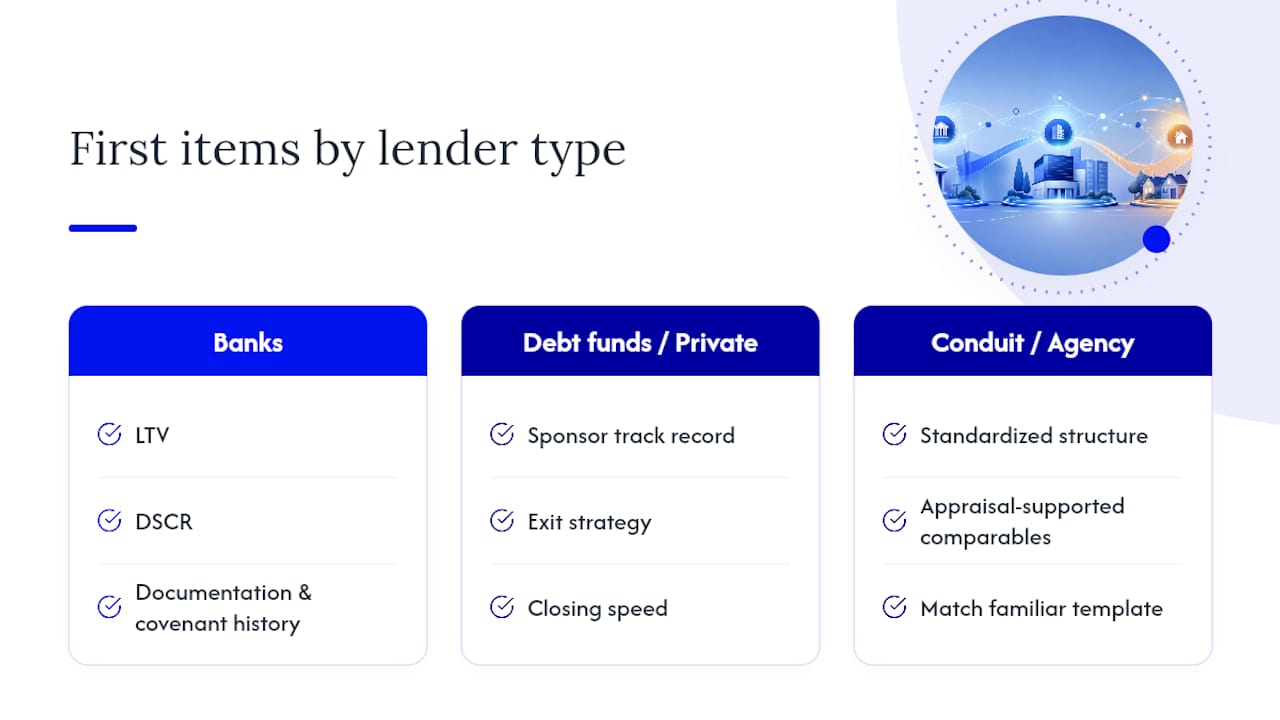
Conduit or agency buyers respond to standardized structure. They're comparing your submission against a template they've seen hundreds of times, so match that format and lead with appraisal-supported comparables rather than a narrative pitch.
Whatever the lender type, a broker's guide to matching lenders helps you figure out which numbers that particular lender actually weighs before you even draft the letter. Surface the metric they care about most in your first paragraph, not your third.
Mistakes That Slow Down or Kill a Submission
The fastest way to stall underwriting is burying the ask under two paragraphs of context. Lead with the number.
- A letter longer than one page reads as unfocused; lenders skim rather than read it closely.
- Numbers in the cover letter that don't match the spread or executive summary create an immediate trust problem, since inconsistency between summary and supporting documents is one of the first things underwriters flag.
- Missing a rent roll or appraisal forces a follow-up email and adds days to the timeline.
- Pretending a deal has no risk is a red flag on its own; naming two or three real risks with mitigants builds more credibility than silence does.
Pro Tip: Before you hit send, run one final check: does every number in the cover letter match the spread exactly? A single mismatched DSCR figure is enough to make an underwriter question the rest of the package.
Why the Cover Letter Should Be the Last Thing You Write
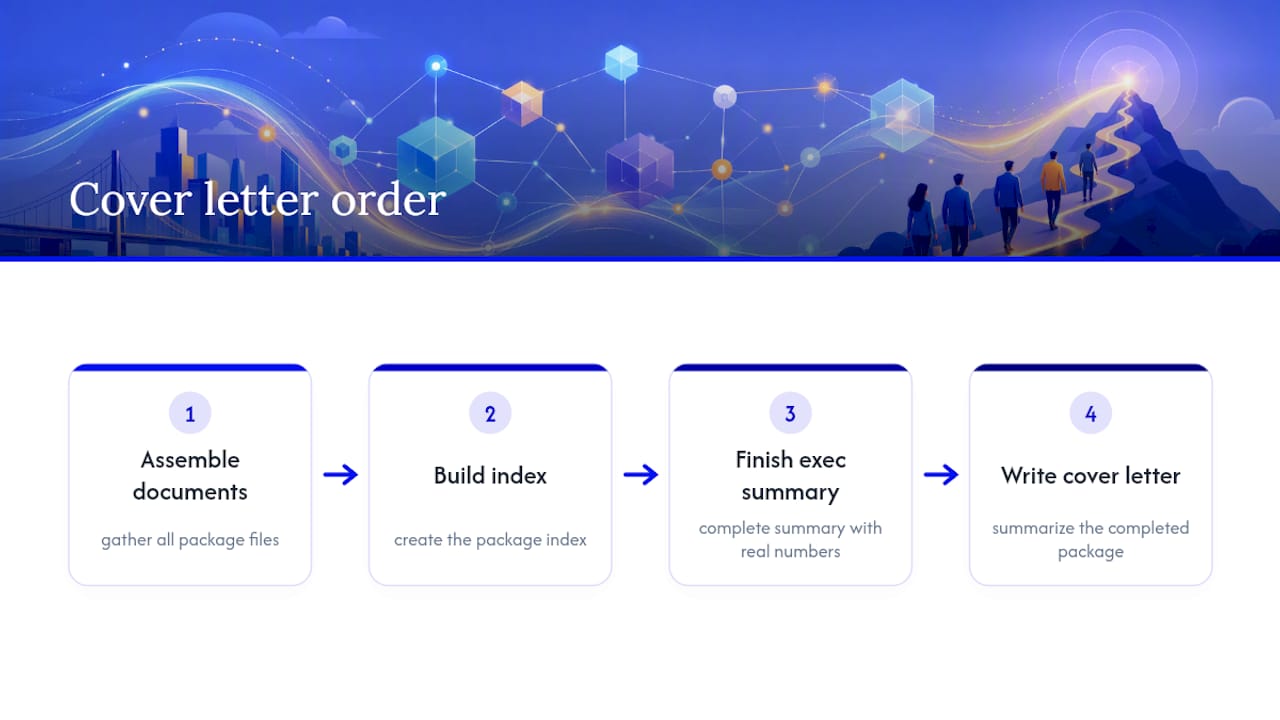
Most brokers draft the cover letter first, then build the package around it. That's backwards. Assemble your documents, build the index, and finish the executive summary before you touch the cover letter, because the letter's only job is to accurately summarize a package that's already complete. Writing it last means you're synthesizing real numbers instead of guessing at them.
A standardized template and a central place to store your documents cut down the back and forth that eats a broker's week. That's the workflow a document checklist should support, not complicate.
— Theron
Submit Faster With BrokersConnect's Package Tools
A matching engine can tell you which lenders are actually likely to take your deal, before you spend an afternoon writing a cover letter for the wrong audience.
A secure document vault can keep every attachment indexed and ready to send, so you're not rebuilding file names from scratch on every deal. Standardized templates handle the cover letter and executive summary structure, and a pipeline tracker shows exactly which lender has your package and how long they've had it, so nothing goes quiet without you noticing. That combination, matching plus templates plus tracking, is what turns a one-off submission into a repeatable process. Start a free trial on the BrokersConnect platform and get your next package in front of the right lender without the guesswork.
Sources
- Investmentbank
- Commercial Loan Credit Memo: What to Include (Template) - LenderAnalyzer
- How to Build a Winning Loan Application Package | Creek Road Financial
- Commercial loan documentation: what lenders expect - LegalClarity