
Commercial mortgage compliance, in a broker's world, means one thing: your submission matches what the lender's checklist and underwriting model actually need before anyone asks. It has nothing to do with regulatory filings. It has everything to do with whether the file you send gets opened, read, and moved forward instead of parked in a follow-up-request queue.
The single highest-impact move is this: assemble every document into one bookmarked PDF, and put a one-page executive summary and a sensitivity analysis on top. That alone determines whether an underwriter treats your deal as ready or as a project.
- One bookmarked PDF, not fifteen loose attachments
- Executive summary as page one
- Sensitivity analysis showing vacancy, rate, and CapEx stress cases
Pro Tip: Lenders in 2026 consistently favor submissions with reconciled T-12s and current rent rolls over files that are technically complete but poorly organized.
Key Takeaways
A commercial loan submission advances fastest when it's a single bookmarked PDF with reconciled financials, a one-page executive summary, and a built-in sensitivity analysis.
| Point | Details |
|---|---|
| Lead with the summary | Put a one-page executive summary and sensitivity analysis on page one of the package. |
| Reconcile before you send | Match T-12 income to the rent roll and explain any variance in a short narrative. |
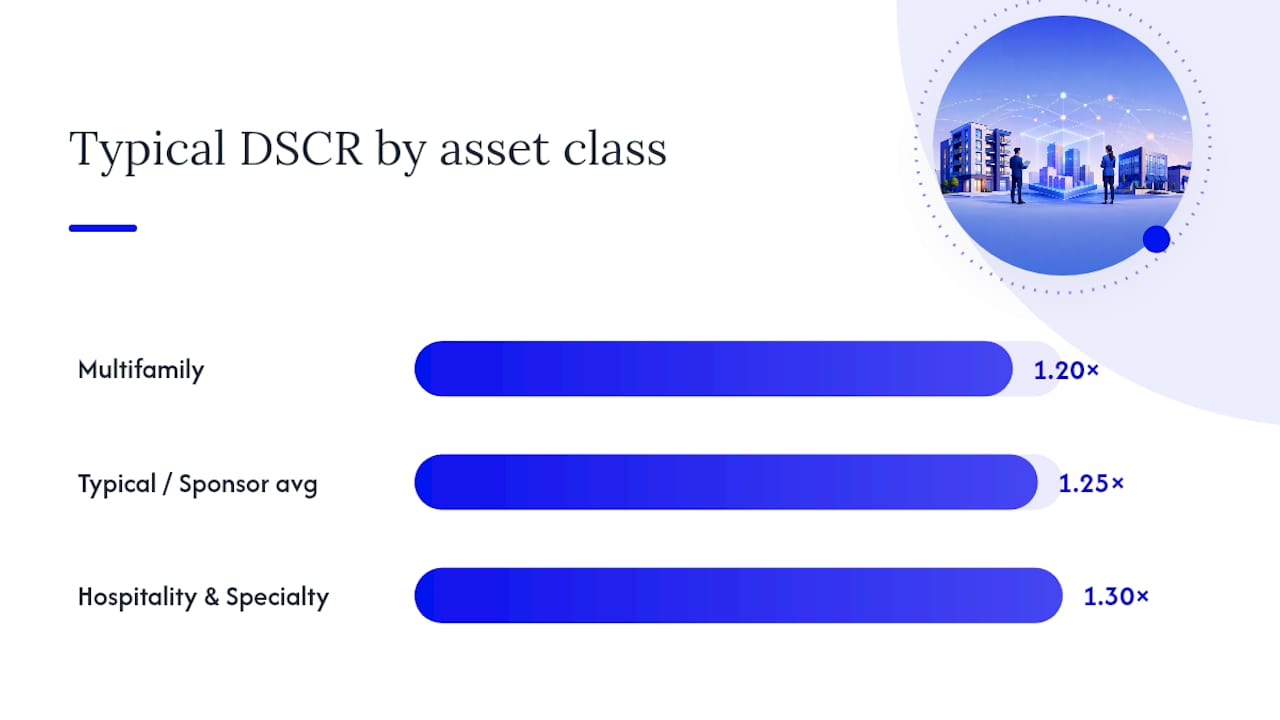
| Model DSCR conservatively | Use in-place NOI and target the 1.20x to 1.30x range most lenders expect. |
| Keep files current | Refresh PFS and rent rolls every 30 to 90 days to maintain a ready-to-close vault. |
| Match the lender type first | Thecrebrokersconnect helps target verified lenders before you build the package, so clean files land with lenders likely to say yes. |
Table of Contents
- What Documents Do Lenders Need for a Compliant Submission?
- How Should You Format a Loan Package for Faster Review?
- What Do Underwriters Actually Check Before Approving a Loan?
- How Do You Keep a Loan File Ready to Close?
- Five-Minute Pre-Send Audit for Loan Submissions
- Why Do Loan Submissions Get Rejected Before Underwriting Even Starts?
- What Regulatory Standards Shape Commercial Loan Packaging?
- What Representations and Warranties Should Brokers Confirm Before Submission?
- How Should Brokers Disclose Off-Balance-Sheet Liabilities?
- What Third-Party Reports Do Lenders Require and Why?
- Why Discipline in Packaging Beats Deal Size Every Time
- Package Deals Faster With BrokersConnect
- Where to Learn More
- Frequently Asked Questions
- Sources
What Documents Do Lenders Need for a Compliant Submission?
Lenders don't grade submissions on volume. They grade them on whether the right documents show up in a predictable order, with numbers that match across every page. Missing one of these categories is the single most common reason a file bounces back with a follow-up request instead of moving to term sheet.
Property package:
- Trailing 12-month operating statement (T-12), reconciled to the rent roll
- Current rent roll with lease start/end dates and any concessions noted
- Lease abstracts for anchor tenants or anything over 10% of gross income
- Exterior and interior photos, dated
- Property tax bills for the last two years
- Current insurance certificate (evidence of coverage, not just a quote)
Sponsor package:
- Personal financial statement (PFS) dated within 90 days
- Two to three years of personal tax returns, all schedules included
- Real estate owned (REO) schedule showing existing debt and cash flow
- Two to three months of bank statements confirming liquidity
Entity and deal documents:
- Formation documents, operating agreement, and certificate of good standing
- A single purpose entity checklist if the lender requires an SPE structure
- One-page executive summary covering loan purpose, capital stack, and key risks
- Sources and uses table
- Purchase and sale agreement or letter of intent
- Preliminary title report and survey, where available
Substitutes exist for a few of these. A CPA-prepared financial statement can sometimes stand in for a full PFS on smaller deals, and some lenders accept a Phase I environmental report in lieu of a full survey at term sheet stage. Confirm the substitute before you submit, not after.
How Should You Format a Loan Package for Faster Review?
A single bookmarked PDF beats a folder of separate files almost every time. Underwriters reviewing fifteen attachments have to open, close, and re-navigate constantly; a bookmarked structure lets them jump straight from the T-12 to the rent roll to the pro forma in three clicks.
Structure the bookmarks in this order:
- Executive summary
- Sources and uses
- Sensitivity analysis
- Property financials (T-12, rent roll, lease abstracts)
- Sponsor financials (PFS, tax returns, REO schedule)
- Entity documents
- Third-party reports (title, survey, appraisal if in hand)
Cross-referencing matters as much as order. If the rent roll shows $42,000 in monthly income but the T-12 shows $39,500, an underwriter stops reading and starts emailing. Reconcile the two before submission and attach a one-page variance narrative explaining the gap, whether it's a recent lease-up, a vacant unit under renovation, or a rent bump that hasn't hit the books yet.
Name files with dates, not versions like "final" or "final2." A file labeled "RentRoll_2026-01-15" tells the underwriter exactly what they're looking at; "RentRoll_v3" tells them nothing. For any CapEx assumptions in your pro forma, back them with vendor quotes or signed contracts rather than round-number estimates.
Pro Tip: Write a one-page cover memo that tells the underwriter exactly which pages answer their three biggest likely questions. It cuts the back-and-forth before it starts.
What Do Underwriters Actually Check Before Approving a Loan?
Most commercial lenders model debt service coverage ratio (DSCR) conservatively, typically requiring 1.20x to 1.30x depending on asset class and sponsor strength. Multifamily deals often clear at the lower end of that range; hospitality and specialty asset types tend to need higher coverage because cash flow is less predictable.
Loan-to-value (LTV) thresholds vary by property type and lender appetite, but the underwriter's real question is simpler: does the trailing 12-month performance support the requested loan amount without relying on projected upside that hasn't happened yet?
Here's what gets checked, in the order it usually gets checked:
- DSCR calculation, using in-place NOI, not pro forma NOI
- LTV against a supportable valuation, not the purchase price alone
- Trailing 12-month income reconciled against the rent roll
- Sensitivity cases: a vacancy increase, a rate shock of 100 to 200 basis points, and a delayed CapEx timeline
Front-loading these stress tests into your original submission does something most brokers underestimate: it removes the underwriter's need to build their own worst-case model from scratch, which is often where a file sits for a week. The most common red flags are unexplained income jumps, a rent roll dated more than 30 days before submission, and a PFS that doesn't tie to the bank statements included in the same package.
How Do You Keep a Loan File Ready to Close?
A ready-to-close vault means your PFS, bank statements, and rent roll are never more than a few weeks stale, so when an underwriter comes back with a condition, you're answering in hours, not days. Response time is one of the most common reasons deals stall after term sheet, and it has nothing to do with the deal's quality.
Refresh sponsor financials every 60 to 90 days if you're actively marketing multiple deals. Rent rolls should be no older than 30 days at submission. Version control matters here too: keep a dated folder structure so you always know which rent roll went to which lender.
Tool categories worth building into your process:
- A secure document vault with access controls and audit trails, covered in more depth in this guide to secure document sharing
- PDF tooling that supports bookmarking and redaction
- A deal CRM to track which version went where and when
- A lender-matching platform to avoid wasting a clean package on the wrong lender type
This is where Thecrebrokersconnect fits directly into the workflow: lender matching narrows your list before you build the package, submission templates keep formatting consistent, and the pipeline tracker flags which conditions are outstanding on which deal. Automate extraction for standard T-12 and rent roll data; write custom narratives yourself for anything that needs judgment, like a variance explanation.
Five-Minute Pre-Send Audit for Loan Submissions
Run this before every submission, no exceptions:
- Confirm it's one bookmarked PDF, not a scattered folder of attachments
- Reconcile the T-12 to the rent roll line by line
- Check that the PFS is dated within the lender's recency window
- Reread the executive summary for clarity: purpose, capital stack, risk, in three sentences
- Confirm the package matches the targeted lender type (bank, bridge, CMBS, private)
Keep the file under 25MB where possible; if third-party reports push it over, send those as a separate labeled attachment rather than compressing images to the point of illegibility. Your cover email needs exactly three sentences: the ask, the DSCR and LTV at the requested proceeds, and the one thing that makes this deal work.
Why Do Loan Submissions Get Rejected Before Underwriting Even Starts?
The most frequent pitfall isn't a bad deal. It's a rent roll that doesn't match the T-12, submitted to a lender type that never funds this asset class in the first place. Targeting the wrong lender with a technically perfect package wastes a clean file on someone who was never going to say yes.
A second pitfall: burying the executive summary on page twelve, or skipping it entirely. Underwriters decide within minutes whether a deal is worth a full read, and a missing summary forces them to reconstruct the story themselves from raw financials, which rarely goes in your favor.
Unexplained large deposits on sponsor bank statements are a third recurring problem. A $180,000 deposit with no annotation reads as a red flag even when the money is perfectly legitimate, like a refinance payout or an inheritance. Annotate the source page directly rather than leaving the underwriter to guess.
Stale documents cause more delays than any single missing item. A rent roll from six weeks ago, a PFS from last year, a REO schedule that doesn't reflect a property sold in the interim. Each stale document generates a follow-up request, and each follow-up request adds days to a timeline that competitive sellers and lenders alike are watching closely.
Fix all four by running the five-minute audit above before every send, not after the first rejection teaches you the hard way.
What Regulatory Standards Shape Commercial Loan Packaging?
Broker-facing packaging compliance isn't governed by a single federal rule the way residential mortgage origination is. It's shaped instead by lender-specific underwriting standards, investor eligibility criteria for loans that get sold or securitized, and industry-standard documentation norms that most institutional lenders have converged on independently.
Bank lenders generally apply the most conservative documentation standards, often mirroring regulatory examination expectations even though the broker submission itself isn't a regulated filing. CMBS conduits apply investor-driven underwriting standards because the loan needs to be sellable into a pool later. Bridge and private lenders have the most flexibility, but even they expect the core categories: reconciled financials, sponsor liquidity proof, and clear entity documentation.
The practical standard that has emerged across nearly all lender types is the same one this article has walked through: complete property and sponsor documentation, a defensible DSCR calculation, and sensitivity testing built into the initial submission rather than added after a request. Treat that as your baseline regardless of which lender category you're targeting, and you'll rarely be caught flat-footed by a lender-specific quirk.
What Representations and Warranties Should Brokers Confirm Before Submission?
Borrower representations and warranties are the statements a sponsor makes about the deal's legal and financial condition, and an underwriter will hold the borrower to every one of them at closing. Confirming these before submission, rather than letting the closing attorney discover a gap, saves weeks.
Check that the sponsor can affirmatively confirm:
- No pending litigation against the property or the borrowing entity
- No undisclosed liens, judgments, or mechanic's claims against the property
- Full and accurate disclosure of all existing debt, including any cross-collateralized obligations
- Zoning and use compliance, or a documented variance if the property operates under a legal non-conforming use
- Accuracy of the rent roll as submitted, with no side agreements or under-the-table concessions
If a sponsor holds other properties with shared collateral or guaranty obligations, get ahead of it. This guide to cross-collateralization explains how those structures affect a lender's view of sponsor capacity and existing exposure, which matters directly to how much new leverage they'll extend on the current deal.
How Should Brokers Disclose Off-Balance-Sheet Liabilities?
Off-balance-sheet liabilities are obligations that don't show up on a standard financial statement but still affect a sponsor's real capacity to service new debt: personal guarantees on other properties, pending capital calls in a fund, or contingent liabilities from a lawsuit settlement structured as payments.
Disclose these proactively rather than waiting for an underwriter to find them during a credit check. A sponsor who guarantees $3 million in debt across two other properties has a materially different risk profile than one without that exposure, even if both show identical net worth on paper.
The REO schedule is the right place to surface most of these: list every guaranteed obligation next to the property it relates to, not just the properties the sponsor directly owns. If a capital call is due within the next 12 months, note the amount and timing separately in the PFS narrative. Underwriters who find an undisclosed guarantee after the fact don't just ask a follow-up question, they often re-run the entire credit approval, which can add a week or more to a timeline that was otherwise ready to close.
What Third-Party Reports Do Lenders Require and Why?
Appraisals, environmental reports, and surveys aren't optional add-ons late in the process. They're compliance checkpoints that verify the value and physical condition claims your submission already made, and lenders will not fund without them regardless of how strong the financial package looks.

The appraisal confirms the value assumption behind your LTV calculation. Order it early, because a value that comes in below your projected number changes every other number in the file, including proceeds and DSCR.
A Phase I environmental report is close to universal for commercial deals, and any flagged issue triggers a Phase II, which can add weeks. Order this the same week you submit the initial package rather than waiting for a term sheet.
The survey confirms boundary lines, easements, and encroachments. Title issues discovered here, an easement that limits expansion plans, an encroaching fence, tend to surface late if the survey is ordered last. Order it in parallel with the appraisal, not after.
Why Discipline in Packaging Beats Deal Size Every Time
Response time and file quality decide funding velocity more than deal size does. Brokers who assemble complete files at day one consistently see faster close rates than those relying on incomplete packages patched together after the first follow-up. A repeatable submission workflow isn't overhead. It's what turns one good deal into a business.
Package Deals Faster With BrokersConnect
Thecrebrokersconnect is built for the exact workflow this article just walked through: match a deal to the right lender before you build the package, so a clean, reconciled file never lands on the wrong desk. Instead of cold-calling down a lender list, you get lender matches based on property type, loan amount, leverage, and structure, which solves the targeting problem that causes more rejections than bad paperwork ever does.
Beyond matching, the platform gives you submission templates that keep your executive summary and sensitivity analysis formatted the way underwriters expect, a secure document vault to maintain your ready-to-close files, and a pipeline tracker so you always know which condition is outstanding on which deal. Brokers using a structured lender-matching process spend far less time chasing dead-end submissions and more time on files that actually move.
Start a free trial at Thecrebrokersconnect and upload your next deal scenario to see which verified lenders match before you send a single package.
Where to Learn More
- Brookmont Capital's lender-funding guidance
- Cactus's DSCR and underwriting checklist
- Lenderave's pre-submission document checklist
Frequently Asked Questions
What is commercial mortgage compliance from a broker's perspective?
It means your loan submission matches the specific documentation and underwriting checklist a lender expects, not a regulatory filing requirement. Complete, reconciled files move faster through underwriting than technically legal but disorganized ones.
How many years of tax returns do lenders want from the sponsor?
Most lenders ask for two to three years of full personal tax returns with all schedules attached, alongside a personal financial statement dated within 90 days.
What DSCR do lenders typically require on commercial deals?
Most commercial lenders model DSCR conservatively, commonly in the 1.20x to 1.30x range, though it varies by asset class and sponsor strength.
Should I submit a deal to multiple lender types at once?
Target the deal to the lender type most likely to fund it, whether that's a bank, bridge lender, CMBS conduit, or private capital source, before sending anything. Wrong-targeted submissions to the wrong lender category are routinely ignored regardless of documentation quality.
How old can a rent roll be at submission?
Keep it under 30 days old at the time of submission. An older rent roll invites a follow-up request before underwriting even begins.
Sources
- How to Get Your CRE Deal Funded: What Lenders Want
- How to Get a Commercial Real Estate Loan in 2026 | Cactus
- How Mortgage Brokers Close Commercial Loans: Process, Fees, and Timeline | Avana Capital
- What Documents Do Lenders Really Need? A Pre-Submission Checklist