
Four terms decide most of the economics on a commercial loan: interest rate and spread, prepayment structure, amortization schedule, and covenant thresholds. Everything else on the page matters, but those four move the most dollars over the life of the loan. Loan term sheet negotiation works best when you treat it as a one-time window, not a warm-up to the loan agreement. The single most effective move is soliciting multiple term sheets and countering in writing, because a written markup forces the lender to respond to each ask individually instead of waving off a phone call.
Before you sign anything, check for binding hotspots hiding inside an otherwise non-binding document: exclusivity or no-shop clauses, and expense reimbursement obligations. Courts have enforced detailed term sheets that read like final agreements, so don't assume the whole page is a draft.
Your immediate next move should be:
- Solicit at least two or three competing term sheets before responding to any single one.
- Run an all-in APR comparison that includes fees, points, and prepayment cost, not just the headline rate.
- Prepare a written markup that pairs every ask with an offset the lender can actually accept.
Key Takeaways
Loan term sheet negotiation succeeds when brokers quantify every trade-off in dollar terms and negotiate in writing before signing anything binding.
| Point | Details |
|---|---|
| Prioritize by dollar impact | Focus first on rate/spread, prepayment structure, amortization, and covenants; they move the most money. |
| Solicit competing offers | Get at least two or three term sheets before responding, and compare all-in APR, not headline rate. |
| Watch binding clauses | Exclusivity, no-shop, and expense reimbursement provisions can be enforceable even in an otherwise non-binding term sheet. |
| Counter in writing | A written markup pairing asks with offsets documents your negotiation trail and forces specific lender responses. |
| Use BrokersConnect to compare faster | Lender matching and standardized pipeline tracking help brokers source and compare multiple term sheets before committing. |
Table of Contents
- Which Loan Term Sheet Items Are Actually Negotiable?
- How Do You Negotiate Loan Terms Step by Step?
- What Happens to Your Leverage After You Sign?
- What Red Flags Should You Check Before Closing?
- What Brokers Get Wrong About Term Sheet Negotiation
- Get More Term Sheets to Compare, Faster
- Where to Learn More
- Sources
Which Loan Term Sheet Items Are Actually Negotiable?
Not every line on a term sheet carries the same weight, and not every line is up for discussion. Knowing which is which before you pick up the phone saves you from burning leverage on items the lender won't move, while missing the ones that matter.
1. Interest rate and spread. Most commercial loans price off a benchmark like SOFR plus a spread, and the spread is where negotiation actually happens; the benchmark itself is not up for debate. Ask about rate floors, which set a minimum regardless of where the index moves, and rate lock windows, which protect your pricing between term sheet and closing. Calculate the all-in APR, not the quoted rate, since origination fees and closing costs can add a point or more to the effective cost.
2. Prepayment structure. This is one of the seven terms most worth contesting on any term sheet. Ask for partial prepayment rights and confirm the lockout period length in months, not just "there is a lockout."
3. Fees and up-front costs. Origination fees, facility fees, third-party diligence costs, appraisal fees, and field exam charges belong on a single itemized list, capped in writing. Asset-based lending term sheets are especially prone to open-ended exam and appraisal fees that balloon during diligence.
4. Amortization and term. A longer amortization period improves monthly cash flow but slows equity buildup, and it affects your refinance math at exit. Model both scenarios against your hold period before you push back.
5. Covenants. DSCR minimums, loan-to-value caps, and reporting cadence deserve stress testing against a downside scenario, not just your current numbers. Request cure periods and materiality thresholds so a single late report or minor dip doesn't trigger default.
6. Recourse and guarantees. Full recourse rarely moves, but carve-outs often do. Push to narrow bad-boy carve-outs to actual fraud and intentional misconduct, and negotiate a burn-off provision that reduces guarantee exposure after a performance track record.
7. Collateral release and cross-collateralization. If multiple properties secure one loan, get specific release prices and conditions in writing before you sign.
Pro Tip: Build a one-page comparison that converts every fee and rate into a single all-in APR figure for each competing term sheet. Lenders rarely volunteer that number, and side-by-side comparison is where your leverage actually shows up.
Standardizing term sheets around effective APR turns opaque fee structures into a metric you can actually compare across lenders, which is the entire point of running competing offers.
How Do You Negotiate Loan Terms Step by Step?
Negotiating loan terms isn't a single conversation. It's a sequence and skipping steps is how brokers end up accepting terms they'd have pushed back on with better prep.
- Assemble your financials first. Pull rent rolls, trailing operating statements, and a covenant sensitivity model before you approach any lender, so you can answer questions on the spot.
- Set your three priority negotiables. Pick the terms with the biggest dollar impact for this specific deal, rate spread, prepayment structure, and one covenant threshold are common picks, and rank them before you see a single offer.
- Solicit multiple term sheets. Compile comparable data (loan amount, LTV, DSCR requirement, spread) across at least two or three lenders so you have real leverage, not a bluff.
- Read the term sheet for binding clauses and expiration dates first. Identify exclusivity, no-shop, and confidentiality language before you look at pricing.
- Submit a written markup. Pair every requested change with an offset: a lower spread request paired with acceptance of a slightly longer lockout, for instance.
- Separate economic asks from structural asks. Don't negotiate rate, fees, covenants, and guarantee scope all in the same breath. Sequence them so the lender can say yes to something early.
A few tactical notes that make the difference between a smooth negotiation and a stalled one:
- Propose specific trade-offs rather than open-ended demands: "lower the spread by 15 basis points in exchange for accepting the step-down prepayment schedule" beats "can you improve pricing?"
- Never negotiate more than two or three items simultaneously. Lenders bristle at redlines that touch every clause.
- Request extensions in writing when you need more time, and stay diligence-ready so the lender has no excuse to reopen pricing.
Pro Tip: Keep a running document of every concession, on both sides, from initial term sheet to final loan agreement. When a closing attorney asks why a clause changed, you want an answer, not a guess.
Marking up the term sheet in writing creates a documented trail that forces the lender to address each point specifically, which matters later if the closing documents drift from what you agreed on.
What Happens to Your Leverage After You Sign?
Your negotiating position peaks the moment before you sign the term sheet, and it drops fast after. Exclusivity and no-shop clauses lock you into one lender for a defined window, typically 30 to 60 days, during which you can't shop the deal elsewhere even if diligence reveals a better option down the street. Negotiate that window down and carve out an exception if the lender materially changes terms during diligence.
A few protective clauses cost you nothing to ask for and save real money if diligence gets ugly:
- A rate lock or rate cap that survives the exclusivity period, so market moves don't erode your pricing.
- Mutual termination rights tied to material adverse findings, not just the lender's discretion.
- A defined scope and cap on expense reimbursement, so a stalled deal doesn't leave you covering an open-ended legal and appraisal tab.
- A prepayment schedule locked into the term sheet language itself, not left to "to be determined in loan documents."
On the operational side, assembling your document package before the term sheet is even signed and committing to 24 to 48 hour response times on lender requests removes the lender's most common excuse for revisiting pricing midstream. Slow diligence gives a lender room to renegotiate; fast diligence takes that room away.
What Red Flags Should You Check Before Closing?
Run this list before you sign anything final, not after.
Hidden cost lines to flag immediately:
- Uncapped or unlimited field exam fees, common in asset-based lending structures.
- Appraisal fees with no cap, or appraisal methodology controlled entirely by the lender with no borrower input.
- Broad audit rights that go beyond standard financial reporting into operational territory.
Structural red flags:
- Cross-default clauses that tie this loan to unrelated obligations elsewhere in your portfolio, detailed further in guidance on cross-collateralization risk.
- Guarantee carve-outs written broadly enough to swallow the "limited recourse" promise whole.
- Covenant thresholds set tight with zero cure period or grace window.
Pro Tip: Before final sign-off, put the executed loan documents side by side with the original term sheet and confirm every negotiated concession actually made it into the final language. Concessions won on paper have a way of quietly disappearing during drafting.
What Brokers Get Wrong About Term Sheet Negotiation
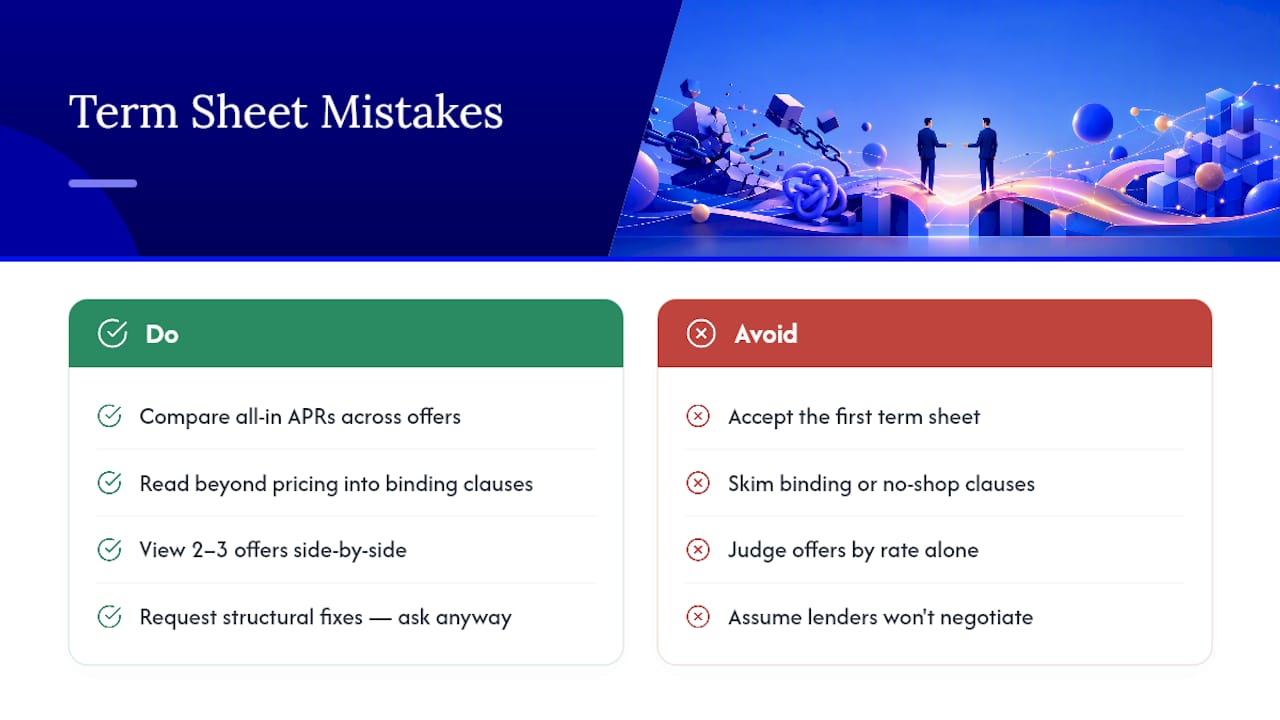
The most common mistake is accepting the first term sheet that lands, without running an all-in APR comparison or reading past the pricing grid into the binding clauses. Brokers who've closed a hundred deals still get caught by a no-shop clause they skimmed past because the rate looked good.
Standardized term-sheet views change that dynamic. When you can pull up two or three offers side by side, with the same fields in the same order, the gaps that matter jump out immediately instead of hiding in different formatting from different lenders. That's the practical value behind BrokersConnect's lender matching and pipeline tracking: it doesn't negotiate for you, but it removes the friction that keeps brokers from comparing enough offers to negotiate well in the first place.
Lenders push back less often than brokers expect, especially on structural asks like cure periods or carve-out narrowing. Most of that pushback is habit, not policy. Ask anyway.
— Theron
Get More Term Sheets to Compare, Faster
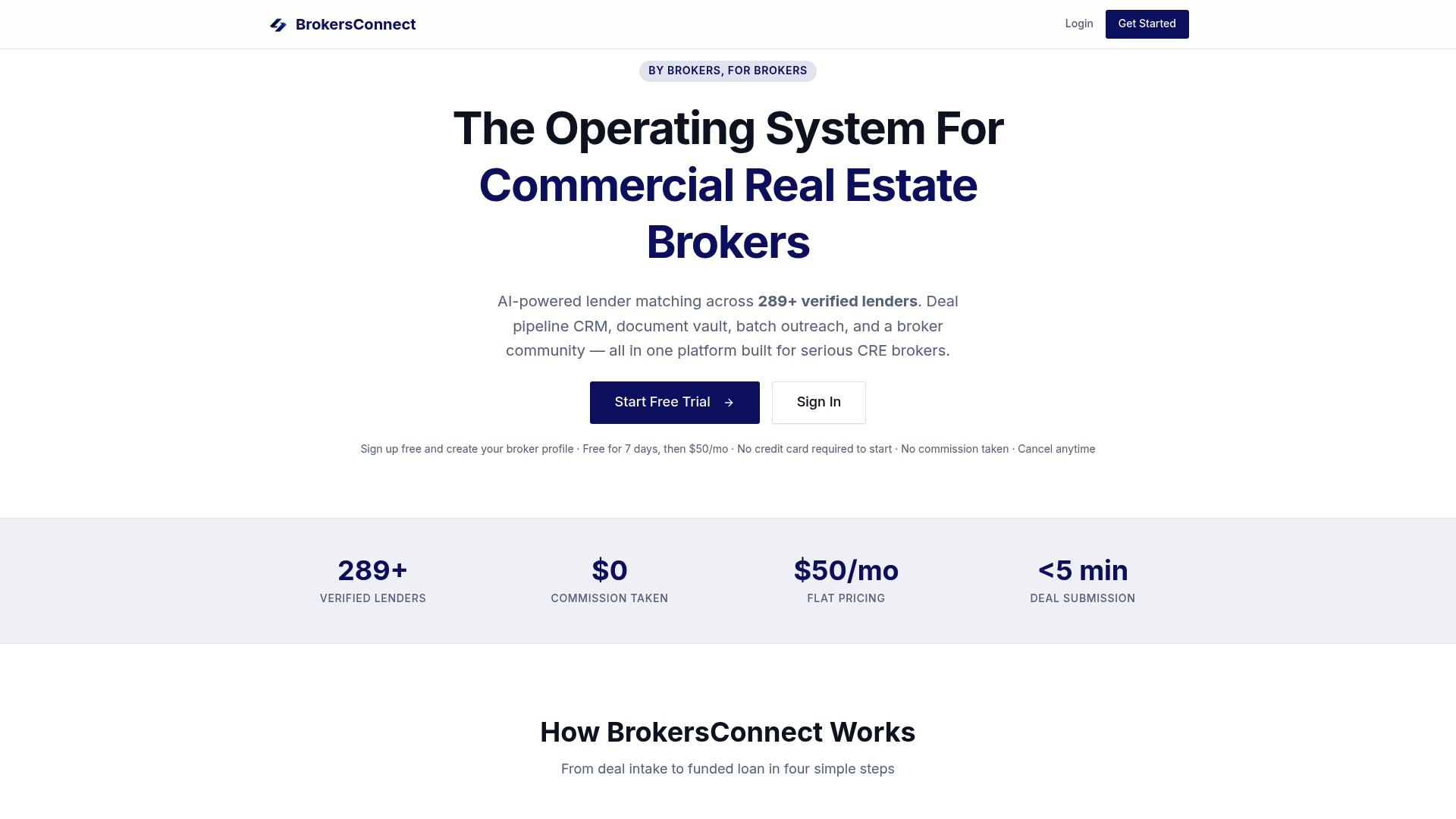
The hardest part of loan term sheet negotiation isn't knowing what to ask for. It's getting enough competing offers on the table to have real leverage when you ask. Thecrebrokersconnect gives brokers a faster path to that leverage: instead of cold-calling lender lists to build a comparison set, you get matched against a database of 289+ verified lenders based on property type, loan amount, and deal structure, so you can solicit multiple term sheets in the time it used to take to find one.
Once you have offers in hand, the platform helps you keep the comparison honest:
- Lender matching that surfaces capital sources actually likely to fund your deal type.
- A pipeline CRM to track every lender conversation and term sheet version in one place.
- Deal templates and packaging tools to submit consistent, comparable requests to every lender at once.
- A lender responsiveness leaderboard so you know which capital sources actually answer.
If you're negotiating a live deal right now, start a free trial at Thecrebrokersconnect and get your next batch of term sheets moving today.
Where to Learn More
The Investopedia explainer on term sheets breaks down the standard financial line items you'll see across most commercial debt term sheets. For a deeper look at which clauses to flag as red flags before signing, CapitalXO's guide to reading loan term sheets walks through binding versus non-binding provisions in detail.
If you're preparing your next submission, Thecrebrokersconnect's guide on loan covenants explains how to model DSCR and LTV thresholds before you negotiate them, and the loan document checklist covers what to have ready once diligence begins. Brokers comparing lenders on a live deal may also find the deal memo examples useful for standardizing submissions across multiple capital sources. On the operational side, Milwaukee Property Management is a useful resource for the property-level questions lenders raise during diligence on income-producing assets.
Sources
- Term sheet — Wikipedia
- Term sheet — Investopedia
- How to Read a Loan Term Sheet (Key Terms & Red Flags) — CapitalXO
- Negotiating your term sheet: 7 terms worth fighting for — LenderAve