
The six highest-impact moves in commercial loan broker marketing right now are: (1) lock in a specific niche and a one-sentence pitch, (2) build a lender-ready one-page deal packet, (3) run a 30-day targeted LinkedIn outreach sprint, (4) launch a six-email welcome and nurture sequence, (5) systematize submissions inside a CRM, and (6) host a quarterly referral workshop for agents and investors. The first two you can start today.
Do these before anything else:
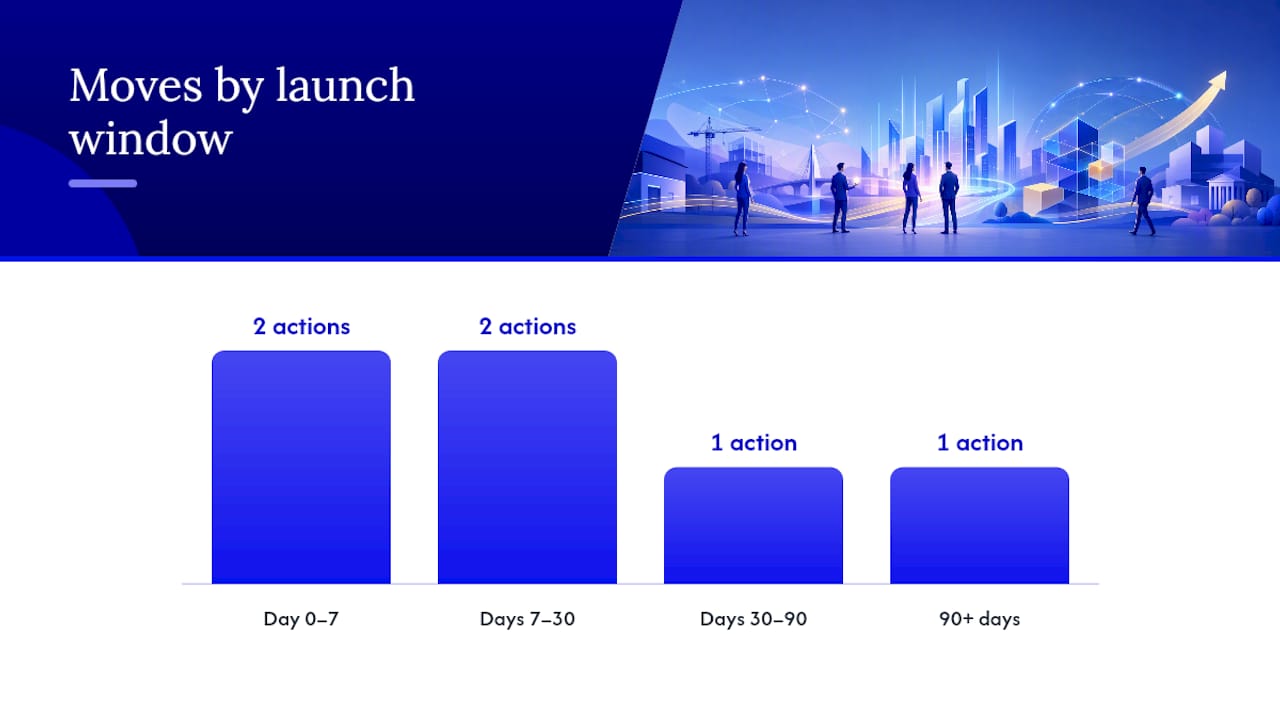
- Nail your niche and pitch (Day 0–7) — Rewrite your LinkedIn headline to name exactly who you serve and what loan types you close. One sentence, no jargon.
- Build a one-page deal packet (Day 0–7) — Create a clean template: borrower summary, property details, loan request, and exit strategy. Lenders will review it in under three minutes.
- Launch LinkedIn outreach (Days 7–30) — Send 10 personalized connection requests per week to commercial real estate agents, investors, and referral partners in your target market.
- Set up an email welcome sequence (Days 14–30) — Six emails, automated, starting the moment a new contact opts in.
- Systematize your pipeline in a CRM (Days 30–90) — Tag every lead by source, stage, and lender match criteria so nothing falls through.
- Run a quarterly referral workshop (90+ days, then recurring) — A 45-minute virtual event for your top referral partners builds trust and generates warm introductions.
Today's two quick wins: Update your LinkedIn headline right now. Then draft one outreach email using the template in Section 3 and send it to three contacts before end of day.
Key Takeaways
Effective commercial loan broker marketing comes down to niche discipline, repeatable outreach, lender-ready packaging, and KPI-driven reviews — executed consistently over 90 days.
| Point | Details |
|---|---|
| Niche first | A focused niche beats generalist positioning for referral credibility and lender fit. |
| Email and SEO lead on ROI | Email returns roughly $36 per $1 and SEO roughly $22 per $1, making both higher priority than paid social. |
| KPI-driven process | Standardizing workflows and tracking KPIs weekly can improve efficiency by 20–30% and accelerate processing by up to fourfold. |
| Lender relationships win deals | Scoring lenders on response time and approval rate, then routing deals accordingly, shortens time-to-term-sheet. |
| Thecrebrokersconnect | The platform operationalizes lender matching, batch submissions, pipeline CRM, and secure docs in one system. |
Table of Contents
- How to define a tight niche that wins referrals
- Network-building playbook: agents, investors, and lenders
- Build a digital marketing stack that generates consistent leads
- How to source deals and manage your pipeline
- How to build lender relationships that shorten "time to yes"
- Systematize the borrower experience from intake to funding
- What KPIs should you track every week?
- Realistic timelines and budgets for common tactics
- How Thecrebrokersconnect operationalizes this playbook
- How to use client testimonials and case studies
- How webinars and educational events attract and nurture leads
- How to design a referral program that actually works
- Social media strategies beyond LinkedIn
- Handling objections during broker-client conversations
- What actually separates growing brokerages from stalled ones
- Thecrebrokersconnect puts the playbook to work
- Sources
How to define a tight niche that wins referrals
A generalist broker competes on price. A niche broker competes on expertise, and expertise wins referrals faster than any ad campaign. Kirkland Lending's practitioner guidance confirms that a focused niche speeds credibility and makes CRM and content investments pay off sooner.
Pick your niche across four dimensions:
- Loan type: bridge loans, DSCR, construction, SBA 504, multifamily
- Geography: a metro, a state, or a specific submarket where you have lender relationships
- Borrower size: deals under $2M, $2M–$10M, or $10M+
- Property type: industrial, mixed-use, retail, self-storage, hospitality
Narrow beats broad every time. A broker who closes bridge loans on value-add multifamily in the Southeast gets referrals from agents, syndicators, and attorneys who work that exact niche. A broker who "does everything" gets calls from people who already have three other brokers working the deal.
Validate your niche before committing:
- At least three active lenders with clear appetite for that loan type and geography
- A referral partner pool you can reach (agents, investors, attorneys, CPAs) within 90 days
- Enough deal flow in that segment to hit your revenue target without relying on outlier transactions
Three pitch snippets to test immediately:
- To a real estate agent: "I close bridge and value-add multifamily loans in the $1M–$5M range. When your investor clients need speed, I can usually get a term sheet in 48 hours."
- To an investor: "I specialize in DSCR and bridge financing for value-add plays. I know which lenders will move fast on your asset type and market."
- To a referral partner or lender: "I package clean, lender-ready submissions for multifamily bridge deals in the Southeast. My borrowers come in pre-qualified and documented."
Network-building playbook: agents, investors, and lenders
Relationships are the distribution channel for commercial lending. The brokers who grow fastest are not the ones with the most contacts — they are the ones who maintain the right contacts at the right frequency.
Tier your relationships
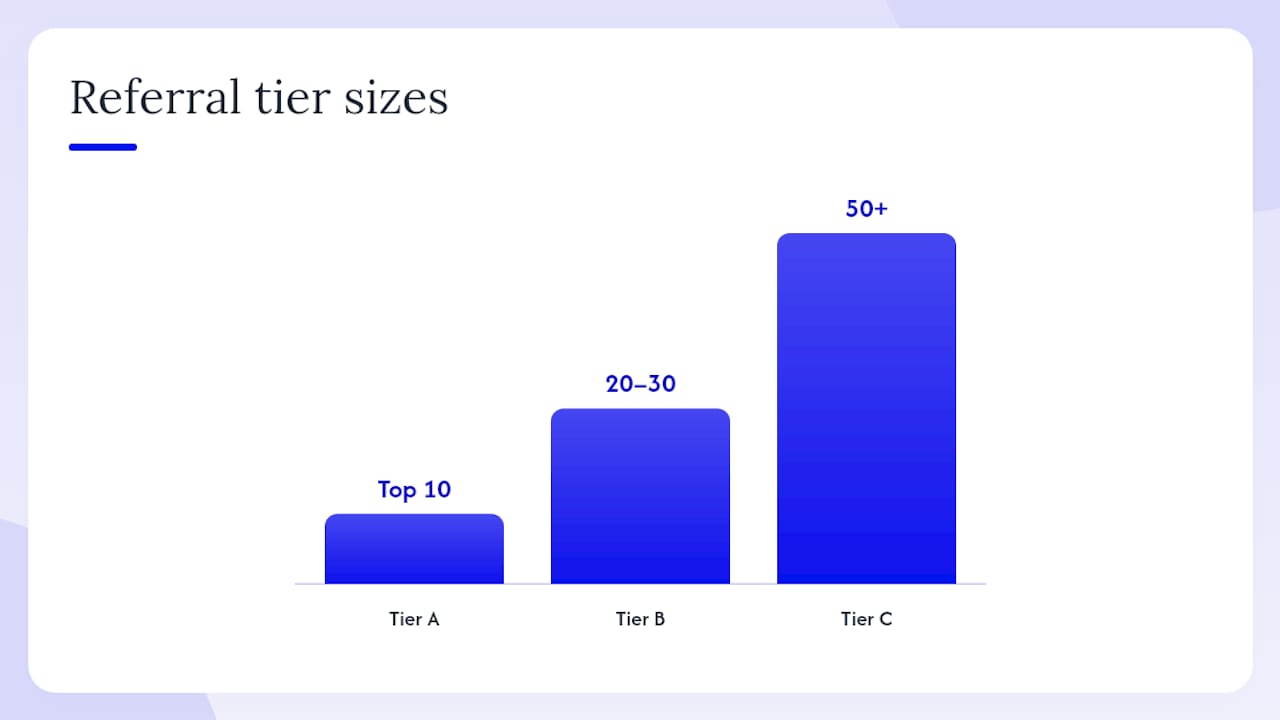
| Tier | Who | Outreach Frequency | Content |
|---|---|---|---|
| A | Top 10 referral partners (active deal flow) | Weekly or biweekly | Market updates, deal wins, personal check-ins |
| B | 20–30 warm contacts (occasional referrals) | Monthly | Newsletter, market insight, event invite |
| C | 50+ cold or dormant contacts | Quarterly | Educational content, workshop invite |
Outreach templates
First outreach (LinkedIn or email): Follow-up (Day 7 if no reply): Value check-in (Day 30): In-person networking checklist:
- Research attendees before the event and identify three people worth a real conversation
- Bring a one-page overview of your niche and recent deal types (not a brochure, a conversation starter)
- Send a LinkedIn connection request within 24 hours of meeting someone, with a personal note referencing the conversation
- Add every new contact to your CRM with source, date, and a follow-up task
Pro Tip: Every handshake is a database entry. After any event, block 15 minutes to log names, notes, and next steps in your CRM before the details fade. A contact you never follow up with is a contact you never had.
Build a digital marketing stack that generates consistent leads
The best commercial loan broker marketing programs run on two or three channels executed well, not six channels executed poorly. Start with LinkedIn and email. Add paid search when you have budget and a tested landing page. Hold off on Meta ads until you have a clear investor or landlord audience to retarget.
Priority channels and what to do on each
LinkedIn is where your referral partners live. Post three times per week: one market insight, one deal type explanation, one short story about a problem you solved for a borrower. Keep posts under 150 words. End with a question or a soft call to action.
Email delivers the strongest channel return of any digital tactic. Business Lending Blueprint reports email returns of roughly $36 per $1 spent, with SEO returning roughly $22 per $1. Referred deals also close at materially higher rates than cold prospects, which is why your email list should be built primarily from referral partner contacts, not cold scraped lists.
A blog post explaining how DSCR loans work for self-storage investors does more for your credibility than a paid ad ever will.
Google Ads work for intent-driven prospects who are actively searching for financing. Orchard Financial Marketing recommends pairing search ads with dedicated landing pages that match the ad message and remove distractions. A generic homepage kills conversion; a page that says exactly what the ad promised does not.
Six-email automated welcome sequence
- Welcome — Who you are, what you specialize in, what they can expect from you
- Education — Explain one concept your niche borrowers always ask about (e.g., how bridge loan sizing works)
- Case example — A deal type you closed, the problem, the solution, the outcome (no client names needed)
- Workshop invite — Invite them to your next quarterly referral event or webinar
- Soft ask — "Do you have a deal I can look at, or know someone who might?"
- Re-engage — Sent 30 days after silence: "Still here if you need me. Here's what's changed in the market."
Channel budget and expected outcomes
| Channel | Monthly Budget (Solo Broker) | Expected Output | Time to Traction |
|---|---|---|---|
| LinkedIn (organic) | $0–$200 (tools/scheduling) | 2–5 warm conversations/month | 60–90 days |
| Email nurture | $50–$150 (ESP) | Ongoing referral activation | 30–60 days |
| Google Ads | $500–$2,000 | 3–10 intent-driven inquiries/month | 14–30 days |
| Content/SEO | $300–$1,000 (writer or time) | Compounding organic traffic | 90+ days |
Invest in content and SEO when you want leads that compound over 12–24 months without ongoing ad spend.
How to source deals and manage your pipeline
Deal sourcing starts before a borrower calls you. Visbanking highlights that data-driven prospecting signals — UCC filings, new equipment purchases, permit activity — let brokers identify financing needs before a formal request arrives. That intelligence, combined with a clean CRM, is how you get to deals before your competitors do.
Essential CRM fields
- Lead source (referral partner name, campaign, or channel)
- Deal stage (inquiry, qualified, submitted, term sheet, closing, funded, dead)
- Property type, loan amount, and geography
- Lender match criteria (LTV, DSCR, loan type, state)
- Submission history (which lenders received the deal, date, response)
- Next follow-up date and owner
Deal qualification matrix
Must-have before spending time:
- Loan amount within your niche range
- Property type you have active lender relationships for
- Borrower has clear exit strategy or repayment source
- Deal is not already placed with another broker
Nice-to-have (increases win probability):
- Clean borrower financials available within 48 hours
- Property in a market where you have at least two lender options
- Referral source with a track record of closeable deals
One-page packet contents
A lender-ready packet that brokers who understand lender appetite produce consistently gets faster responses and higher win rates. Include:
- Borrower summary (entity type, experience, credit profile)
- Property overview (type, location, current occupancy, NOI)
- Loan request (amount, LTV, loan type, term)
- Use of proceeds
- Exit strategy or repayment source
- Three supporting documents attached (rent roll, P&L, appraisal or BPO)
How to build lender relationships that shorten "time to yes"
Most brokers treat lenders transactionally. The ones who close more deals treat lenders like partners, which means understanding their appetite before submitting, not after.
Lender onboarding checklist:
- Document their current appetite: property types, loan sizes, geographies, LTV limits
- Note their preferred communication channel (email, phone, portal)
- Record their documentation standards (what they need in a first submission)
- Ask directly: "What makes you decline a deal in the first 24 hours?"
Lender feedback loop:
After every submission, send a one-line follow-up: "Any initial questions on the [property type] deal in [city]?" After a decline, ask: "What would have made this work?" Log every answer. Over six months, you will have a pattern that tells you exactly how to package deals for each lender.
Pro Tip: Score every lender on two metrics: average response time and approval rate on submitted deals. Route your best deals to lenders with the highest scores. Reserve slower or more selective lenders for deals that fit their niche precisely. This one habit cuts your average time-to-term-sheet significantly.
Systematize the borrower experience from intake to funding
A chaotic client experience costs you referrals even when you close the deal. Borrowers talk. A smooth, predictable process is itself a marketing asset.
Intake form fields:
- Borrower name, entity, and contact info
- Property address, type, and current use
- Loan amount requested and loan purpose
- Current occupancy and NOI (or projected)
- Target close date
- How they heard about you
Client onboarding checklist:
- Send a welcome email within two hours of inquiry with next steps and document request
- Provide a one-page timeline showing milestones from intake to funding
- Set explicit expectations: "Lenders typically respond within 3–7 business days after submission"
- Confirm document receipt and flag any gaps before submitting
One-page client summary (post-consultation):
Send this within 24 hours of your first call. It should cover: what you heard about their deal, the loan type you recommend, two or three lender options you plan to approach, and the next step with a specific date. This single document reduces "where are we?" calls by more than half and signals that you run a professional operation.
Secure document workflows matter here too. Borrowers who upload sensitive financials through a secure portal trust you more than those who email PDFs back and forth.
What KPIs should you track every week?
The brokers who grow fastest are not the ones who work the most hours. They are the ones who know which activities produce funded deals and do more of those.
Priority KPIs
| KPI | What It Tells You | Benchmark to Aim For |
|---|---|---|
| Lead source breakdown | Which channels produce closeable deals | Top 2 sources generate most funded deals |
| Conversion rate by source | Where to invest more | Referral > 30%, cold outreach < 10% |
| Time-to-close | Pipeline health and lender efficiency | 45–90 days for most CRE loan types |
| Win rate (submitted vs. funded) | Submission quality and lender fit | 25% for a well-matched pipeline |
| Revenue per funded deal | Margin health | Varies by deal size; track trend, not just total |
| Lender response time | Lender relationship quality | First response within 48 hours |
Monthly review checklist
- Which lead source produced the most funded deals this month?
- Where did deals stall (qualification, submission, lender, closing)?
- Which lenders responded fastest and approved most?
- What is your current pipeline value vs. last month?
- Which marketing activity produced the most new contacts?
BCG research on corporate lending shows that combining process standardization, technology integration, and KPI-driven production steering can improve process quality and efficiency by roughly 20–30% and accelerate processing times by two- to fourfold. That is not a technology argument — it is a discipline argument. Brokers who review KPIs weekly and adjust accordingly outperform those who review quarterly.
Realistic timelines and budgets for common tactics
| Milestone | Priority Actions | What Success Looks Like |
|---|---|---|
| 30 days | Niche defined, LinkedIn profile updated, one-page packet built, email sequence live | First 3–5 warm conversations from outreach |
| 90 days | CRM populated, 30+ referral contacts in nurture, Google Ads test running | 2–4 qualified inquiries per month, one submission |
| 90 days | Referral workshop completed, content/SEO producing traffic, lender relationships documented | 5–10 qualified leads per month, 2–3 funded deals |
Typical budget ranges (solo broker):
- Website refresh: $500–$3,000 one-time
- CRM subscription: $50–$200/month
- Email service provider: $30–$150/month
- Google Ads: $500–$2,000/month to test; scale after 5%+ landing page conversion
- Content creation: $300–$1,000/month (freelance writer or your own time)
A solo broker who invests $1,000–$2,500/month across CRM, email, and selective paid search can expect meaningful lead flow improvements within 90 days, assuming the niche is defined and the outreach cadence is consistent.
How Thecrebrokersconnect operationalizes this playbook
The workflow that takes the longest to build manually is the one from lead qualification to lender response. Most brokers spend hours searching lender lists, formatting submissions, and chasing responses. A purpose-built platform compresses that cycle.
Thecrebrokersconnect maps directly to the playbook steps above:
- Lender matching: AI-powered matching against 289+ verified lenders by property type, loan amount, geography, LTV, and loan purpose
- Batch outreach: Submit a deal scenario to multiple lenders simultaneously instead of one at a time
- Submission templates: Pre-built deal packaging templates that produce lender-ready packets fast
- Pipeline CRM: Track every deal by stage, lender, and submission history in one place
- Secure document vault: Borrowers upload documents once; lenders access them through a secure channel
Sample workflow:
- Qualify the lead using your intake form and deal matrix
- Build the one-page packet using a submission template
- Run AI lender matching to identify the best-fit lenders from the verified database
- Batch submit to three to five lenders simultaneously
- Track responses in the pipeline CRM and follow up using the lender feedback loop
AI underwriting tools integrated into this workflow improve targeting precision and reduce the time spent on deals that are unlikely to close.
Pro Tip: Evaluate any platform on two metrics before subscribing: how fast does it surface a lender match, and how clean is the submission output? Those two factors determine whether the tool saves you time or adds steps.
How to use client testimonials and case studies
The most credible marketing asset a commercial loan broker has is a closed deal with a happy borrower. Most brokers never capture it.
After every funded deal, send a two-question email: "What was the biggest challenge you faced getting this deal financed?" and "What would you tell another investor about working with me?" Those two answers, with permission, become a case study. You do not need a polished PDF. A LinkedIn post with the deal type, the challenge, and the outcome in three sentences outperforms any brochure.
For case studies, structure them around the problem-solution-outcome frame: what the borrower needed, why it was difficult, and how you got it closed. Specific details (loan amount range, property type, timeline) make them credible. Vague summaries do not.
Display testimonials on your website's homepage and on your LinkedIn profile's Featured section. Rotate them quarterly so returning visitors see fresh social proof.
How webinars and educational events attract and nurture leads
A 45-minute webinar positions you as the expert in the room without a single cold call. The format works because it attracts people who already have a problem you solve.
Pick one topic per quarter that your niche borrowers or referral partners genuinely want answered: "How bridge loans work for value-add multifamily," "What lenders look for in a DSCR submission," or "How to get a construction loan approved in 2026." Promote it to your email list, your LinkedIn connections, and your referral partner network two weeks in advance.
During the webinar, spend 35 minutes on education and 10 minutes on Q&A. Never pitch in the first 40 minutes. At the end, offer a free 20-minute deal review call for anyone who wants to discuss their specific situation. That call is where deals start.
Record every session and repurpose it: a blog post, three LinkedIn clips, and an email to the contacts who registered but did not attend.
How to design a referral program that actually works
Most referral programs fail because the incentive is vague and the ask is awkward. Fix both.
Structure the program clearly:
- Define who qualifies (agents, investors, attorneys, CPAs, financial advisors)
- State the reward explicitly: a flat fee per funded deal, a percentage of your commission, or a reciprocal referral agreement
- Put it in writing, even a one-page email summary, so partners know exactly what they signed up for
Make the ask easy:
Give every referral partner a one-sentence script: "I know a commercial loan broker who specializes in [your niche]. Want me to connect you?" That is all they need. The easier you make the referral, the more often it happens.
Motivate with recognition, not just money. A quarterly email to your top referral partners naming them publicly (with permission) and thanking them for their introductions costs nothing and builds loyalty. People refer to people who appreciate them.
Social media strategies beyond LinkedIn
LinkedIn is the primary channel for broker-to-partner relationships, but it is not the only one worth your time.
BiggerPockets is the largest real estate investor community in the United States. Brokers who answer financing questions in the forums consistently and without pitching build a reputation that generates inbound inquiries. One well-answered thread on "how to finance a value-add apartment deal" can drive more qualified contacts than a month of LinkedIn posts.
Facebook Groups for local real estate investors and landlords are underused by brokers. Find two or three active groups in your target market, join as a contributor, and answer financing questions. Do not post ads. Post answers.
YouTube is the highest-trust content format for complex financial topics. A five-minute video explaining how DSCR loans are underwritten, filmed on a phone with decent lighting, builds more credibility than a written post because viewers can see and hear you. One video per month is enough to establish a presence.
The rule across all platforms: contribute before you promote. Brokers who show up only to pitch get ignored. Brokers who show up to help get referrals.
Handling objections during broker-client conversations
The two objections you will hear most often are "your rate is too high" and "I can go direct to the lender." Both are solvable with the right framing.
"Your rate is too high" is almost always a value question, not a price question. The answer is not to lower your fee. It is to make the value visible: "I'm going to save you 20–40 hours of lender research, package your deal so it gets reviewed in the first round, and give you access to lenders you can't reach directly. The fee pays for itself if I close this deal 30 days faster than you would on your own."
"I can go direct to the lender" deserves a direct response: "You can, and some lenders will take direct borrower calls. But most institutional lenders prioritize broker submissions because they come pre-packaged and pre-qualified. Going direct often means a longer review cycle and less negotiating leverage on terms."
When a borrower pushes back on timeline, resist the urge to overpromise. Give a range, explain what drives the variance, and tell them what they can do to speed things up (clean documents, fast responses, clear exit strategy). Borrowers who understand the process are easier to manage and more likely to refer.
What actually separates growing brokerages from stalled ones
The brokers I watch grow fastest share one habit that has nothing to do with marketing budget: they pick one niche and stay in it long enough to become the obvious choice. Most stalled brokers are not failing because of bad tactics. They are failing because they keep widening their focus every time a deal outside their niche shows up. That deal usually takes three times as long to close, pays less than expected, and distracts from the referral relationships they were building.
The second pattern is speed of packaging. A broker who can produce a clean, lender-ready submission within 24 hours of qualifying a deal wins more often than a broker who takes a week. Lenders notice. Referral partners notice. Borrowers notice.
If you are a solo broker just starting out, pick one tactic from this guide and run it for 60 days before adding another. LinkedIn outreach or a six-email welcome sequence, not both at once. If you are running a small team, systematize submissions first. The CRM and packet template pay dividends on every deal that follows.
Thecrebrokersconnect puts the playbook to work
Brokers who follow this guide will still spend hours on the parts that do not scale: searching lender lists, formatting submissions, and tracking responses across email threads. Thecrebrokersconnect is built to handle exactly those steps.
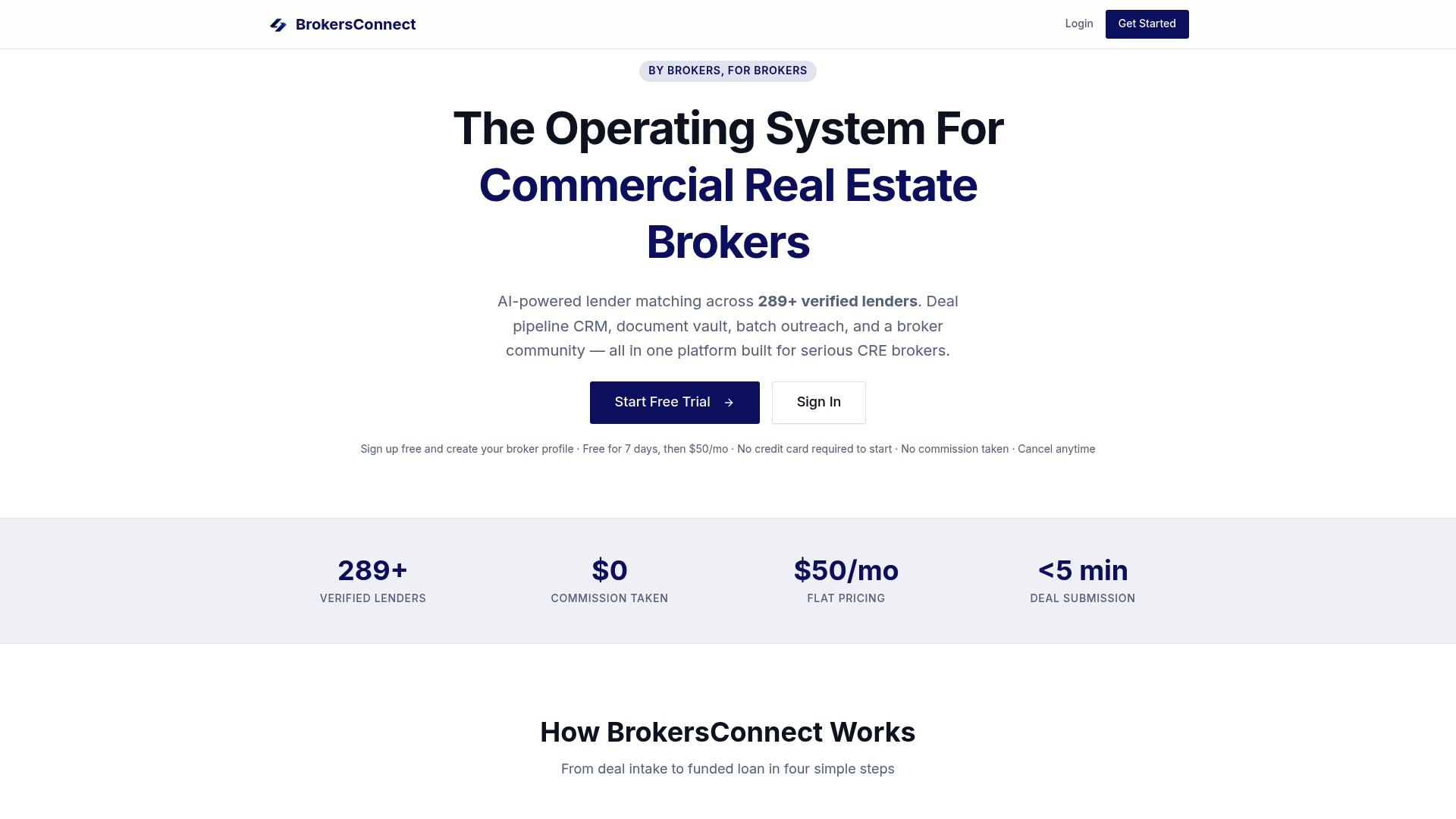
The platform gives you AI-powered matching across 289+ verified lenders, batch submission to multiple lenders at once, pre-built deal packaging templates, a pipeline CRM to track every deal and lender conversation, and a secure document vault that keeps borrower files organized and shareable. Every feature maps to a step in the playbook above. Instead of building these workflows from scratch, you start with a system that is already configured for commercial real estate deal flow.
Start a free trial at Thecrebrokersconnect and run your next deal through the platform. Evaluate it on one metric: how fast does it get you to a lender response?
Sources
- Strategies for smarter corporate lending
- Marketing to Small Business Owners: A Broker's Playbook
- Digital marketing for Mortgage Brokers - Orchard Financial Marketing
- Effective Networking & Marketing Strategies for Commercial Loan Brokers