
AI underwriting in commercial real estate automates the extraction of rent rolls, T-12 operating statements, and offering memoranda into structured, editable DCF models that calculate IRR, equity multiple, cash-on-cash return, NPV, and DSCR in minutes rather than days. The immediate next step for any acquisitions team: run a controlled pilot on two or three live deals using a source-backed platform that provides click-to-source audit trails, and require SOC2 certification before any vendor touches your deal documents. Platforms like Thecrebrokersconnect are built around exactly this workflow, connecting AI-enabled underwriting to lender matching, pipeline CRM, and a secure document vault so outputs move directly into capital placement.
What changes most is not the math. It is the time. Teams that have shifted to automated real estate underwriting report analysts moving from mostly manual data entry to scenario testing and lender engagement, with deal throughput increasing 3–5x as a result. The catch is that none of those gains hold if the platform cannot show an investment committee exactly which rent-roll row produced a given NOI figure. Explainability is the prerequisite, not a nice feature.
- What AI underwriting does: Parses unstructured deal documents into structured models with core investment metrics calculated automatically.
- What to pilot first: Upload two live deals, verify click-to-source traceability on every pro forma line, and export to Excel before committing to a subscription.
- Security floor: SOC2 Type II certification and role-based access controls are the minimum bar for any platform handling deal documents.
Table of Contents
- What a credible AI underwriting platform must actually deliver
- Tangible benefits and realistic ROI expectations
- Key risks and how to avoid the common failure modes
- Six criteria to evaluate AI underwriting platforms before you sign
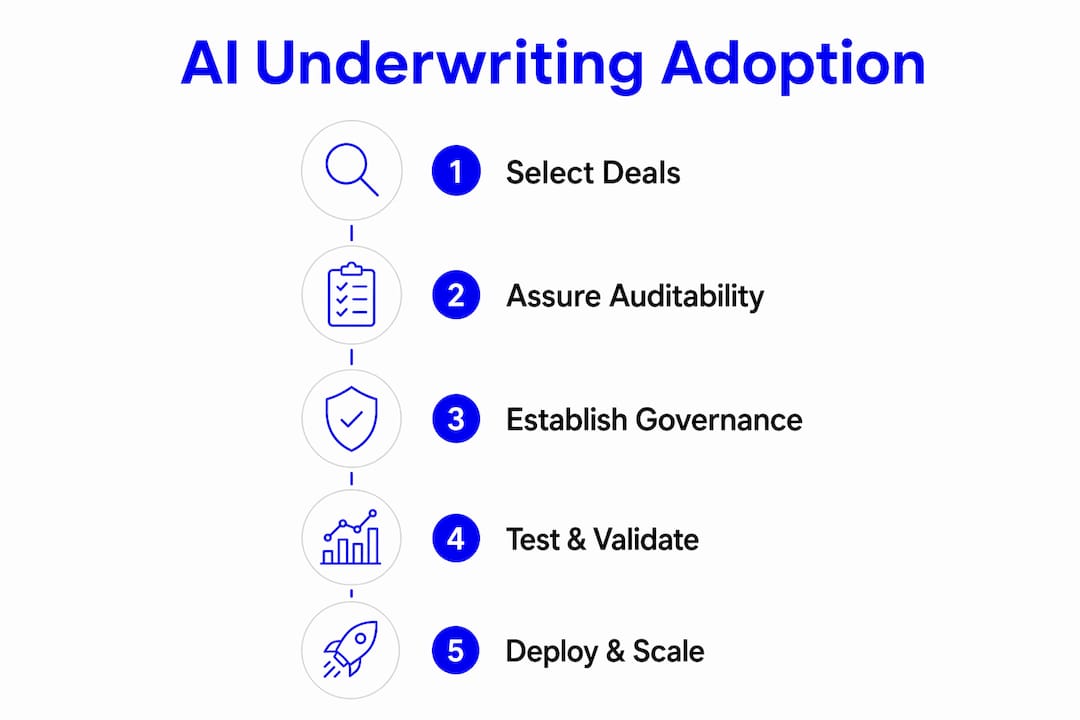
- A 6–12 week pilot and adoption checklist
- When AI underwriting is not the right tool
- How Thecrebrokersconnect supports AI-enabled underwriting workflows
- The recommendation for CRE finance teams
- Key Takeaways
- The analyst role shift nobody talks about enough
- Thecrebrokersconnect gives brokers a faster path from underwriting to funded deals
- Useful sources and further reading
What a credible AI underwriting platform must actually deliver
The marketing language around AI in property evaluation is thick with vague claims. What separates a defensible platform from a chat wrapper dressed in a spreadsheet skin comes down to six specific capabilities.
Document intelligence with confidence scoring
A credible engine parses rent rolls, T-12s, lease abstracts, PDFs, scanned images, and OMs into structured data and assigns confidence scores to each extracted value. That score tells a reviewer which cells need human verification before the model runs. Without it, you are trusting extraction you cannot see.
Connected workspace and model population
The AI assistant must be grounded in the actual deal model and documents. Grounding outputs to source evidence prevents hallucinations by forcing the system to tie every calculation to a named file and line item rather than generating plausible-sounding numbers from general training data. One editable DCF or pro forma stays linked to the source documents throughout the workflow.

Scenario analysis and waterfall modeling
Multi-scenario sensitivities, LP/GP waterfall distributions, and lender-ready outputs are table stakes for acquisitions teams. The platform should let you toggle vacancy, rent growth, and exit cap assumptions and see the IRR and equity multiple update in real time, with every changed assumption logged.
Data lineage and auditability
Every pro forma cell must trace back to a named document and exact line item. Edit history and override tracking are not optional. Investment committees and lenders increasingly require this chain of custody before accepting AI-generated outputs, and platforms that expose the source trail move through committee review faster.
Integrations and API support
Excel and Argus interoperability, CRM connectors, document vault integration, and batch lender submission capability determine whether underwriting outputs are immediately usable or require manual re-entry. A platform that produces a great model but cannot push it to your lender pipeline has cut the workflow in half and left the harder half untouched.
Security and compliance
SOC2 Type II certification, AES-256 encryption at rest and in transit, and role-based access controls are the baseline. Secure document vaulting matters particularly for deals involving sensitive tenant financials or confidential OMs.
| Capability | What to look for | Practical test |
|---|---|---|
| Document extraction | Confidence scores per field, multi-format support | Upload a scanned rent roll; check extraction accuracy |
| Model population | Auto-populated DCF linked to source docs | Verify IRR traces to specific rent-roll rows |
| Scenario analysis | Multi-variable sensitivity tables, waterfall modeling | Toggle exit cap 50bps; confirm IRR updates and logs change |
| Auditability | Click-to-source on every pro forma cell | Click NOI; confirm it opens the T-12 line that produced it |
| Integrations | Excel export, CRM push, batch lender submission | Export model to Excel; check formula integrity |
| Security | SOC2 Type II, encryption, role-based access | Request SOC2 report; test permission tiers |
Pro Tip: Ask every vendor for a live demo where you upload your own document, not their sample file. Extraction accuracy on a real, messy rent roll tells you more than any polished demo deck.
Tangible benefits and realistic ROI expectations
The productivity case for machine learning real estate financing is real, but the numbers depend heavily on current workflow maturity. Here is how to think about it honestly.
Time savings: from weeks to hours
A manual underwriting cycle for a mid-size multifamily deal typically runs 10–15 business days when you account for document collection, model build, internal review, and lender packaging. AI-assisted extraction and model population can compress the initial model build to a few hours. The review and scenario-testing phase still requires analyst time, but that time is spent on judgment rather than data entry.

Throughput and headcount efficiency
Teams adopting AI underwriting consistently report 3–5x increases in deal throughput without adding headcount. A team that previously underwrote a moderate number of deals per month can realistically target 3–5 times as many deals in the same period once the platform is configured and analysts are trained. That shift changes the economics of a brokerage or acquisitions desk materially.
Rough pilot ROI calculation: If one analyst spends substantial hours per deal manually and the platform reduces that considerably, you recover significant analyst hours per deal, resulting in meaningful cost savings per deal. At 10 deals per month, the monthly savings exceed most enterprise SaaS subscription costs by a wide margin.
Accuracy and human-in-loop validation
Accuracy improves with tool training and firm-specific templates. Advanced ML models trained on large CRE document sets provide confidence scoring and side-by-side verification interfaces so reviewers can spot and correct extraction errors before they propagate into the model. Error rates fall as the platform learns your document formats and your firm's standard assumptions.
- Reduced manual entry errors from transcription mistakes
- Standardized outputs that match firm templates across all analysts
- Faster lender memo turnaround because the model is already formatted for submission
- Increased deal throughput without proportional headcount growth
- Confidence scoring that surfaces which cells need human review
Key risks and how to avoid the common failure modes
AI underwriting fails in predictable ways. Knowing them in advance is the difference between a successful pilot and a committee that never trusts the outputs again.
Hallucinations and black-box outputs
A generic large language model asked to underwrite a deal will produce confident-sounding numbers with no traceable source. Industry-specific, domain-trained engines are required to interpret trailing versus pro forma cap rates, debt-service coverage logic, and lease-term nuances correctly. A general-purpose chat interface is not a substitute. The mitigation is straightforward: require click-to-source traceability on every output before the platform touches a live deal.
Poor source data quality
Garbage in, garbage out applies here more than anywhere. Incomplete rent rolls, missing T-12 months, or inconsistent tenant naming across documents produce extraction errors that compound through the model. Run a data quality audit on your sample deals before the pilot begins.
Mis-mapped lease or tenant rows
Lease abstracts with non-standard formats, multiple amendment pages, or handwritten annotations are where extraction accuracy drops. Platforms with confidence scoring flag these rows for human review. Platforms without it pass errors silently into the model.
Vendor lock-in and data portability
Proprietary model formats that cannot export cleanly to Excel or Argus create dependency. Require a data portability clause in any contract and test the export before signing.
Lender mistrust of opaque outputs
Lenders and investment committees are increasingly skeptical of AI-generated pro formas that cannot be traced. Explainability and auditability are the direct answer: a one-page memo showing the audit trail from pro forma to source document resolves most lender objections before they become deal delays.
Regulatory and record retention
U.S. lenders operating under federal guidelines may require documented audit trails for underwriting assumptions; maintain source documents and model versions for the retention period your counsel specifies.
Pro Tip: Before your pilot goes live, run the platform against two or three closed historical deals where you already know the correct outputs. Compare the AI model to your final approved model line by line. That backtest tells you exactly where the platform needs human-in-loop checkpoints.
Six criteria to evaluate AI underwriting platforms before you sign
Vendor selection is where most teams make the mistake of prioritizing a polished UX over the capabilities that actually matter in front of a lender or committee.
1. Auditability and source tracing
The single most important criterion. Every pro forma cell must link back to a named source document and specific line item. Test this in the demo: click a NOI figure and confirm it opens the exact T-12 row that produced it. Platforms that cannot do this in a live demo will not do it in production.
2. Model transparency and domain specialization
The platform must understand CRE-specific logic: trailing versus pro forma NOI, debt-service coverage, waterfall distributions, and asset-class-specific vacancy conventions. Treating AI as a generic chat wrapper is the most expensive mistake acquisitions teams make in vendor selection.
3. Integrations and API support
Confirm Excel export with formula integrity, Argus compatibility if your firm uses it, CRM push capability, and batch lender submission. A platform that requires manual re-entry between underwriting and lender outreach has not solved the workflow problem.
4. Data security and compliance
Request the SOC2 Type II report, not just a checkbox on a sales deck. Confirm encryption standards, role-based access controls, and how the vendor handles document deletion requests.
5. Validation and backtest methodology
Ask how the vendor tested extraction accuracy and on what document corpus. Platforms that have run backtests against large CRE document sets and can share accuracy metrics by document type are meaningfully more trustworthy than those that cannot.
6. Pricing and support model
Understand whether pricing is seat-based, deal-based, or volume-tiered. Hidden integration costs (API connectors, custom template configuration, onboarding) often add 30–50% to the headline price. Require a full cost-of-ownership estimate before the pilot ends.
Suggested pilot RFP test tasks (1–3 minutes each):
- Upload a real rent roll and verify extraction accuracy against the source
- Click a pro forma cell and confirm click-to-source opens the correct document row
- Run a scenario update (change exit cap 50bps) and confirm the model updates and logs the change
- Export the model to Excel and verify formula integrity
- Submit a batch lender outreach from within the platform
Scoring rubric (acquisitions teams): Weight auditability at 30%, integrations at 25%, domain specialization at 20%, security at 15%, and pricing at 10%. Lender-facing teams should weight auditability higher, at 40%, and reduce the pricing weight accordingly.
A 6–12 week pilot and adoption checklist
A controlled pilot with defined acceptance criteria is the only way to know whether a platform will hold up under real deal pressure.
Week-by-week timeline
- Weeks 1–2 (Intake and scoping): Select two to three live deals representing your most common asset classes. Identify the analyst team and a senior reviewer who will sign off on acceptance criteria. Document your current underwriting cycle time as the baseline.
- Weeks 3–4 (Data mapping and configuration): Map your standard rent roll, T-12, and OM formats to the platform's extraction schema. Configure firm-specific templates including vacancy methodology, reserve assumptions, and waterfall hurdles. This step determines institutional consistency across all analysts.
- Weeks 5–6 (Model configuration and training): Run the platform on your pilot deals. Train analysts on the reviewer interface, confidence score interpretation, and override protocols. Establish the human-in-loop checkpoints where analyst sign-off is required before the model advances.
- Weeks 7–9 (Validation): Compare AI-generated models against manually built models for the same deals. Measure extraction accuracy by document type, flag systematic errors, and adjust template configuration. Run the backtest protocol from the limitations section.
- Weeks 10–12 (Sign-off and governance): Present results against acceptance criteria to leadership. Designate ongoing reviewers, establish change-control rules for template updates, and document a rollback plan if the platform is retired.
Data preparation checklist
- Sample rent roll with at least 12 months of history and all tenant names standardized
- T-12 operating statement with expense line items matching your firm's standard categories
- OM with property description, rent schedule, and capital expenditure history
- Required metadata: property address, asset class, loan amount, and target hold period
Pilot acceptance criteria
- Extraction accuracy: 95% or higher on structured fields (rent, square footage, lease expiration)
- Audit trail: 100% of pro forma cells traceable to a named source document
- Throughput: initial model build completed in under four hours per deal
- Stakeholder sign-off: senior reviewer and at least one lender contact confirm output format is acceptable
Governance
Designate one analyst as the platform owner responsible for template updates. Require committee approval for any change to firm-level assumptions inside the platform. Maintain a version log of all template changes with dates and approvers.
When AI underwriting is not the right tool
Not every deal belongs in an AI underwriting workflow. Knowing the exceptions saves time and protects deal quality.
- Small, one-off boutique transactions with highly negotiated capital structures where the setup overhead of configuring templates exceeds the time saved on a single deal.
- Complex development pro formas with phased construction draws, unusual tax credit structures (LIHTC, opportunity zone), or bespoke waterfall arrangements that institutional templates misrepresent. These require custom modeling that AI extraction cannot reliably populate.
- Deals with poor or missing historical data: if the rent roll covers fewer than six months, the T-12 has significant gaps, or tenant financials are unavailable, confidence scores will be low across the board and human modeling is faster and more reliable.
- Transactions requiring strict custom legal or regulatory review where the underwriting assumptions are dictated by counsel or a regulatory body and cannot be standardized. Human-only workflows are appropriate here.
- Highly distressed or special-situation assets where the income approach is secondary to a liquidation or repositioning analysis that falls outside standard DCF templates.
The honest framing: AI underwriting delivers the most value on repeat deal types with consistent document formats. The more bespoke the deal, the more the analyst's judgment needs to lead.
How Thecrebrokersconnect supports AI-enabled underwriting workflows
Thecrebrokersconnect is built as a connected operating system for commercial real estate brokers, and its AI underwriting tools are designed around the evaluation criteria above rather than as standalone features.
The platform's document vault accepts rent rolls, T-12s, OMs, and lease abstracts and feeds them into an AI-assisted underwriting workflow that populates deal models with core metrics including IRR, equity multiple, cash-on-cash return, and DSCR. Every output carries a source trail so reviewers can verify extraction before the model is shared with a lender.
What distinguishes the workflow is the connection between underwriting and capital placement. Linking underwriting to lender matching, CRM, and document vaults reduces the friction between analysis and submission. On Thecrebrokersconnect, a completed model can move directly into batch lender outreach across the platform's database of 289+ verified lenders, filtered by property type, loan amount, leverage, and transaction structure. That connection is where the throughput gains actually materialize.
- Click-to-source audit trail: every pro forma line traces back to the source document row
- Lender matching: AI-powered matching against 289+ verified lenders by deal parameters
- Pipeline CRM: track deal status, lender conversations, and submission history in one place
- Secure document vault: SOC2-aligned storage with role-based access controls
- Batch lender outreach: submit deal packages to multiple lenders simultaneously
Teams piloting the platform typically report initial model builds completing in hours rather than days, with lender outreach initiated in the same session.
The recommendation for CRE finance teams
Run a targeted pilot. That is the short version. The longer version has three parts.
First, select two to three deals that represent your most common asset class and document quality. These should be live deals, not historical ones, so the pilot tests real workflow pressure rather than clean archived files.
Second, require click-to-source auditability from day one. Any platform that cannot demonstrate a traceable link from every pro forma cell to a named source document row should not advance past the demo stage. This is the criterion that determines lender and committee acceptance, and it is the one most vendors obscure in their marketing.
Third, measure against throughput and accuracy KPIs, not just user satisfaction. Define your baseline cycle time before the pilot starts, set a target (initial model build under four hours), and hold the vendor to it.
Three immediate next steps:
- Pick two to three deals for the pilot and assign a senior reviewer to sign off on acceptance criteria
- Allocate a 6–12 week pilot budget covering subscription cost, analyst time for configuration and training, and one senior reviewer session per deal
- Prepare a one-page audit trail memo for at least one pilot deal and share it with a lender contact to test acceptance before the pilot ends
The governance question matters as much as the technology. Designate a platform owner, establish change-control rules for firm-level templates, and document a rollback plan before the pilot goes live.
Key Takeaways
AI underwriting in commercial real estate delivers 3–5x deal throughput gains when deployed on a source-backed platform with click-to-source auditability, firm-level templates, and direct integration into lender matching and pipeline CRM.
| Point | Details |
|---|---|
| Core function | AI extracts rent rolls, T-12s, and OMs into editable DCF models calculating IRR, DSCR, and equity multiple automatically. |
| Throughput gains | Teams consistently report 3–5x deal throughput increases as analysts shift from data entry to scenario testing and lender engagement. |
| Auditability is the prerequisite | Every pro forma cell must trace to a named source document; platforms without click-to-source fail lender and committee review. |
| Pilot timeline | A 6–12 week controlled pilot with defined acceptance criteria (95% extraction accuracy, sub-four-hour model build) is the standard evaluation approach. |
| Thecrebrokersconnect | Connects AI-assisted underwriting to 289+ verified lenders, pipeline CRM, secure document vault, and batch lender outreach in one platform. |
The analyst role shift nobody talks about enough
The conversation about AI underwriting tends to focus on speed and accuracy. Those matter. But the more consequential change is what happens to the analyst's job description, and most firms are not thinking about it carefully enough.
When extraction is automated, the analyst stops being a data-entry operator and starts being an auditor. That sounds like an upgrade, and in many ways it is. But it requires a different skill set: the ability to read a confidence score and know which extraction errors are material, the judgment to override a mis-mapped lease row without introducing a new error, and the discipline to enforce firm-level templates rather than improvising assumptions deal by deal.
The firms that get the most out of AI underwriting are the ones that invest in that transition deliberately. They set firm-level templates before the pilot goes live, not after. They designate a platform owner who owns template governance and trains new analysts on the reviewer interface. They treat the human-in-loop checkpoint not as a formality but as the moment where institutional judgment gets applied.
The firms that struggle are the ones that hand analysts a new tool and assume the workflow will self-organize. It will not. The technology is ready. The governance question is whether your team is.
Pro Tip: Set your firm's vacancy methodology, reserve assumptions, and waterfall hurdles inside the platform before the first deal goes through. Analysts who configure assumptions deal by deal introduce variance that compounds across a portfolio and makes committee review harder, not easier.
Pro Tip: Design your human-in-loop checkpoint at the confidence-score review stage, not at the final model review. Catching extraction errors before they populate the model is faster and less disruptive than correcting a completed pro forma.
Thecrebrokersconnect gives brokers a faster path from underwriting to funded deals
Most brokers spend the most time on the two steps that should be fastest: building the initial model and identifying which lenders will actually look at the deal. Thecrebrokersconnect compresses both.
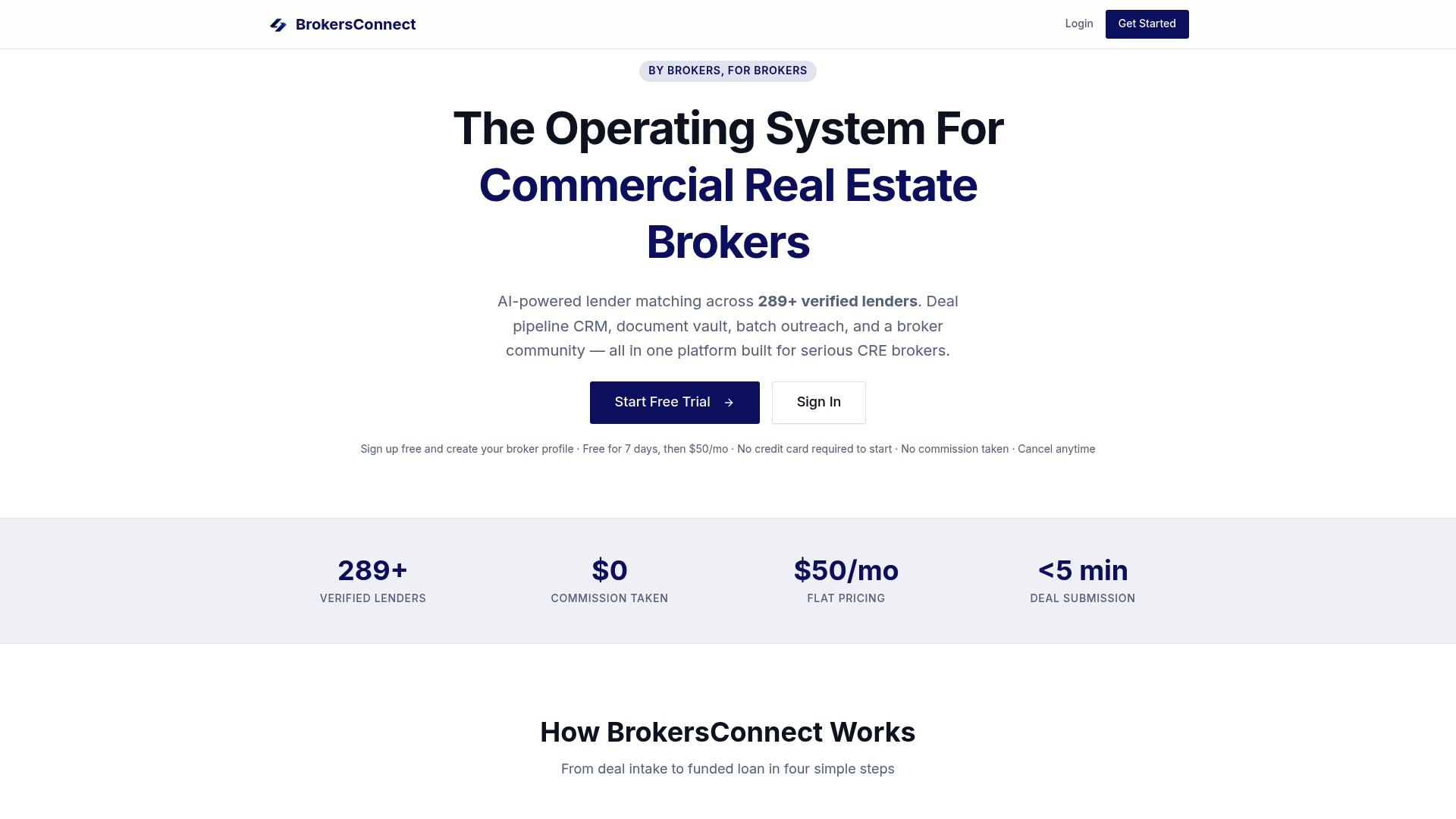
The platform connects AI-assisted underwriting directly to a verified lender database with a large number of sources, filtered by property type, loan amount, leverage, location, and transaction structure. A model built in the morning can reach the right lenders the same afternoon, with batch outreach and pipeline tracking handled inside the same workspace. The secure document vault keeps deal files organized and accessible, and the audit trail built into every model means lender conversations start with credibility rather than back-and-forth on assumptions.
For brokers evaluating whether to pilot AI underwriting, Thecrebrokersconnect offers a free trial period with no commission or transaction fees. The flat monthly subscription covers lender matching, deal pipeline CRM, document vault, batch outreach, and AI deal packaging tools. Start your free trial and run your first two deals through the platform to see the throughput difference firsthand.
Useful sources and further reading
For acquisitions teams and technical evaluators conducting deeper due diligence during a pilot, the following sources informed this guide and are worth reviewing directly.
- AI and ML in Real Estate Underwriting — MIT research on machine learning applications in CRE underwriting; useful for understanding model validation methodology and academic benchmarks.
- CRELYTIC Engine — Technical documentation on document extraction and metric calculation for CRE deal analysis.
- Clik.ai Auto Underwriting — Product documentation on ML-based extraction accuracy, confidence scoring, and reviewer interfaces for CRE and multifamily.
- First Line Software: AI-Accelerated Deal Underwriting — Implementation guidance on firm-level template configuration and institutional consistency.
- DSCR Calculator for Rental Property Cash Flow Analysis — Partner tool for understanding DSCR calculations and lender qualification metrics.
- Commercial loan qualification guidance — Partner resource on lender metrics and loan qualification considerations relevant to AI-underwritten deal submissions.
- Thecrebrokersconnect platform overview — Full feature documentation covering AI-enabled underwriting, lender matching, pipeline CRM, and document vault.
This article is general information for commercial real estate professionals and does not constitute legal, financial, or regulatory advice. Confirm current compliance requirements with qualified counsel for your specific transactions and jurisdiction.