
Clean commercial deals typically close in 30 to 60 days from LOI to close, with pre-qualified bridge loans landing in 21 to 30 days and CMBS running longer once rating agency steps enter the picture. What actually determines where a deal lands on that range isn't loan size or property type. It's document completeness and how fast third-party reports come back. Order your Phase I and appraisal the day the term sheet is signed, reconcile the rent roll against the T-12 before underwriting starts, and confirm who's authorized to sign before anyone asks.
TL;DR:
- Document completeness and timely receipt of third-party reports are the main factors influencing the duration of a deal, not loan size or property type.
- Ordering Phase I and appraisal reports immediately after signing the term sheet and reconciling rent rolls against T-12 can save several days.
- Delays often result from late third-party reports, unresolved title issues, or late discovery of signer authority problems, which should be addressed early.
- Different loan types have distinct typical timelines, with bridge loans closing in 21 to 30 days and CMBS deals taking 60 to 90 days due to additional review layers.
- Using platforms that match lenders to property profiles and maintaining organized, synchronized documents can significantly accelerate closing processes.
Table of Contents
- Mapping the Due Diligence Timeline From LOI to Funding
- What Lenders Are Actually Doing During Due Diligence
- Where Deals Actually Get Stuck (and How to Unstick Them)
- Checklists and Sample Timelines by Loan Type
- Practitioner Notes on Keeping Deals Moving
- Close Faster by Fixing the Two Biggest Time Sinks
- Sources
- FAQ
Mapping the Due Diligence Timeline From LOI to Funding
A due diligence timeline isn't one block of time. It's five phases stacked with different owners, different bottlenecks, and different amounts of flexibility. Understanding where each phase can compress and where it can't is the difference between a broker who manages a closing and one who just watches it happen.
Initial screening takes 1 to 3 days. The lender checks basic fit: property type, loan amount, location, and whether the sponsor profile clears a first look. This phase moves fast because it's mostly a yes/no gate, not analysis.
Preliminary underwriting runs 1 to 2 weeks. The underwriter builds a working model off the rent roll, T-12, and sponsor financials you've submitted. This is also when smart brokers get third-party reports moving, because ordering long lead items like Phase I, appraisal, and property condition reports during preliminary underwriting rather than waiting for formal approval shaves real time off the back end.
Formal due diligence is the longest stretch: 2 to 6 weeks. Third-party reports come back, title and survey get reviewed, and any red flags from the underwriting model get chased down. This phase is sequential in one critical way: you cannot fund with open title exceptions, so title cure has to finish before closing regardless of how fast everything else moved.
Credit committee typically takes about a week. The underwriter presents a credit memo built to hold up under scrutiny, not just to get a yes.
Documentation and closing runs another 1 to 2 weeks, covering loan document drafting, final conditions, and funding mechanics.
| Phase | Typical duration | Can it overlap with other phases? |
|---|---|---|
| Initial screening | 1 to 3 days | No, this gates everything else |
| Preliminary underwriting | 1 to 2 weeks | Yes, order reports here |
| Formal due diligence | 2 to 6 weeks | Partially, title cure is sequential |
| Credit committee | About 1 week | No |
| Documentation and closing | 1 to 2 weeks | No |
Channel matters more than most brokers assume. A relationship bank or life-company lender that already knows the sponsor can compress this whole sequence hard. CMBS and agency conduit deals add weeks because rating agency review and servicer sign-off get layered on top of standard underwriting. If your borrower needs certainty on a date, the lender channel is often a bigger lever than anything you do operationally.
What Lenders Are Actually Doing During Due Diligence
Every request a lender sends during due diligence traces back to one of four internal workstreams, and knowing which one you're feeding helps you anticipate what's coming next.
- Initial screen and sizing: the underwriter runs a rough LTV and DSCR check against lender appetite, usually within 1 to 3 days of receiving the scenario.
- Underwriting model build: NOI gets normalized, comps get pulled, and the deal gets stress tested against rate and vacancy scenarios. This step sets your loan sizing and most of your conditions.
- Third-party report integration: the appraisal caps your LTV, a Phase I flagging contamination risk can trigger a Phase II, and a PCA finding deferred maintenance can drive up reserve requirements.
- Credit memo and committee prep: the underwriter is building an argument, not just a summary. The OCC's Comptroller's Handbook on commercial real estate lending lays out the underwriting standards, LTV limits, and documentation expectations that shape exactly what goes into that memo.
The underwriting model is where most of the real analytical time gets spent, and it's also where a well-organized submission pays off. An underwriter's credit memo has to survive committee review and hold up in a later audit, so sponsor track record, mitigants for weak spots, and sensitivity analysis all need to be addressable, not just implied.
Pro Tip: Package sponsor financials with a one-page track record summary up front. Underwriters spend less time hunting for context, and that time savings shows up directly in your turnaround.
Where Deals Actually Get Stuck (and How to Unstick Them)
The delays that blow up a due diligence timeline are almost never dramatic. They're small, avoidable, and repeat across nearly every deal that runs long.
- Rent roll and T-12 mismatch. Reconcile these against each other before submission, not after the underwriter flags the gap.
- Late third-party reports. Phase I environmental reports commonly run 15 to 25 business days, so order at LOI signing, not at formal approval.
- Unresolved title exceptions. Pull title early and negotiate cure or insurance workarounds in parallel with underwriting, not after.
- Signer authority problems. Late discovery of signing authority issues is one of the most common causes of last-minute scheduling failures, so collect entity documents and resolutions before they're requested.
- Tenant estoppels and construction completion items. Both have long lead times and depend on third parties outside your control.
Pro Tip: Assign one person as the single owner for every open item on the closing checklist. Diffuse ownership is how a two-day fix turns into a two-week delay.
Checklists and Sample Timelines by Loan Type
Every loan type shares the same core phases, but the documents, third-party reports, and realistic buffers shift depending on the product. Here's how the full loan document checklist tends to break down by channel.
| Loan type | Core documents | Key third-party reports | Realistic total timeline |
|---|---|---|---|
| Bridge (pre-qualified) | Rent roll, T-12, entity docs | Appraisal, Phase I | 21 to 30 days |
| Conventional/multifamily | Rent roll, T-12, sponsor financials, leases | Appraisal, Phase I, PCA | 30 to 45 days |
| Construction | Permit set, budgets, draw schedule, GC contract | Appraisal, Phase I, PCA, plan review | 45 to 75 days |
| CMBS/conduit | Full offering package, rating agency materials | Appraisal, Phase I, PCA, ALTA survey | 60 to 90 days |
Construction deals carry the widest range because permit timing and draw schedule negotiation depend on jurisdictions and general contractor availability that no one at the lending table controls directly. CMBS deals run long not because underwriting itself is slower, but because rating agency review and servicer conditions get added on top of a standard process.
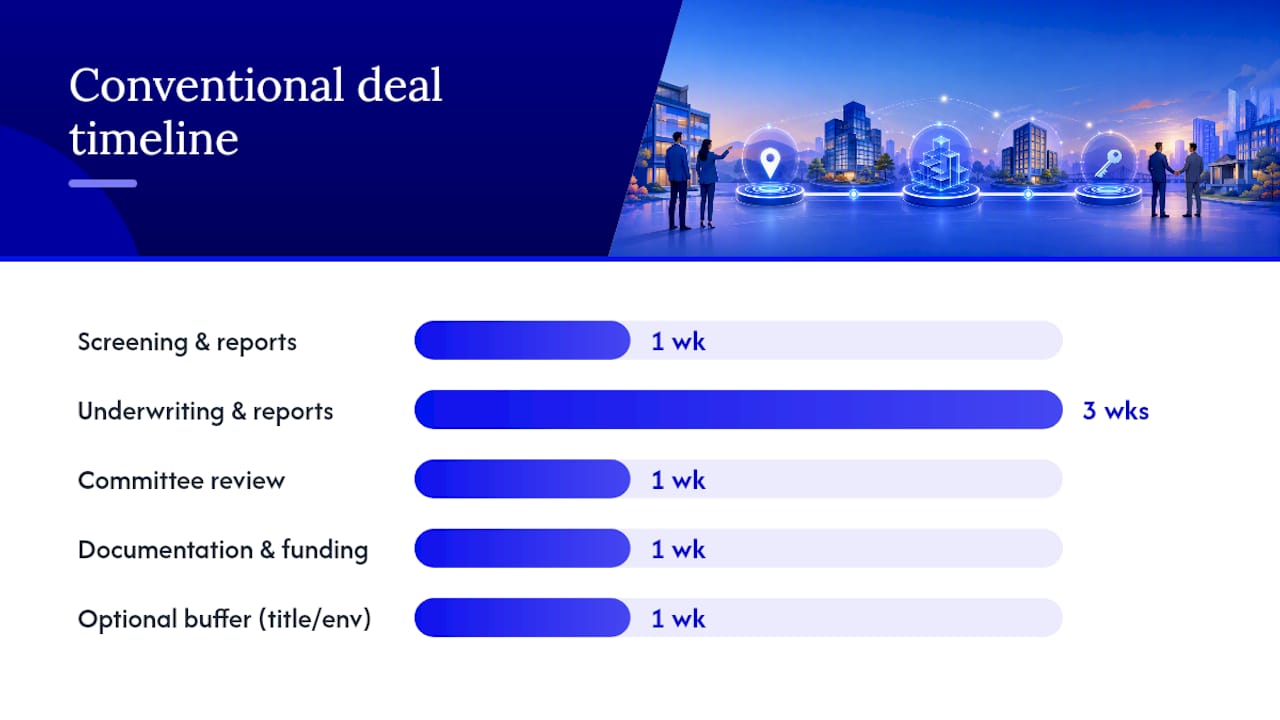
For a clean conventional deal, a realistic week-by-week sketch looks like: week 1 for screening and report ordering, weeks 2 to 4 for underwriting and report turnaround running in parallel, week 5 for committee, and week 6 for documentation and funding. Add a buffer week anywhere title work or environmental follow-up is even remotely likely. Reviewing a practitioner closing checklist before the LOI is signed helps you spot which of these buffers your specific deal will actually need.
Practitioner Notes on Keeping Deals Moving
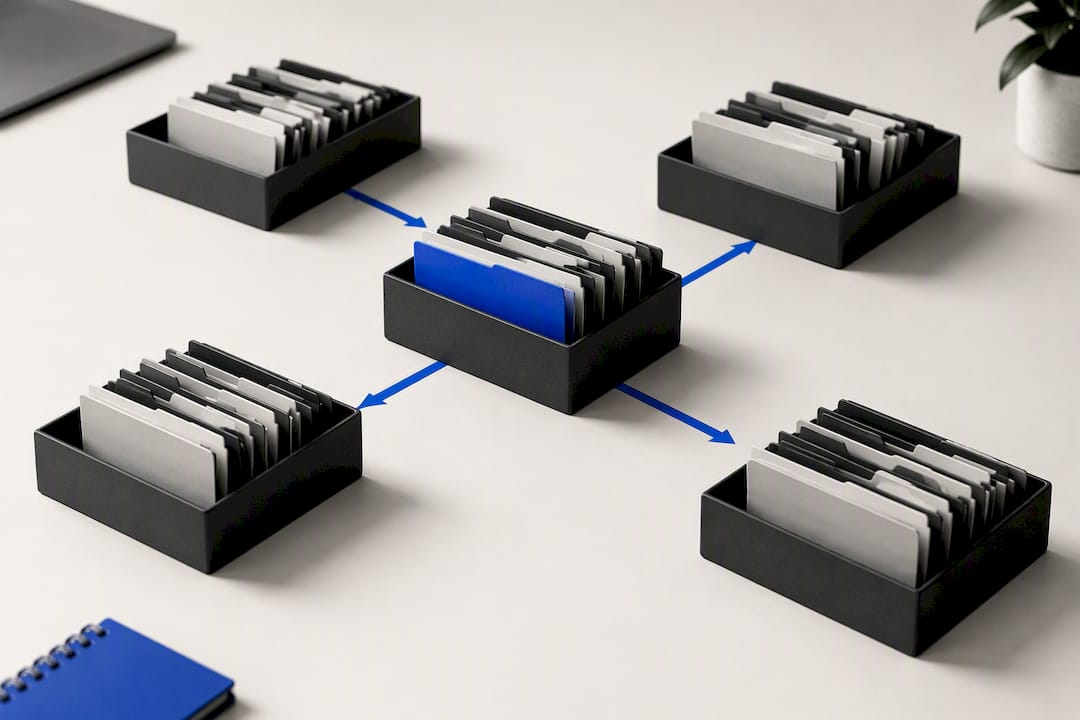
The brokers who consistently close faster aren't smarter underwriters than the ones who don't. They just run tighter operations. A standardized deal room with consistent file naming saves an underwriter real time hunting for documents, and that time savings comes straight back to you as a faster response.
A weekly underwriting sync, even a 15 minute call, keeps small issues from calcifying into deal-killing ones. And assigning a single document owner instead of splitting the checklist across a team stops the redundant lender questions that eat entire days.
Running a deal to 2 or 3 lenders in parallel can sharpen execution, but only if your document versions stay locked. Sloppy parallel submissions create more confusion than they solve, and a strong lender-matching approach narrows that list before you ever submit, rather than after a lender flags mismatched terms.
— Theron
Close Faster by Fixing the Two Biggest Time Sinks
Most of the delay in a due diligence timeline traces back to two things: finding the right lender and keeping documents straight once you have one. BrokersConnect is built to cut both down. Instead of cold-calling lender lists, AI-powered matching surfaces lenders whose appetite actually fits your property type, leverage, and sponsor profile in minutes.
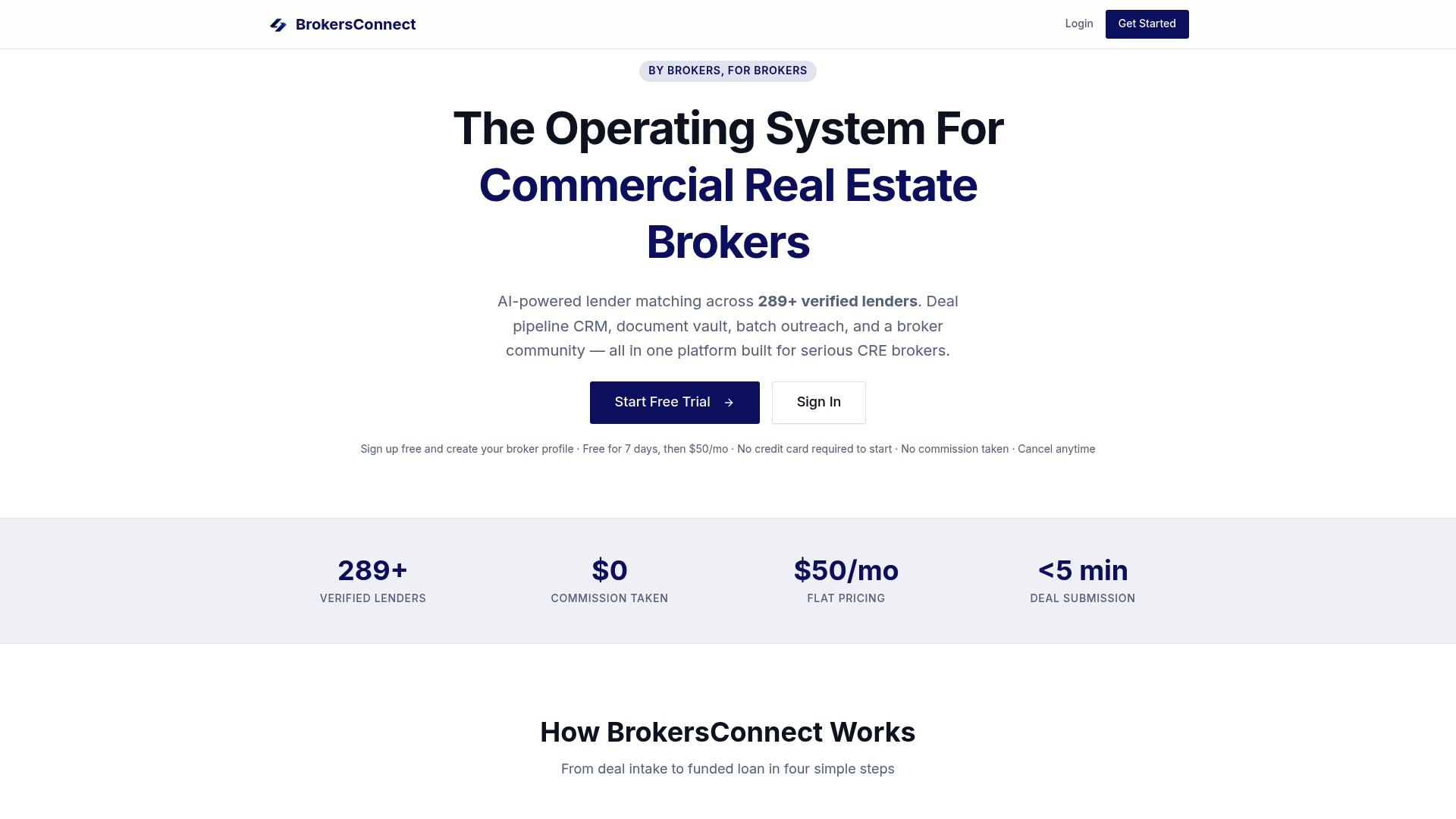
The secure document vault keeps rent rolls, T-12s, and entity documents in one place instead of scattered across email threads, and batch lender outreach lets you submit to multiple matched lenders at once without the version chaos that sinks parallel submissions. Status tracking shows exactly where each conversation stands, so nothing sits unanswered while a deal's clock runs. The platform offers a subscription with a flat monthly fee and a trial period to test it on your next deal. Start your free trial at BrokersConnect and see how much faster your next closing moves.
Sources
For deeper reference, the OCC's Comptroller's Handbook on commercial real estate lending covers underwriting standards in detail, and practitioner guides on closing checklists walk through common closing pitfalls step by step.
- Commercial Real Estate Loan Underwriting: What Lenders Actually Check | Moraine
- Comptroller's Handbook: Commercial Real Estate Lending | OCC
- The Commercial Real Estate Loan Closing Process | Abel RC
- Commercial Loan Closing Process: 7 Proven Steps | Fortra Law
FAQ
How Long Does a Due Diligence Timeline Usually Take?
Clean commercial deals typically run 30 to 60 days from LOI to close, while pre-qualified bridge loans can close in 21 to 30 days. CMBS and other securitized channels usually run longer because of added rating agency steps.
What Causes Most Due Diligence Delays?
Late third-party reports, mismatched rent rolls and T-12s, and unresolved title exceptions cause most delays. Signer authority problems discovered late in the process are another frequent, avoidable cause.
How Long Do Third-Party Reports Take?
Phase I environmental reports commonly take 15 to 25 business days, while appraisals and property condition reports often run several weeks. Ordering these at LOI signing rather than waiting for formal approval keeps them off the critical path.
Does Loan Type Change the Due Diligence Timeline?
Yes. Bridge loans move fastest at 21 to 30 days when pre-qualified, conventional and multifamily deals run 30 to 45 days, construction loans often take 45 to 75 days, and CMBS deals typically need 60 to 90 days.
How Can Brokers Speed Up a Due Diligence Timeline?
Order long-lead reports early, reconcile financial documents before submission, and assign a single owner for every open checklist item. Platforms like BrokersConnect also cut time by matching brokers to lenders whose appetite already fits the deal, instead of relying on cold outreach.