
Track lender feedback by logging every lender response directly in the deal record with a standard feedback template, a defined SLA, and automated reminders. Capture the reviewer's name, response time, and current status on each entry, and let your deal-management platform trigger alerts when a lender goes quiet past the deadline. That single habit turns scattered emails and voicemails into a pipeline you can actually manage.
TL;DR:
- Lenders should respond within 48 to 72 business hours, with automated alerts escalating if they fail to acknowledge or respond within five business days.
- Standardized feedback templates must be completed in real time to accurately log lender contact details, response channel, outcome, and requested documents.
- Separating deal stages into distinct steps like "Application received," "Submitted," and "Offer" with attached SLAs enhances pipeline management and prevents deals from stalling unnoticed.
- Tracking key metrics such as response time, response rate within SLA, and offer rate weekly helps identify slow lenders and optimize your pipeline.
- Using dedicated software that centralizes deal records, automates SLA alerts, and maintains lender messaging history improves efficiency compared to manual spreadsheet tracking.
Table of Contents
- What to Record for Every Lender Interaction
- Pipeline Stages and SLAs: Why "Submitted" Needs Its Own Column
- Follow-Up Cadence That Actually Gets a Reply
- Metrics and Dashboards: Turning Responses Into a Scorecard
- Operational Checklist and Practitioner Workflow
- Why Disciplined Feedback Tracking Changes Broker Economics
- How BrokersConnect Puts This Framework on Autopilot
- Sources
- FAQ
What to Record for Every Lender Interaction
A lender's silence tells you nothing useful unless you know exactly what you asked and when. The fix is a standard feedback template attached to every submission, filled in the moment a lender responds, not reconstructed from memory a week later.
Each entry should capture:
- Lender contact name and title (loan officer, credit analyst, correspondent)
- Date and time of the response, plus the channel (email, phone, portal message)
- Outcome status: reviewing, declined, conditional interest, term sheet issued
- Specific questions the lender asked, verbatim where possible
- Documents requested and the deadline attached to them
- Who owns the next step and by when
Before you even get to that stage, a tight pre-submission package cuts down on the back-and-forth that muddies your log. Industry commercial loan document checklists point to a minimal file that speeds review: a one-page deal summary, trailing 12 or year-to-date financials, a current rent roll, entity formation documents, and appraisal status if one exists. Standardized fields matter because they let you triage at a glance. If three lenders all asked for updated financials this week, that is not three isolated problems. It is a signal your intake package needs an update.
Pro Tip: *Log the exact wording of a lender's question, not your summary of it.
Pipeline Stages and SLAs: Why "Submitted" Needs Its Own Column
Most broken pipelines share one flaw: they treat "we sent the file" and "the lender is actively reviewing it" as the same stage. They are not, and collapsing them is how deals quietly die.
A workable stage structure looks like this:
- Lead — scenario identified, not yet packaged
- Application received — borrower docs collected, file being assembled
- Submitted — file is in a lender's hands and the SLA clock has started
- Offer — term sheet or letter of intent issued
- Funded — closed
- Not now — declined or shelved, with a reason logged
Broker pipeline guidance on CRM deal tracking stages recommends exactly this kind of separation, because a deal sitting in "Submitted" with no lender activity for 10 days is a fundamentally different problem than one still waiting on the borrower for financials.
Attach SLAs to each stage. A reasonable starting point: expect an initial lender acknowledgment within 48 to 72 business hours of submission, with a follow-up trigger at 48 hours if nothing arrives, and an escalation flag at five business days. Automated reminders that reassign an owner or ping a manager when an SLA lapses stop deals from stalling simply because everyone assumed someone else was handling it.
Follow-Up Cadence That Actually Gets a Reply
Chasing a lender with "just checking in" rarely works. Chasing with a specific ask and a deadline usually does.
A cadence that holds up in practice:
- Day 0: Confirmation message the moment you submit, restating the deal summary and flagging the primary contact for questions.
- 48 hours: A short check-in asking whether the file was received and whether anything is missing, with direct links to the documents already sent.
- 5 business days: A firmer follow-up naming a specific outstanding item and a deadline for response, since slow lender communication is one of the top reasons deals stall.
- 7 days with no response: An escalation message, ideally to a second contact at the same shop, or a clear internal decision to re-route.
If a lender misses two SLA windows in a row without explanation, consider routing the deal to a backup lender instead. Preserving momentum matters more than one relationship, and a cold outreach sequence built for lender lists can get a replacement submission moving the same day.
Metrics and Dashboards: Turning Responses Into a Scorecard
Feedback logs only pay off once you convert them into numbers you check weekly. Five metrics do most of the work.
- Median submission-to-response time — how long lenders actually take, not how long they claim
- Response rate within SLA — the share of submissions that get any reply inside your defined window
- Offer rate — offers issued divided by submissions sent
- Time-to-offer — days from submission to term sheet
- Win rate by lender — funded deals divided by offers received
Regulatory guidance for institutions in the Comptroller's Handbook on CRE lending calls for timely internal reporting on lending activity, and the same discipline applies on the broker side: a lender-level dashboard, refreshed weekly, is what turns raw feedback into a working responsiveness leaderboard you can route deals against.
Operational Checklist and Practitioner Workflow
The brokers who close more deals per quarter tend to run a tighter intake process, not a bigger lender list. A few tactics separate disciplined shops from chaotic ones.
- Keep intake and submission as separate steps. Never mark a deal "Submitted" until the package is genuinely lender-ready.
- Run a quick funder-fit check before sending anything. A pre-submission checklist built around leverage, property type, and sponsor profile catches mismatches before a lender does.
- Attach a short handoff note, three or four sentences on the deal thesis and why this lender fits. It cuts down on lenders asking questions the file already answers.
- Batch submissions to two to four targeted lenders with tailored notes rather than blasting a long list. A wide, untailored spray usually produces more noise than offers, since good documentation and communication discipline correlate directly with faster funding.
- Name and organize documents consistently (borrower name, doc type, date) so a reviewer isn't hunting through a folder.
Pro Tip: A well-labeled file with a short handoff note often gets a preliminary read faster than a larger, unlabeled package, simply because the reviewer spends less time figuring out what they're looking at.
Why Disciplined Feedback Tracking Changes Broker Economics
Shaving even a day or two off median response time compounds fast.
The pattern shows up repeatedly in shops that separate "Submitted" from "Application received" and enforce SLAs: fewer deals go cold in the gap, and commissions get steadier because pipeline stalls stop happening invisibly. The metrics in the section above aren't reporting exercises. They're the early-warning system that tells you which lender relationships are worth protecting and which ones are quietly costing you deals.
— Theron
How BrokersConnect Puts This Framework on Autopilot
Building this system yourself in spreadsheets works, until you're managing 15 active submissions and the follow-up dates start slipping. Thecrebrokersconnect was built around exactly the workflow described above: every deal gets a centralized record that holds the feedback template, the full lender messaging history, and the submission stage in one place, so nothing lives in a scattered inbox anymore.
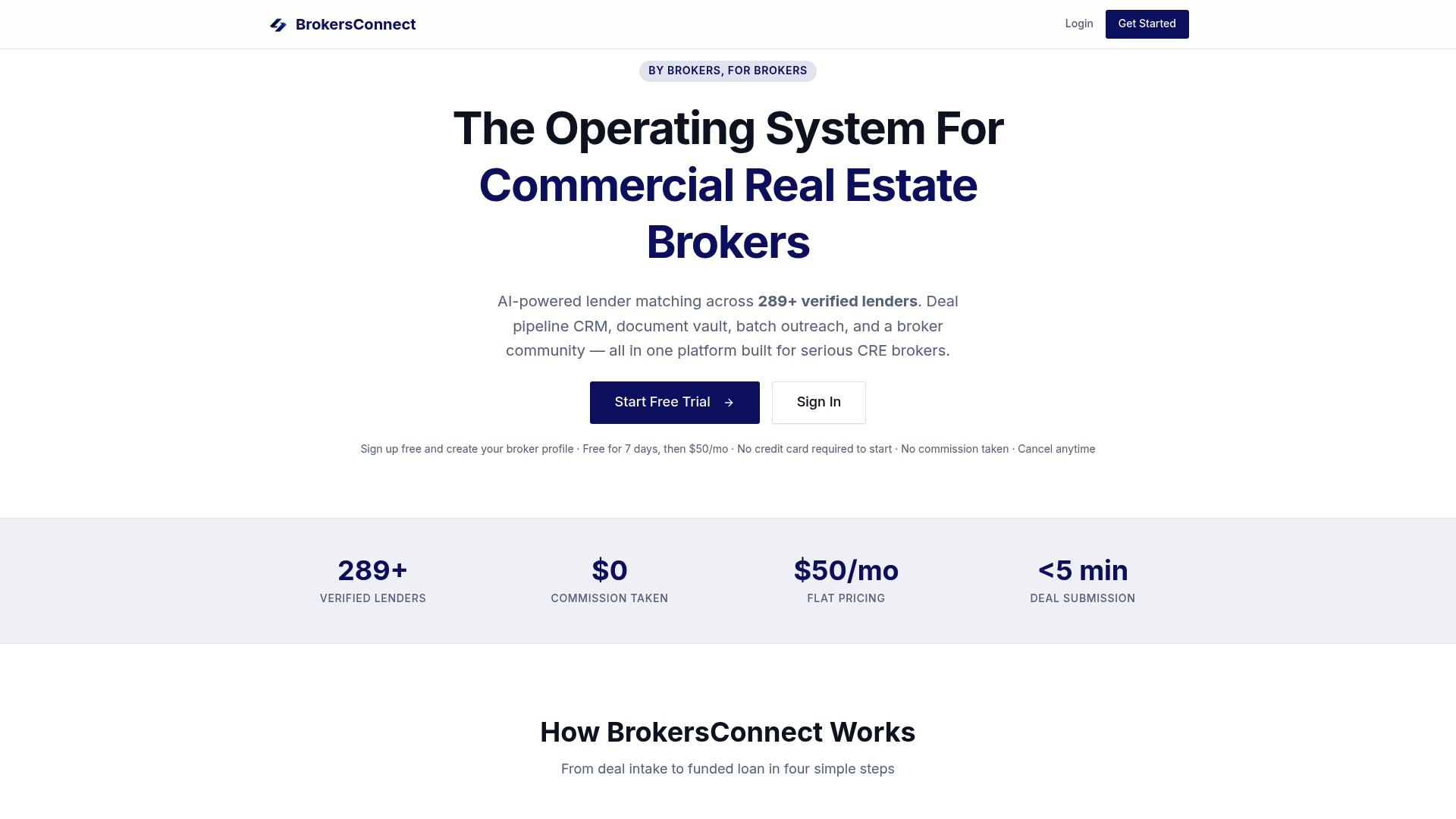
Submission templates keep your pre-submission package consistent across deals, SLA alerts flag lenders going quiet before a deal stalls, and a built-in responsiveness leaderboard shows which of the platform's 289+ verified lenders actually reply on schedule for your property type and leverage range. That last piece alone replaces the manual tracking most brokers cobble together after a few missed follow-ups.
The platform has a monthly subscription fee with a free trial, and no commissions or transaction fees attached. If you're still tracking lender responses in email threads and sticky notes, start a trial and see what the deal record looks like when the SLA alerts do the chasing for you.

Sources
For anyone building this system from scratch, a few primary sources are worth keeping on hand. The Comptroller's Handbook on CRE lending and Federal Reserve underwriting standards outline the documentation and reporting discipline that regulated lenders already follow, useful context for building your own logging fields.
For ready-to-copy structures, the pipeline stage guide and the pre-submission checklist both offer templates you can adapt directly, alongside guidance on matching lenders to a deal's profile.
- Comptroller's Handbook: Commercial Real Estate Lending
- Commercial Loan Document Checklist for 2026 | APC Insights
- The Broker Pre-Submission Checklist for 2026 | Kaaj
FAQ
How Do I Log Verbal Lender Feedback From a Phone Call?
Write it down within the hour, using the same fields you'd use for an email response: reviewer name, outcome, specific questions asked, and next step. Verbal feedback fades fast, so the delay between the call and the entry is where most detail gets lost.
When Should I Re-Route a Non-Responsive Lender?
If a lender misses two consecutive SLA windows, typically the 48-hour check-in and the 5-day follow-up, treat that as your cue to submit to a backup lender rather than waiting longer. Time-sensitive deals, like bridge loans with a closing deadline, deserve an even tighter trigger.
What's the Minimum Document Package for a Lender to Review a File?
A deal summary, trailing 12 or year-to-date financials, a current rent roll, and basic entity documents cover most initial reviews, according to industry checklist guidance. Appraisal status helps but usually isn't required at first submission.
What Response Time Counts as Good Lender Performance?
An initial acknowledgment within 48 to 72 business hours is a reasonable benchmark for most commercial lenders. Anything consistently slower than that, paired with a low offer rate, is worth flagging in your lender-level tracking and reconsidering for time-sensitive submissions.
Can a Deal-Management Platform Automate Lender Feedback Tracking?
Yes. A platform like Thecrebrokersconnect centralizes the deal record, tracks lender messaging history, and triggers SLA alerts automatically, replacing manual spreadsheet updates with a system that flags stalled deals before they go cold.