
Adopt a milestone based cadence: confirm receipt immediately, send a diagnostic question within 72 hours, call at day 7, and escalate if no underwriting owner is named by day 21. The principle behind it, tracked by brokers using tools like BrokersConnect, is diagnostic follow-up: every message should ask which specific underwriting item is open rather than requesting a generic status. Cadence should tighten during active underwriting and loosen during committee review, and tracking third-party tasks separately keeps you from mistaking an appraiser's delay for lender silence, a distinction the OCC's underwriting guidance implicitly supports through its emphasis on documented review procedures.
TL;DR:
- Following up within 72 hours with a diagnostic email and calling at day 7 increases the likelihood of timely underwriting responses, especially if no owner is named by day 21.
- Tracking open items, third-party delays, and decision dates separately in a CRM helps identify actual bottlenecks and prevents mistaking third-party delays for lender silence.
- Adjust your follow-up cadence based on the loan stage, with more frequent contacts during active underwriting and milestone-focused checks during committee review and closing.
- Using a structured message format that states observed issues, asks one specific question, and proposes a clear next step ensures faster, actionable responses from lenders.
- Employing a dedicated platform like BrokersConnect can help automate tracking, flag aging files, and improve follow-up discipline across multiple active deals.
Table of Contents
- A copyable follow-up schedule from day zero to closing
- How the cadence changes at each loan stage
- Message architecture that actually produces answers
- What to track: checklist and CRM fields that make follow-ups targeted
- Where lender follow-up goes wrong
- A broker's take on making the cadence stick
- How BrokersConnect keeps this cadence from slipping
- Where to check underwriting standards and committee expectations
- Sources
- FAQ
A copyable follow-up schedule from day zero to closing
Most brokers lose deals to slippage, not rejection. A file sits untouched for two weeks because nobody flagged that the appraisal hadn't come back, or because the follow-up email asked "any update?" instead of naming the open item. A time-boxed cadence solves both problems by forcing a checkpoint before silence turns into drift.
- Day 0: Confirm receipt by email within hours of submission, and ask who the assigned underwriting contact is.
- Day 3 (72 hours): Send one diagnostic email that names the single item most likely to be unresolved, such as a missing rent roll or an unclear guarantor structure.
- Day 7: Call the underwriting contact directly. A phone call establishes ownership in a way email rarely does.
- Day 14: Send a document reminder tied to any outstanding item, referencing your submission checklist entry by name.
- Day 21: If no underwriting owner or decision date exists, escalate to a senior credit contact and log the escalation with its projected impact on closing.
- Week 6 to 8 and beyond: Shift to milestone checks tied to the closing runway, such as confirming appraisal receipt or term sheet issuance rather than asking for a status.
Email creates a written record, phone calls establish ownership, and your CRM or portal notes should log documents and dates so nothing depends on memory. Compress this cadence to 48 hour intervals once a lender requests specific missing items, since that signals active review. Lengthen it during committee review, when weekly milestone checks are more appropriate than daily pings.
How the cadence changes at each loan stage
Submission, underwriting, committee review, and closing each carry different blockers, and treating them identically is the fastest way to either annoy a lender or miss a stall.
- Submission stage: The main blocker is an incomplete file. Follow up every 2 to 3 days until you have confirmation the file is complete, and focus messages on missing items rather than timeline.
- Underwriting stage: The blocker is usually a specific analytical question. Check in every 3 to 5 days, and reference the exact question, not the file as a whole.
- Committee review stage: The blocker is scheduling and internal presentation, often shaped by how the credit memo was written, a point ICBA materials on loan write-ups makes when discussing committee dynamics. Weekly milestone checks are enough here.
- Closing stage: The blockers shift to third parties: title exceptions, survey delivery, insurance binders. Daily contact is warranted only once a specific document is due.
Triggers that should reset your cadence include an appraisal returning, underwriting questions clearing, a term sheet being issued, or title exceptions resolving. Each of these events should prompt an immediate check-in rather than waiting for the next scheduled touch, a pattern covered in more detail in a closing checklist built around milestones.
Message architecture that actually produces answers
Every follow-up should follow the same three-part structure: state what you observed, ask one question, and name the action and date you need. A message that asks three things at once usually gets zero answers.
- Email: Use a subject line that names the file and the ask, such as "Riverside Plaza, LLC: rent roll confirmation needed by Friday." Track replies by thread rather than starting new ones each time.
- Phone: Open with the file name and the specific gap, not a general "checking in." Example: "I'm calling about the Meridian Logistics file. Is the environmental report the last item before underwriting can move?"
- Portal or CRM notes: Log the date, the person you reached, and the exact item discussed so the next follow-up references it directly.
- LinkedIn or SMS: Reserve these for brief scheduling nudges only, never for substantive underwriting questions.
Avoid stacking channels on the same day, and never send a follow-up that could be answered with "still working on it." That answer means your question wasn't specific enough.
Pro Tip: End every follow-up message with a proposed next date, so the lender is responding to a deadline rather than an open-ended request.
What to track: checklist and CRM fields that make follow-ups targeted
A follow-up is only as good as the record behind it. Without a structured checklist, brokers end up re-asking for documents that were already sent or missing the fact that a third party, not the lender, is the actual bottleneck.
- Submission date and lender contact so you know exactly how many days have elapsed and who owns the file.
- Underwriting owner named explicitly, not just "the lender's team."
- Open items logged by type (financial, legal, third-party) with an assigned owner and due date.
- Expected decision date updated after every substantive conversation.
- Third-party tasks for appraisal, title, and survey tracked separately from lender-side items.
The standardized submission checklist itself should cover borrower information, guarantor details, property specifics, requested loan terms, financial statements, rent roll or operating statement, purchase agreement, construction bids where relevant, and third-party reports, a structure consistent with the documentation practices described in the Comptroller's Handbook on commercial real estate lending. A fuller version of this list is available in a loan document checklist for CRE brokers.
| Field | What it captures |
|---|---|
| Submission date | Day the file was sent to the lender |
| Underwriting owner | Named contact responsible for review |
| Open items | Outstanding document or question, by type |
| Third-party task | Appraisal, title, or survey status and owner |
| Expected decision date | Lender's stated or estimated timeline |
These fields let you build an aging view that flags files with no update in 7 or more days, which is the fastest way to catch a stalled deal before it threatens the closing date outlined in a due diligence timeline for brokers.
Where lender follow-up goes wrong
Generic status emails fail because they invite a generic non-answer. Asking "any update on the Parkview file?" lets the lender reply "still reviewing" without committing to anything.
- Sending the same message to multiple contacts instead of confirming a single underwriting owner.
- Treating third-party delays, like a slow appraiser, as lender unresponsiveness and escalating to the wrong party.
- Skipping the diagnostic question and asking for a status instead of naming the specific open item.
- Letting more than 21 days pass without a named owner or decision date on file.
Pro Tip: Build an escalation ladder in advance: first contact, then a named senior credit contact, then a call with the branch or regional manager, each triggered by a specific number of unanswered days.
A broker's take on making the cadence stick
I started tracking underwriting owner and expected decision date as separate CRM fields after watching a bridge loan sit untouched for three weeks because everyone assumed someone else was following up. Once I logged third-party tasks separately, appraisal delays stopped masquerading as lender silence, and my diagnostic emails started getting same-day replies instead of vague acknowledgments. The checklist matters less than the discipline of updating it after every call.
— Theron
How BrokersConnect keeps this cadence from slipping
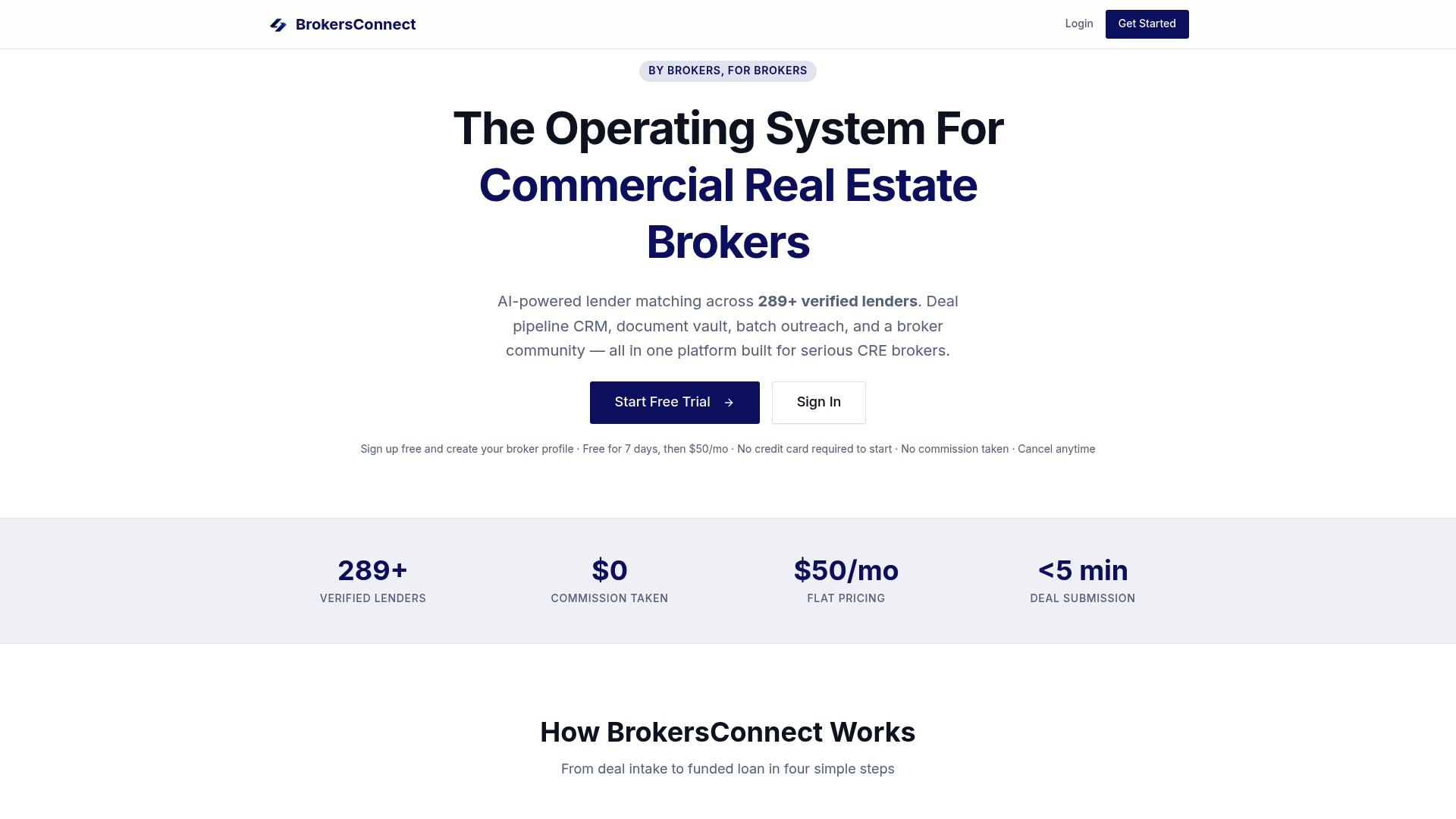
Running this cadence by memory works until you have a dozen active files, at which point missed touches become inevitable. A platform was built to carry the tracking load so the cadence runs on schedule instead of on recall.
- A built-in submission checklist mirrors the borrower, guarantor, property, and financial fields this article covers, so nothing gets submitted incomplete.
- AI-powered lender matching can narrow your list to lenders suited to the deal, which may reduce the number of dead-end follow-ups run in parallel.
- Conversation tracking may log every touch against a file, so the next follow-up references the last real update instead of starting over.
- A pipeline dashboard can surface aging files automatically, flagging the ones that may need a call.
- A lender responsiveness leaderboard can show which lenders tend to answer diagnostic questions quickly, helping prioritize where to spend follow-up effort first.
BrokersConnect runs on a flat $50 per month subscription with no commissions, and a free trial lets you load an active file and test the cadence against a real submission before committing.
Where to check underwriting standards and committee expectations

For a primary source on prudent underwriting, approval procedures, and documentation practices, see the OCC's Comptroller's Handbook. For guidance on how loan write-ups are structured and presented to committees, see ICBA's commercial real estate lending presentation, and for property-level documentation practices that feed into your checklist, Rezone's property management blog covers operational recordkeeping that pairs well with lender submissions.
Sources
- Comptroller's Handbook: Commercial Real Estate Lending
- Commercial Real Estate Lending in Today's Economy (ICBA)
FAQ
How often should I follow up with a lender after submission?
Follow up within 72 hours with a diagnostic email, then call at day 7, and treat day 21 without a named underwriting owner as an escalation trigger. Adjust frequency by stage: tighter during active underwriting, looser during committee review.
What should a lender follow-up email say?
State what you observed, ask one specific question about the open underwriting item, and request a next action with a date. Avoid generic "checking in" language, which invites a non-answer.
How do I know if a delay is the lender's fault or a third party's?
Track appraisal, title, and survey tasks as separate line items with their own owners and due dates in your tracker. If a third-party task is still open, the delay likely isn't the lender's underwriting team.
When should I escalate a stalled loan file?
Escalate once 21 days have passed without a named underwriting owner or a stated decision date, and log the escalation along with its likely impact on your closing timeline.
What CRM fields matter most for tracking lender responses?
Submission date, underwriting owner, open items by type, expected decision date, and third-party tasks with assigned owners are the fields that make follow-ups specific rather than generic.