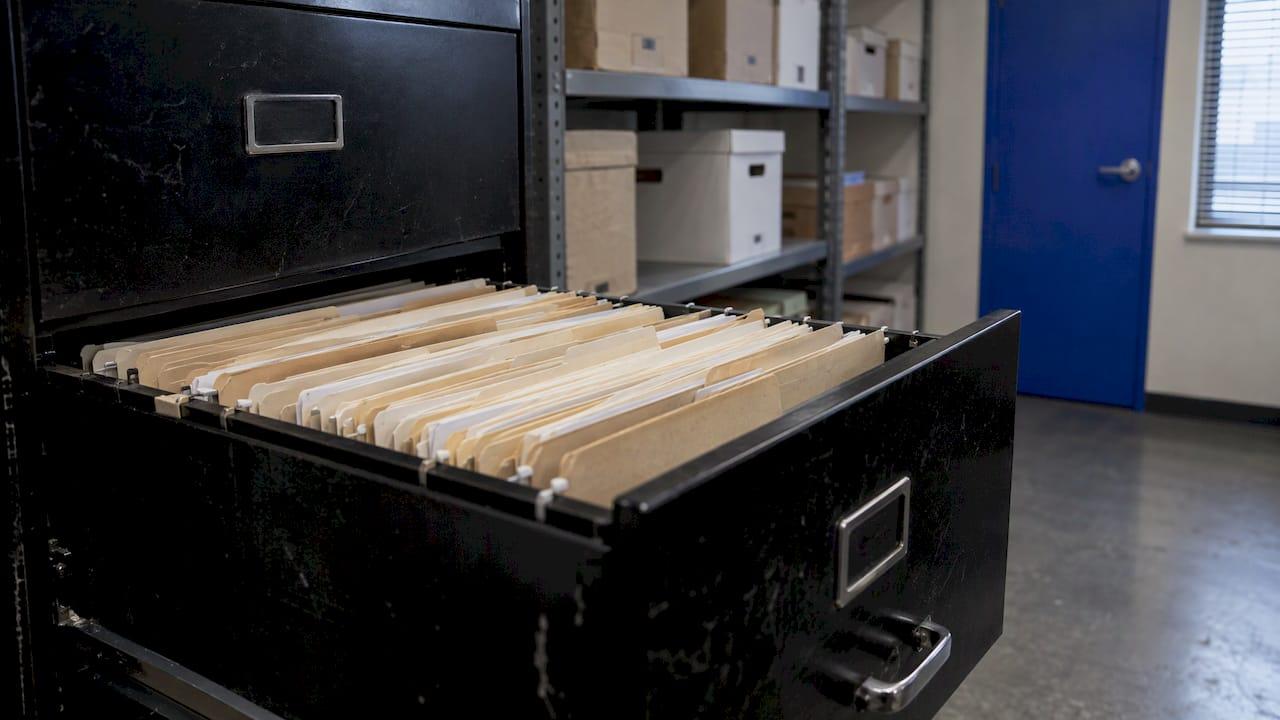
A document retention policy is a written rule set that says which records your brokerage keeps, for how long, where they live, what they are called and how they are destroyed when the clock runs out. For a commercial loan or mortgage broker, the working answer is this: set one schedule built on the longest period that applies to you, name every file the same way, and destroy expired records in a documented, secure manner. Retention periods differ by state and by license type, so the schedule below is a framework, and your state regulator's rule is the final word.
The pages that rank for this keyword are written for nonprofits and generic small businesses. A broker handles something different: borrower financials, tax returns, IDs, entity documents and lender correspondence on every deal. That is why the policy needs loan-file detail, not a generic seven-year rule.
TL;DR
- Retention periods for broker records vary by state: for example, Washington sets three years, Maryland 61 months and Iowa 36 months for general business records.
- Adopt the longest period that applies to a record type, then add the IRS tax-record periods on top.
- Use one file naming convention for every deal so any document can be found in seconds.
- Destroy expired records so they cannot be read or reconstructed, and write down how you did it.
- Keep the policy in one page of rules and one schedule table, and review it once a year.
Table of Contents
- Why a loan brokerage needs a written policy
- What the rules say about retention periods
- IRS rules for business and tax records
- Build the retention schedule in six steps
- File naming conventions for loan files
- Destroying records securely
- What a good policy looks like on one page
- Keep every deal's records in one place
- FAQ
- Sources
Why a loan brokerage needs a written policy
A Maryland licensing guide for brokerages describes records management and a retention schedule as core risk-limiting practices. The same guide says a schedule should comply with the relevant laws, show the retention period for each type of file and say when files can be destroyed.
Three situations make the written version matter:
- A regulator exam or complaint. You are asked for a file from three years ago. If you cannot produce it, or you destroyed it early, that is the finding.
- A dispute with a borrower, referral partner or lender. The file is your evidence of what was disclosed and agreed.
- A data incident. The older the file you still hold, the more borrower data you are exposed on. Keeping everything forever is not a safe default.
A written policy also lets a new hire or a solo broker's assistant act without asking you where things go.
What the rules say about retention periods
There is no single federal clock for loan brokers. The periods come from your state license rules, the type of work you do and tax law. The examples below come from state regulators and show how wide the range is.
| Jurisdiction | What must be kept | Period |
|---|---|---|
| Washington | Mortgage broker books, accounts, records, files and transaction documents | Minimum of three years |
| Iowa | General business records | At least 36 months from the final transaction |
| Maryland | A mortgage broker's loan records | 61 months after the loan is made or denied |
| Colorado | Real estate brokerage transaction files | Four years from the consummation date of the transaction |
Two cautions on reading this table. First, several of these rules were written for residential mortgage licensing or real estate brokerage licensing. If you broker commercial loans, check whether your state licenses you, under which law, and what that law says about records. Second, the ranges overlap but do not agree, which is exactly why a multi-state brokerage should not copy one state's number.
What a loan file includes
Regulators are specific about what counts as a record. Iowa's rule lists an index, an application log and application files, and describes loan files as including the application, appraisal report, underwriting verifications, the closing file and closing documents such as the note, mortgage and TILA/RESPA disclosures (Iowa Administrative Code). Utah's rule goes further, listing items such as credit reports and explanations, conversation logs, employment and tax verifications, appraisal records, underwriter denials and adverse action notices (Utah Admin. Code R162-2c-302).
The lesson for a commercial broker is that "the file" is wider than the term sheet. It includes your communications with lenders and borrowers, your disclosures and agreements, and the logs that show the order of events.
Loan logs
Iowa requires a loan register kept in the order loans closed, showing the transaction date, borrower name, the names and NMLS ID numbers of the broker, lender, loan originator and closing agent, and the amount financed (Iowa rule 187.18.9). Even where no rule requires it, a one-line-per-deal log like this is the fastest way to answer "what did we do for this borrower?"
Only what you actually held
Maryland's rule adds a useful boundary: a licensee acting as a broker is not responsible for retaining a record unless it was at some time in the licensee's physical possession (COMAR 09.03.06.05). Your policy should still say which records you keep as the broker and which stay with the lender or closing agent.
IRS rules for business and tax records
The "keep it seven years" advice you see everywhere traces back to a few IRS periods. According to the IRS page on how long to keep records:
- Keep records for 3 years in the ordinary case.
- Keep them for 6 years if you did not report income that you should have, and it is more than 25% of the gross income shown on your return.
- Keep them for 7 years if you file a claim for a loss from worthless securities or a bad debt deduction.
- Keep them indefinitely if you did not file a return or filed a fraudulent one.
- Keep employment tax records for at least 4 years after the tax is due or paid, whichever is later.
So a seven-year rule is a common conservative choice, not a general IRS requirement. For a brokerage, the tax records that matter are commission statements, 1099s, expense receipts, payroll files and bank statements. Your accountant should confirm the periods for your entity type.
Build the retention schedule in six steps
A schedule is a table. Each row is a record type; the columns are owner, retention period, format, location and destruction method.
1. Inventory what you hold
List every document type that crosses your desk: borrower applications, financial statements, tax returns, rent rolls, entity documents, IDs, appraisals, term sheets, lender emails, broker agreements, referral fee agreements, compliance records and your own business records. Our loan document checklist is a quick way to make sure the borrower side of the inventory is complete.
2. Group them into four classes
Four classes keep the schedule short enough to follow:
- Loan and transaction files, by deal.
- Borrower identity and compliance records, including KYC material. See our AML and KYC guide for commercial mortgage brokers.
- Agreements, such as broker agreements and referral fee agreements.
- Business and tax records.
3. Assign a period to each class
For each class, take the longest of the state license rule, any contract term and the IRS period. If you are licensed in more than one state, use the longest across them. A practical example: if Washington's three years, Maryland's 61 months and a four-year transaction file rule all touch your deals, the loan file class is set at 61 months, counted from the date the loan closes or is denied.
Write down the trigger, not just the length. "Five years" means nothing until you say five years from what: closing, denial, last activity or the end of the tax year. Rules differ here. Maryland counts from the loan being made or denied, Colorado from consummation or from the expiration of a listing contract that did not close.

4. Decide format and location
Electronic storage is acceptable under some rules. Colorado allows hard copy or electronic transaction files as long as they can be inspected during the retention period (Colorado Division of Real Estate), and Utah allows electronic maintenance if it complies with its Uniform Electronic Transactions Act (R162-2c-302). Pick one system of record per class so there is no argument about which copy counts. Access should be limited to people who need it; our guide to document access controls covers how to set that up.
5. Mark each file with its destruction date
The Maryland guidance recommends a reference log or filing system that makes records easy to find and notes on each file when it can be destroyed (Maryland brokerage guide). The easiest way is to record the close or denial date in the loan log and calculate the destruction date there.
6. Name an owner and a review date
One person owns the policy, even in a two-person shop. Once a year, run the schedule: pull the files that have passed their date, confirm none is under a dispute or inquiry, and destroy the rest. If a claim, complaint or regulator request arrives, pause destruction for the affected files until it is resolved and note the pause in the log.
File naming conventions for loan files
A retention schedule only works if you can find the files it governs. Naming is where most brokerages lose that battle: "Financials final v2 (1).pdf" has no future.
The Texas Department of Savings and Mortgage Lending's compliance guide, updated January 26, 2026, says loan files should be organized by consolidating documents into one PDF or by clearly labeling each document (Texas Mortgage Compliance Guide). For a model of a disciplined convention, Fannie Mae's Loan Quality Connect starts loan-file names with the loan number, then an underscore and "LoanFile", and numbers split files in sequence, such as LoanFile1 and LoanFile2 (Fannie Mae). That is a residential agency rule, not a commercial standard, but the principle carries over: a unique identifier first, a fixed word for the document type, and sequence numbers for splits.

A convention you can adopt today
Use this pattern for every file:
DealID_BorrowerShortName_DocType_YYYY-MM-DD_v01
Examples:
2026-114_HarborView_RentRoll_2026-10-02_v01.pdf2026-114_HarborView_PFS-Smith_2026-10-04_v02.pdf2026-114_HarborView_TermSheet-LenderA_2026-10-19_v01.pdf
Rules that keep it working:
- Deal ID first. Year plus a sequence number sorts chronologically and matches your loan log.
- Dates in year-month-day. It sorts correctly in any folder.
- A fixed list of document types. Publish it: RentRoll, T12, PFS, TaxReturn, Appraisal, TermSheet, EntityDocs, KYC. If everyone invents their own, search fails.
- No spaces or special characters. Use hyphens and underscores.
- Versions, not "final". Use v01, v02. Only one version is current.
- Same structure for folders. One folder per deal, with the same subfolders each time: Borrower, Property, Lender, Compliance, Closing.
Name the file for how it will be destroyed
If the deal ID is the first element, one folder holds everything for that deal, and the loan log gives the destruction date, you can destroy a whole deal in one step. Scattering one deal's documents across inboxes and desktops is what makes defensible destruction impossible.
Destroying records securely
A retention policy that stops at "keep" is half a policy. Washington requires mortgage brokers to have written policies and procedures for destroying records, including electronic ones, when the retention period ends, in a way that the information cannot be reconstructed or read (WAC 208-660-450). Iowa requires disposal done in a reasonable manner that safeguards identification information (Iowa rule 187.18.9).
At the federal level, the FTC's Disposal Rule requires anyone who holds consumer information for a business purpose to take reasonable measures against unauthorized access when disposing of it (16 CFR 682.3). Its examples include shredding paper so it cannot practicably be read or reconstructed, and destroying or erasing electronic media for the same result.
In practice:
- Shred paper in-house with a cross-cut shredder or use a destruction vendor that gives you a certificate.
- Delete electronic files from the system of record, then from backups, shared drives, email attachments and downloads folders.
- Record what you destroyed: deal ID, date, method and who did it. Keep that log itself permanently.
- Treat credit report information with particular care, since the Disposal Rule applies to it directly.
What a good policy looks like on one page
Sections: purpose and scope; roles; the schedule table; storage and access; naming convention; destruction procedure; pause rule for disputes and inquiries; annual review. A brokerage of any size can hold that on one page plus the schedule. Have your attorney review it once, especially if you are licensed in several states. This article is general guidance, not legal advice.
Our view: the file should live with the deal
Most retention failures we hear about from brokers are not about the number of years. They come from scattered files: documents in email threads, lender replies in a personal inbox, versions on a desktop. A schedule cannot govern what you cannot locate.
That is why we built BrokersConnect around the deal. The pipeline, the lender conversations and a secure document vault sit in one platform, so a deal's records are not spread across five tools. Pair that with the naming convention above and your annual clean-up becomes a review of one pipeline instead of a hunt.
Our approach is simple: put structure in at the start of the deal, and compliance later takes care of itself far more easily. For how documents should move between you and lenders, see our guides on secure document sharing and commercial mortgage compliance.
Theron
Keep every deal's records in one place
BrokersConnect is a platform for commercial real estate brokers that combines a deal pipeline CRM, a secure document vault, deal templates and batch lender outreach, with a database of 289+ verified lenders. It costs a flat $50 per month with a free trial and no commissions or transaction fees, so each deal and its documents start in one organized place.

If you are about to write your policy, start with the schedule table and the naming rules above, then set up your next deal with them from day one.
FAQ
How long should a loan broker keep documents?
It depends on your state and license. Published rules range from three years in Washington to 61 months for loan records in Maryland. Adopt the longest period that applies to you and confirm it with your state regulator or attorney.
What does a seven-year retention policy mean?
It means records are kept for seven years from a defined trigger, such as closing or the end of the tax year, and then destroyed. Seven years is a common conservative choice, and the IRS names it for worthless securities and bad debt deduction claims, but it is not a general rule for every record.
Can I keep loan files electronically only?
Often yes. Colorado accepts hard copy or electronic files as long as they can be inspected during the retention period, and Utah allows electronic maintenance under its electronic transactions law. Check your own state's rule.
What is the best way to name loan files?
Put a unique deal ID first, then the borrower, a fixed document type, a date in year-month-day order and a version number. Fannie Mae's naming convention follows the same logic of identifier first and sequence numbers for split files.
How do I destroy old borrower records?
Shred paper and erase electronic files so they cannot practically be read or reconstructed, as the FTC Disposal Rule describes. Include backups, and log each destruction.
Sources
- A Broker's Guide to Creating a Policy and Procedure Manual (Maryland)
- Iowa Administrative Code, Rule 187.18.9
- Maryland COMAR 09.03.06.05, Records
- Texas Mortgage Compliance Guide, January 2026
- Utah Admin. Code R162-2c-302
- Washington WAC 208-660-450, Mortgage transaction documents
- Colorado Division of Real Estate, Transaction File Requirements and Retention
- FTC Disposal Rule, 16 CFR 682.3
- Fannie Mae, Document Naming Conventions
- IRS, How long should I keep records?