
Rent roll analysis is the process of reviewing a property's tenant and lease data, as of a specific date, to judge income quality and flag hidden risk before you underwrite, lend against, or manage the asset. Investors, property managers, and lenders all rely on it, but the process only works if you start in the right place: confirm the rent roll's "as-of" date, then check whether economic occupancy (rent actually collected) matches physical occupancy (units filled). Everything else in the analysis builds on that one reconciliation.
TL;DR:
- Physical occupancy should be verified against the rent roll within 30 to 60 days to ensure the data is recent and reliable.
- A complete rent roll must include key columns such as market rent, lease end date, deposit held, and current balance owed, which lenders expect to see consistently.
- Analyzing discrepancies between physical and economic occupancy highlights collections issues, concessions, or delinquency risks that could affect cash flow.
- Clustering lease expirations in narrow windows warrants modeling vacancy, concessions, and renewal risk to avoid overestimating income stability.
- Lenders prefer rent rolls with transparent reconciliation to the T12, broken-down loss-to-lease, tenant concentration details, and a clear plan for lease expiration management.
Table of Contents
- What a Rent Roll Is and When You Need One
- Rent-Roll Template: The Columns a Credible Report Can't Skip
- The Hour-Long Rent-Roll Analysis Workflow
- Key Metrics and Formulas Every Analyst Needs
- Red Flags Underwriters Never Let Slide
- How Rent-Roll Analysis Shifts Across Asset Classes
- Reconciling the Rent Roll to the T12 for Your Proforma
- A Worked Example and a Copyable Column Checklist
- What Lenders Actually Want to See Before They'll Engage
- Package Rent-Roll Findings Into Faster Lender Matches
- Sources
What a Rent Roll Is and When You Need One
A rent roll lists every unit or space in a property along with the tenant, lease terms, rent, and lease expiration for each one. It's the primary record of who's paying what, when their lease ends, and how much of the building is actually occupied, and it forms the backbone of any rent roll definition used across acquisitions, lending, and forecasting.
A rent roll is not the same as a T12 (trailing twelve-month operating statement), and you need both. The rent roll tells you who's supposed to be paying and how much; the T12 tells you what actually landed in the bank account. A property can show 97% occupancy on the rent roll while the T12 reveals months of unpaid rent buried in delinquency. Neither document alone tells the full story.
You'll need a fresh rent-roll review in several situations:
- Acquisition due diligence, where the rent roll shapes your offer price and financing terms
- Refinancing, when a lender needs current income verification
- Annual forecasting and budget season for existing owners
- Any major management decision, like a renovation program or repositioning strategy
The moment a rent roll lands in your inbox, check the as-of date, count total units against occupied units, and scan for blank fields. Those three moves take five minutes and tell you whether the document is even worth analyzing further.
Rent-Roll Template: The Columns a Credible Report Can't Skip
A rent roll missing key columns isn't just incomplete. It's a red flag on its own, because sellers sometimes strip out unfavorable data before sending a package to buyers or lenders.
Here's what a lender-ready rent roll needs, row by row, for every unit:
- Unit number and tenant name (or "vacant")
- Square footage or bedroom/bathroom count, depending on asset type
- Lease start date and lease end date
- In-place rent (what the tenant currently pays)
- Market rent (what a new lease would command today)
- Security deposit held
- Current balance owed or delinquency amount
- Concessions (free rent, reduced rent periods, move-in specials)
- Lease status (current, month-to-month, notice given, eviction in process)
Four of these get left off more often than they should: market rent, lease end date, deposit held, and balance owed. Buyers and lenders expect to see all four, and a rent roll template missing these fields undermines the seller's credibility before you've even run a single calculation. Market rent shows you the upside. Lease end date shows you the risk timeline. Deposit and balance owed show you exactly how exposed the landlord is on collections.
A well-built rent roll includes one row per unit, including every vacant one; vacant units without a row are an easy way to quietly inflate occupancy numbers. Concessions should be broken out separately from base rent, never blended into a single "net rent" figure that hides how much free rent is actually flowing. And the totals at the bottom, total rent, total SF, occupied unit count, need to tie back to what's stated elsewhere in the offering package. If they don't, that's your first question to the broker.
The Hour-Long Rent-Roll Analysis Workflow
You don't need a week to get a solid read on a rent roll. Following an established sequence gets you through the essentials in about an hour, and it's roughly the same step-by-step framework most experienced underwriters use.
-
Verify the date and reconcile to the T12. Confirm the as-of date is recent (within 30 to 60 days ideally), then cross-check total rent against T12 collected rent and bank deposit records. Request any missing fields before going further.
-
Calculate physical occupancy. Divide occupied units by total units. This is your baseline, but it's the least informative number on the page by itself.
-
Calculate economic occupancy. Divide actual collected rent by potential gross rent (what the property would earn at 100% occupancy and full market rent). A gap between physical and economic occupancy points to concessions, delinquency, or collection problems.
-
Compute average in-place rent by unit type. Break this out by floor plan or unit category rather than blending everything into one property-wide average, which hides where the real opportunity or risk sits.
-
Calculate loss-to-lease per unit type, using current market comps for each category rather than one blended number.
-
Build a lease expiration schedule and calculate WALT (weighted average lease term). Look specifically for clustering, where a large share of leases expire in the same window.
-
Separate renovated from unrenovated units and analyze each group independently. Blending them together masks the true rent premium a renovation program is generating (or failing to generate).
-
Flag outliers and document follow-up. Any rent that's dramatically above or below its unit type average deserves a lease audit. Any tenant with a rocky payment history deserves a credit check before you finalize assumptions.
Pro Tip: Run steps 2 and 3 side by side in the same spreadsheet tab. The moment you see physical occupancy at 95% and economic occupancy at 84%, you know exactly where to spend the rest of your hour: chasing down concessions and delinquency, not admiring a healthy-looking occupancy headline.
Key Metrics and Formulas Every Analyst Needs
These are the calculations that turn a rent roll from a list of numbers into an underwriting tool.
- Physical occupancy = Occupied units ÷ Total units × 100
- Economic occupancy = Collected rent ÷ Potential gross rent × 100
- Loss-to-lease = (Market rent − In-place rent) ÷ Market rent × 100, calculated per unit type
- Average rent per unit = Total rent for a unit type ÷ Number of units in that type
- Rent per square foot = Monthly (or annual) rent ÷ Unit square footage
- WALT = Sum of (each lease's remaining term × its rent) ÷ Total rent
- Concentration ratio = Rent from top tenant (or top 3 tenants) ÷ Total property rent × 100
A gap between physical and economic occupancy is the number that separates a stable deal from a hidden problem. A high physical occupancy paired with meaningfully lower economic occupancy almost always points to concessions, delinquencies, or collection issues you should model as a direct cash impairment, not a footnote.
On benchmarks: healthy multifamily occupancy tends to run 93% to 96%, though self-storage and industrial properties follow different norms and need asset-specific comparisons.
Red Flags Underwriters Never Let Slide
Some issues on a rent roll are cosmetic. Others change your entire risk model. Here's what belongs on every underwriter's checklist:
- Stale rent roll or missing as-of date. If the document isn't dated, or it's more than 60 days old, ask for an updated version before you do anything else with the numbers.
- Rent roll and T12 mismatches. When scheduled rent on the roll doesn't line up with collected rent on the T12, reconcile the timing of deposits and look for a pattern of late or partial payments.
- High month-to-month concentration and mass lease expirations. These signal turnover risk. Model realistic vacancy and concession assumptions rather than assuming smooth renewals.
- Heavy tenant concentration. A single tenant, or top three tenants, generating an outsized share of total rent means the property's cash flow rides on a handful of relationships. Lease clustering above roughly 25% of rent expiring in a single quarter should trigger a mass-renewal plan or a stress-tested scenario, not a passing mention in the memo.
- Hidden concessions and undisclosed obligations. Free rent periods, reduced-rate move-ins, and unrecorded tenant improvement or leasing commission commitments can quietly erode net operating income for months after closing.
None of these flags kill a deal by themselves. They just mean your assumptions need to get more conservative, and your due diligence period needs to get longer.
How Rent-Roll Analysis Shifts Across Asset Classes
The columns matter, but which ones matter most changes with the property type.
- Multifamily demands unit-level granularity: bedroom and bathroom counts, renovated versus unrenovated status, and the rent premium each renovation is actually producing. Turnover analysis matters more here than almost anywhere else.
- Self-storage runs on month-to-month leases as the norm rather than the exception, so the key comparison is street rate (what a new customer pays today) versus in-place rate, alongside expected churn.
- Industrial properties typically carry long-term, triple-net leases, which shifts your focus to rent per square foot, lease term length, and single-tenant concentration risk, since one industrial tenant often accounts for the entire building's income.
- Retail and office rent rolls need percent-rent clauses, sales-based rent triggers, tenant credit quality, and co-tenancy risk factored in, since one anchor tenant leaving can trigger kick-out clauses for smaller tenants nearby.
Reconciling the Rent Roll to the T12 for Your Proforma
The rent roll tells you what's scheduled. The T12 tells you what's real. Your proforma needs to be built on the second one, adjusted by what the rent roll tells you is coming.
Start by matching rent-roll totals against T12 collected rent and actual bank deposits line by line. Any gap needs an explanation, whether that's a rent increase that hasn't hit the books yet or a delinquency problem the seller hasn't disclosed. Auditing scheduled rent against actual collections is the single move that prevents you from underwriting phantom income that was never really there.
From there, translate what you found into concrete assumptions:
- Convert your lease expiration schedule into a vacancy assumption, weighted toward the windows where clustering is heaviest
- Build tenant improvement and leasing commission line items around your loss-to-lease findings, since closing that gap usually requires capital
- Run a downside scenario where your top tenant, or your most clustered expiration window, doesn't renew, and see what that does to debt service coverage
A conservative case, a base case, and an upside case built this way give you a defensible range instead of a single optimistic number that falls apart under lender scrutiny.
A Worked Example and a Copyable Column Checklist
Grouping lease expirations into windows makes clustering visible fast. Build a simple table with columns for month-to-month, 0 to 90 days, 91 to 180 days, 181 to 365 days, and 12-plus months, then sort every lease into its bucket.
For loss-to-lease, the method matters more than any single number: pull market comps for each unit type, subtract in-place rent from market rent, divide by market rent, and average within (never across) unit types.
| Column | What it tells you |
|---|---|
| Unit / tenant | Identifies the row and occupancy status |
| In-place vs. market rent | Reveals loss-to-lease upside |
| Lease start / end | Feeds your expiration schedule and WALT |
| Deposit / balance owed | Shows collection risk |
| Concessions | Separates real rent from promotional discounts |
Before trusting any spreadsheet output, spot-check the totals row against the property's stated occupancy and rent figures elsewhere in the offering package. If a tool or AI-assisted underwriting workflow is doing the extraction, verify a handful of rows by hand first.
What Lenders Actually Want to See Before They'll Engage
Most brokers send lenders a rent roll that raises more questions than it answers, and every follow-up question costs a day or two of momentum. Build the reconciliation into your submission before you send it: as-of date confirmed, occupancy split into physical and economic, loss-to-lease broken out by unit type, and lease clustering flagged with a plan attached.
A rent roll that already answers "why does economic occupancy trail physical occupancy" and "what happens if the top three tenants don't renew" moves faster through underwriting than one that forces the lender to ask. Clean documentation is a competitive advantage in a market where lenders are choosing between dozens of submissions a week, and a well-prepared loan document checklist built around this reconciliation is worth more than a polished cover letter.
— Theron
Package Rent-Roll Findings Into Faster Lender Matches
A reconciled rent roll can be turned into a submission-ready deal file instead of a folder of loose spreadsheets, matched against a database of verified lenders based on property type, leverage, and loan purpose.
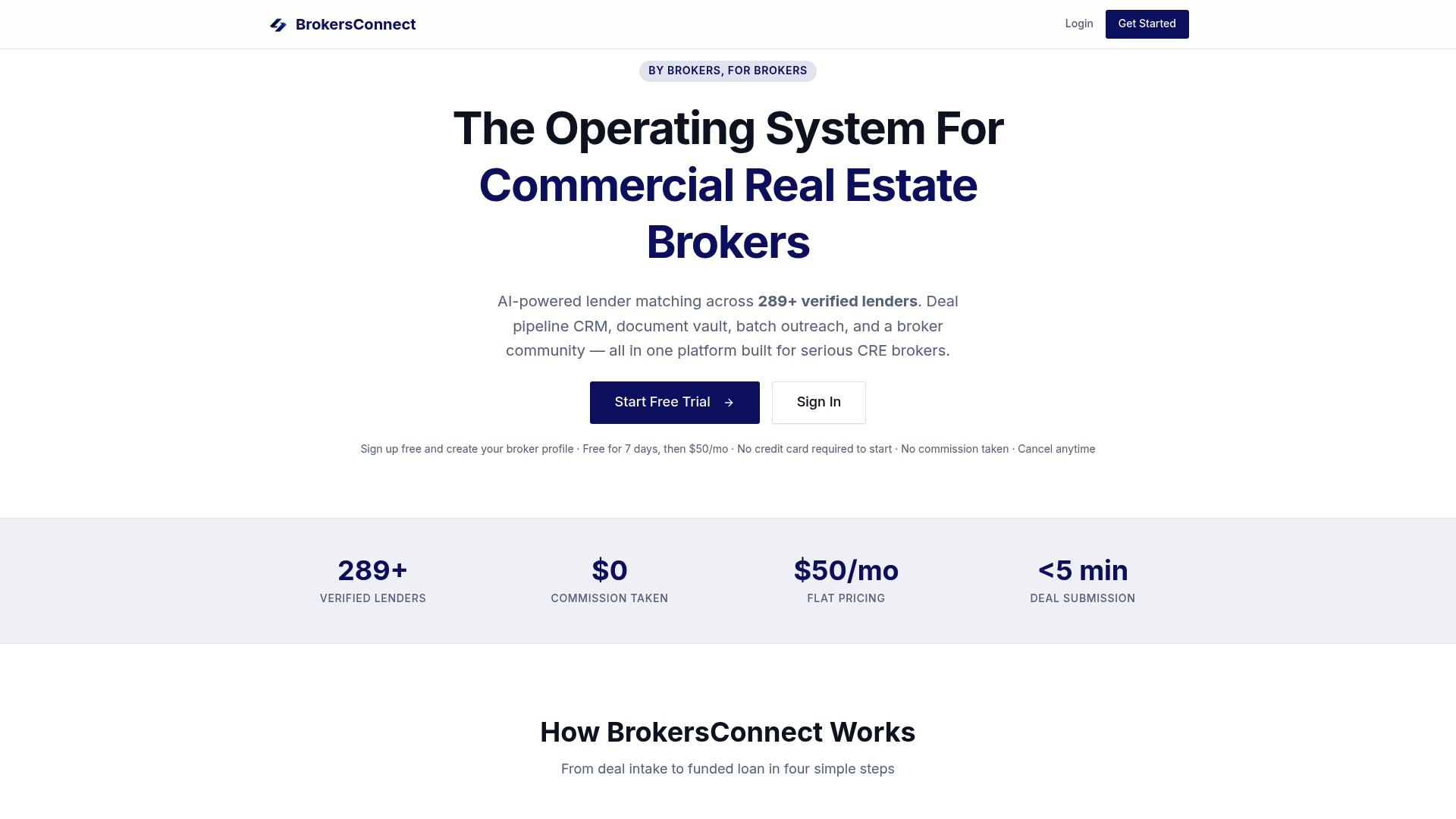
Once you've run the occupancy math, flagged the loss-to-lease gaps, and mapped out lease clustering, that work belongs in a package a lender can act on immediately. The platform's deal pipeline CRM keeps your rent-roll data, reconciled T12 figures, and supporting documents attached to the deal itself, so nothing gets lost between your first pass and the lender's underwriting. Batch outreach and a lender responsiveness leaderboard mean you're not guessing which lenders are actually replying this month. A DSCR-driven deal can lean on the DSCR loan guide to frame debt service assumptions before submission, and a fee calculator on the platform helps you check the math before a lender does. Start a free trial and build your next rent-roll-backed submission through Thecrebrokersconnect.
Sources
- How to Analyze a Rent Roll for CRE Acquisitions
- Rent Roll Template: Every Column That Should Be On It | Real Estate Investing Edge