
Prioritize lender fit before you send a single email, build a submission packet that meets agency-level underwriting standards, and run a tight four to five touch outreach sequence instead of a scattershot blast. Brokers who pair that discipline with a matching tool like BrokersConnect cut the time between first contact and a serious lender conversation, because they are not guessing which lenders even want the deal.
TL;DR:
- Route stabilized larger loans to agency lenders, transitional properties to debt funds, and mission driven housing to CDFIs; verify recent closings, leverage, and loan purpose.
- Date the rent roll within 30 days of final underwriting, reconcile it against the trailing twelve month statement, and explain any gaps before submission.
- Lead with loan amount and a metric on Day 1, follow up on Days 4 and 14, call Day 9, and check in Day 21.
- Track substantive reply time, term sheet conversion, and funding time for each lender; remove those with no substantive response after three consecutive deals.
Table of Contents
- Map the lender landscape and prioritize your targets
- Prepare a submission that meets underwriting expectations
- Outreach channels and a repeatable contact sequence
- Turning first contact into a repeat referral relationship
- Pipeline tracking, lender scoring, and responsiveness metrics
- Templates and a four-week playbook for a live deal
- What actually moves a multifamily lender outreach strategy forward
- How BrokersConnect speeds up lender identification and outreach
- FAQ
- Sources
Map the lender landscape and prioritize your targets
Not every multifamily lender fits every deal, and treating them as interchangeable wastes your best submissions on the wrong desks. Regional and community banks tend to favor smaller loan sizes and relationship-driven underwriting, agency lenders in the Freddie Mac Optigo network handle standardized, larger stabilized deals, debt funds and bridge lenders step in for value-add or transitional properties, life companies chase low-leverage, high-quality assets, and CDFIs often work mission-driven or workforce housing deals where local underwriting flexibility matters more than speed.
Before you reach out, filter prospects against a short list of fit criteria:
- Loan size: match the deal's dollar amount to the lender's typical sweet spot, not just its stated range.
- Property class and location: confirm the lender has actually closed in that asset class and submarket recently.
- Leverage and sponsor strength: check whether the lender's stated leverage tolerance matches your sponsor's net worth and liquidity position.
- Loan purpose: acquisition, refinance, and construction each route to different desks within the same institution.
A simple way to rank your list is a probability score: multiply your estimate of approval probability by the strength of your existing relationship and by how well the deal fits the lender's stated criteria. The lenders that score highest get your first calls, not the ones at the top of a generic directory. For a workflow built around matching deals to lender appetite instead of cold-calling down a list, see this fit-first workflow.
Prepare a submission that meets underwriting expectations
Lenders screen fast, and an incomplete or inconsistent packet gets deprioritized before anyone reads your pitch. Build your submission around the documents agency underwriters expect to see, because even private lenders increasingly benchmark against that standard.
- Rent roll dated within 30 days of your final underwriting package, matching the format Freddie Mac's submission guidance expects.
- T-12 or three years of historical operating statements, reconciled line by line against the rent roll.
- Sponsor net worth and liquidity documentation, current and signed.
- Insurance evidence, credit reports, and management agreements, as outlined in Freddie Mac's underwriting checklist for full underwriting packages.
Reconciliation matters more than volume. Tie every number on the rent roll to the income and expense statement, and when a figure does not match, explain the deviation in a short narrative rather than leaving the lender to guess. A rent roll showing $1.2 million in gross potential rent needs to trace cleanly to the T-12's rental income line, and any gap between them is the first thing an underwriter flags.
Common pitfalls include stale rent rolls, mismatched NOI figures between the summary and the source documents, and missing sponsor liquidity statements that stall a file for weeks. Fix these before submission, not after a lender asks.
Pro Tip: Build one master submission folder per deal so every lender receives the same current documents, which prevents version confusion when two lenders are reviewing the same file at once.
Outreach channels and a repeatable contact sequence
Email outperforms cold calls for first contact because it lets a lender evaluate fit on their own schedule, but calls and introductions still close the gap once a lender has shown interest. Industry data suggests a short, data-forward initial message with one key metric and a clear ask outperforms long introductory emails for generating lender engagement.
Use this five-touch sequence as your default cadence:
- Day 1: a two-paragraph email naming the property type, loan amount, and the one metric that makes the deal attractive (debt yield, occupancy, or sponsor track record).
- Day 4: a brief follow-up highlighting a different data point, such as in-place NOI growth.
- Day 9: a phone call to the loan officer or correspondent, referencing the email.
- Day 14: a short note offering to send the full packet or schedule an intro call.
- Day 21: a final check-in before moving the lender to a lower-priority tier.
Batch outreach works for lenders in your lower-fit tiers where volume matters more than customization, while your top-tier targets deserve bespoke messages referencing a specific prior deal or stated lending criteria, and tools like Send offers on MLS listings with state approved contracts can help streamline offer generation and tracking. A documented five-touch sequence with timing benchmarks is available in this cold email framework, and sponsor-first messaging examples appear in this outreach strategy guide.
Pro Tip: Lead every first-touch email with the number a lender cares about most, debt yield or sponsor net worth, instead of your firm's background.

Turning first contact into a repeat referral relationship
Winning one term sheet matters less than becoming a lender's first call on the next deal, and that status comes from small, consistent wins rather than a single large closing. Community lenders and CDFIs in particular reward brokers who submit clean files, disclose problems early, and follow through on commitments, according to guidance from ICIC on relationship-based lending.
- Start with a small, easy deal to prove your packaging quality before sending your most complex file.
- Be transparent about weaknesses in a deal rather than letting a lender discover them during underwriting.
- Watch for responsiveness and advisory behavior, since lenders who offer feedback on structure are signaling they want to keep working with you.
- Check in quarterly even when you have no active deal, so the relationship does not go cold between transactions.
Small banks and CDFIs tend to favor this approach because local decision-makers have more discretion to build relationships than a national correspondent lender does.
Pipeline tracking, lender scoring, and responsiveness metrics
A simple scoring system keeps your outreach effort pointed at the lenders most likely to close, rather than the ones who respond fastest to a form email. Score each lender on three dimensions: fit (does the deal match their stated criteria), responsiveness (how quickly and substantively they reply), and close likelihood (based on prior deals or verbal interest).
- Log response time from first contact to first substantive reply, not just an auto-acknowledgment.
- Track conversion rate from initial submission to term sheet for each lender over time.
- Note time to funding once a term sheet is signed, since this varies widely by lender type.
Use these scores to reallocate your time: lenders scoring high on all three dimensions get priority follow-up, while consistently unresponsive lenders move to a quarterly check-in cadence instead of active pursuit.
Pro Tip: Review your lender scorecard monthly and drop any lender with zero substantive responses after three consecutive deals from your active outreach list.
Templates and a four-week playbook for a live deal
Keep templates short enough to edit in minutes, not hours.
- First-touch email: name the property, loan amount, one standout metric, and a direct ask for a 15-minute call.
- Day 4 follow-up: lead with a second data point (occupancy trend or sponsor liquidity) and restate the ask.
- Post-call recap: summarize what you discussed and attach the preliminary rent roll and T-12.
A four-week timeline for a live deal typically runs: week one for initial outreach and lender screening calls, week two for sending the full submission packet to interested lenders, week three for underwriter questions and reconciliation follow-ups, and week four for term sheet comparison and selection. Keep an initial submission (summary, rent roll, T-12) separate from the full underwriting package (sponsor financials, insurance, credit reports) so you are not sending unnecessary documents to lenders who have not yet expressed interest.
What actually moves a multifamily lender outreach strategy forward
The brokers who get traction fastest are not the ones with the longest lender list, they are the ones who match a deal to three or four genuinely well-fit lenders and follow through relentlessly on documentation. Small banks and CDFIs often care less about your firm's size and more about whether your last three submissions were clean and honest about weaknesses. One pattern worth noting: a broker who sent a tightly reconciled packet to a regional bank with no prior relationship, flagged a rent concession upfront instead of burying it, and followed up on schedule turned that cold introduction into a signed term sheet within three weeks, largely because the lender trusted the numbers without re-underwriting from scratch.
— Theron
How BrokersConnect speeds up lender identification and outreach
We built a platform to cut the hours brokers spend searching lender lists and cold-calling desks that were never going to say yes. AI lender matching can compare your deal scenario against a database of lenders across property type, loan amount, leverage, and loan purpose to surface the ones most likely to engage.
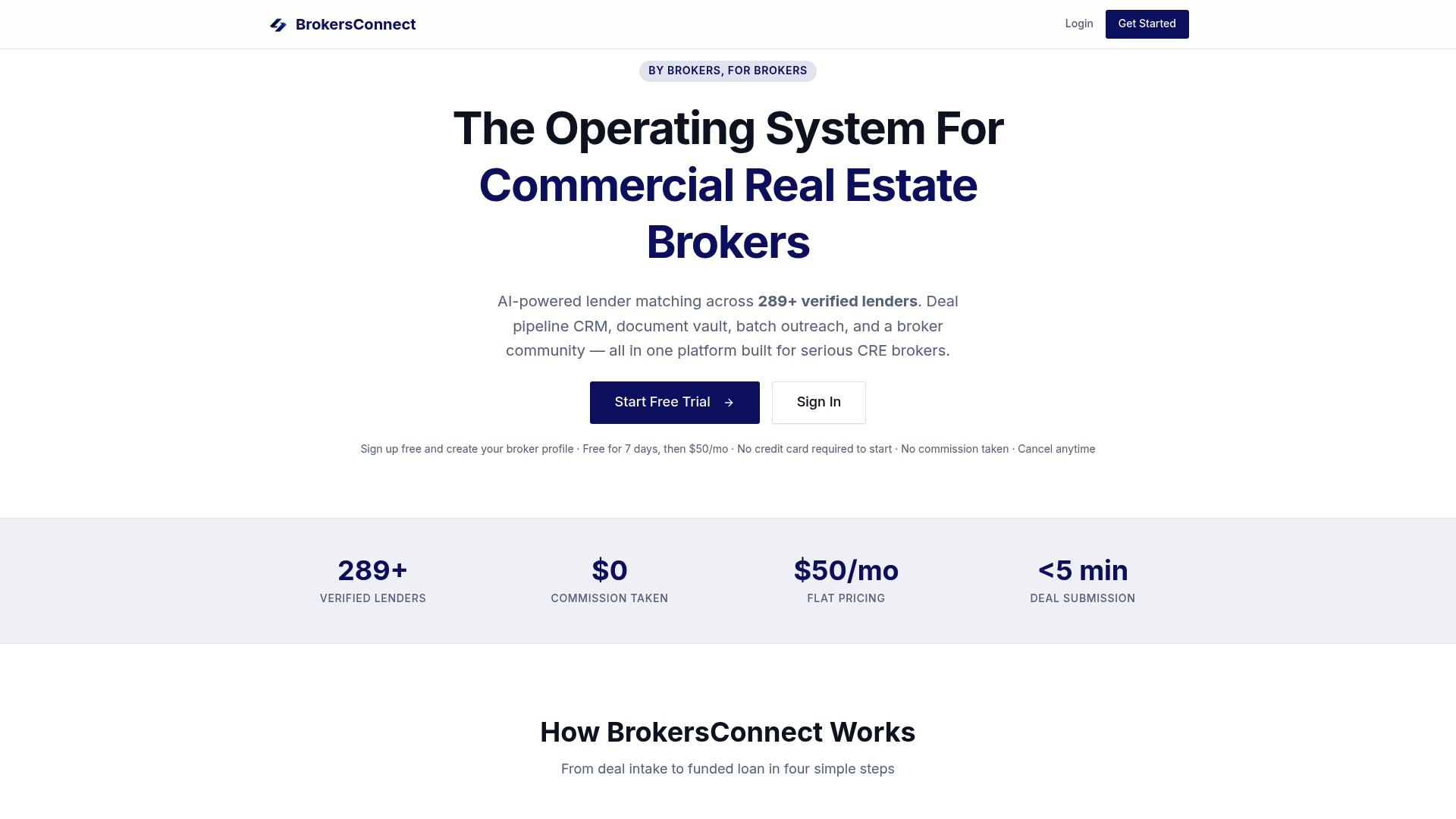
- Batch outreach lets you contact multiple matched lenders without losing the personalization each message needs.
- Submission tracking keeps every lender conversation, document version, and response time in one pipeline instead of scattered inboxes.
- A responsiveness leaderboard shows which lenders actually reply, so your follow-up effort goes where it pays off.
If you are ready to replace guesswork with a matched lender list and a tracked pipeline, start with the BrokersConnect platform and submit your first deal scenario today.
FAQ
What is the fastest way to start a multifamily lender outreach strategy?
Prioritize lenders by fit, assemble a current rent roll, T-12, and sponsor financials, then run a short multi-touch email sequence instead of a single blast. Tools that match deals to verified lenders by property type and loan size, such as BrokersConnect, shorten the identification step significantly.
How old can a rent roll be for a multifamily loan submission?
A rent roll should be dated within 30 days of your final underwriting package, consistent with Freddie Mac's submission guidance. Lenders also expect it to reconcile cleanly against your T-12 operating statement.
How many touches should a lender outreach email sequence include?
A four to five touch sequence over roughly three weeks, mixing email and a phone call, gives a lender enough exposure to the deal without feeling like pressure. The first message should lead with one strong data point and a direct ask, since short, data-forward emails tend to outperform longer introductions.
How do you build trust with a multifamily lender over time?
Start with smaller, cleanly packaged deals, disclose weaknesses upfront, and follow through on every commitment, which the ICIC relationship-building guide identifies as a core driver of repeat referral partnerships. Community banks and CDFIs in particular reward consistent, transparent submissions with faster decisions over time.
What metrics should brokers track for lender outreach success?
Track response time to first contact, conversion rate from submission to term sheet, and time to funding once terms are signed. Logging these per lender lets you concentrate future outreach on the relationships that actually produce closings.
Sources
- Freddie Mac Multifamily Regional Seller Workshop - Loan Submission
- Exhibit 1: Underwriting Checklists
- Bridging the Capital Access Gap — Building relationships with lenders (ICIC)