
Lender outreach automation works when you pair a filtered, verified contact list with a sequenced, multi-channel cadence and route every reply straight into your pipeline. Skip any of those three pieces and you're just cold-emailing faster. The first move: map your credit box, pull a list for three live deals, and run a six-touch pilot before you scale to hundreds of lenders. A platform like BrokersConnect exists specifically to shorten that pilot.
TL;DR:
- Running a six-touch, multi-channel outreach sequence over 14 to 21 days significantly increases lender response rates, with most replies occurring after the fourth or fifth contact.
- Using real-time data extraction or tagging contacts with recent verification timestamps keeps contact lists fresh, improving targeting efficiency and response quality.
- Automated systems should handle list building, sequencing, deliverability, reply routing, and CRM updates, while humans focus on deal analysis, negotiation, and relationship development.
- Connecting outreach to the deal pipeline via native tools, Zapier, or API calls ensures replies and sentiment data advance deals automatically rather than manual updates.
- Starting with three live deals, a targeted six-touch sequence, and a carefully warmed-up domain provides a reliable pilot to measure response rates before scaling outreach efforts.
Table of Contents
- What Does Lender Outreach Automation Actually Automate?
- Where Do You Get Lender Contacts, and How Do You Keep the Data Fresh?
- How Do You Build a Multi-Channel Sequence Lenders Actually Answer?
- How Does Outreach Automation Connect to Your Deal Pipeline?
- What Metrics Should You Track, and How Fast Should You Respond?
- What Mistakes Wreck Deliverability and Compliance?
- What I'd Actually Run First
- How BrokersConnect Handles the Pilot Workflow For You
- Sources
- FAQ
What Does Lender Outreach Automation Actually Automate?
Automation doesn't replace your judgment. It replaces the repetitive, clerical steps that eat your morning before you ever get to the phone.
Here's what software should handle without you touching it:
- List building and enrichment — pulling lender contacts and matching them against loan type, geography, and leverage.
- Sequencing — scheduling emails, calls, and LinkedIn touches on a fixed cadence.
- Deliverability management — authentication, send throttling, and bounce monitoring.
- Reply routing — flagging a response and assigning it to the right person immediately.
- CRM updates — logging every touch and status change without manual entry.
What stays human: reading a lender's actual appetite for a deal, negotiating terms, and deciding which relationships deserve a phone call instead of a template. The payoff of automating the rest isn't just speed. It's consistency, since a machine never forgets the fourth follow-up the way a busy originator does.
Where Do You Get Lender Contacts, and How Do You Keep the Data Fresh?
You have three real options: live extraction, purchased lists, or manual research. Each trades speed for control differently.
Live extraction pulls current data from sources like Google Maps and lender websites in real time, which tends to produce fresher, more filterable contact lists than a static purchased file. Purchased lists are faster to acquire but decay quickly. Manual research gives you the most control and the least scale.
Whichever source you pick, filter hard before you send anything:
- Asset class and loan size the lender actually funds
- Geographic coverage, ideally as a defined polygon, not just a state name
- Signals worth prioritizing, like a recent office relocation or a thin online review count that suggests a smaller shop hungry for volume
Freshness matters more than volume. A smaller list validated last week outperforms a massive list scraped six months ago, and signal-driven targeting around events like loan maturities or leadership changes tends to surface better-fit lenders before they're flooded with competing pitches.
Pro Tip: Tag every contact with a "last verified" timestamp and re-run validation every 60 to 90 days. Stale emails are the single fastest way to tank your sender reputation.
How Do You Build a Multi-Channel Sequence Lenders Actually Answer?
A sequence that only sends email is a sequence that gets ignored. The strongest performers weave email, phone, and LinkedIn into one cadence, warming the lender up before ever asking for a meeting.
Here's a workable structure over 14 to 21 days:
- Day 1: Email introducing the deal with one specific fact (property type, loan amount, sponsor track record).
- Day 3: LinkedIn connection request referencing the same deal detail.
- Day 5: Follow-up email with a credit-box specific hook ("this fits your stated leverage range on multifamily").
- Day 8: Phone call, brief voicemail if no answer.
- Day 11: LinkedIn message, not a connection request, referencing a trigger event (recent fund raise, new correspondent relationship).
- Day 14: Second phone attempt.
- Day 18: Final email with a direct yes/no ask ("Would this fit your box? A quick no helps me too.").
Most replies land on touches four through six, not the first email, which is why brokers who quit after two attempts leave meetings on the table. Subject lines that reference the specific asset ("Value-add multifamily, Dallas, $8.2M") outperform generic pitches, and your closing CTA should always give the lender an easy binary choice rather than an open-ended "let's connect."
Pro Tip: Never send touch two and three on the same channel back to back. Alternating channels reads as attentive; repeating the same email format reads as a bot.
How Does Outreach Automation Connect to Your Deal Pipeline?
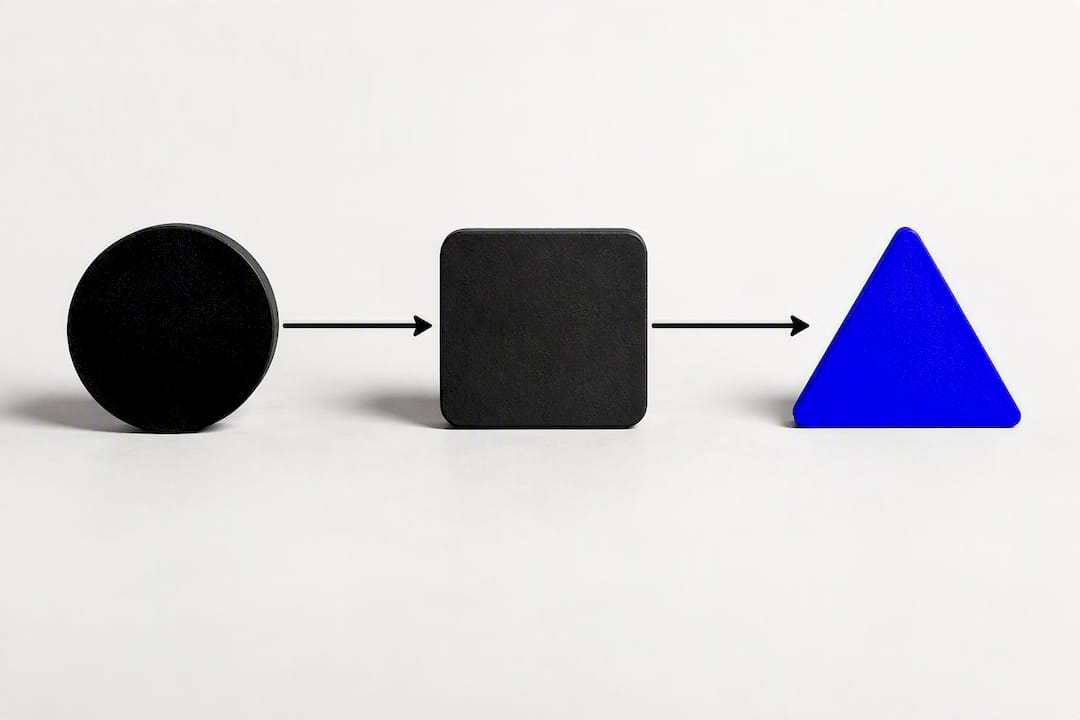
Outreach that doesn't feed your pipeline is just noise generation. The workflow that actually works looks like this: a trigger event fires (new deal added, lender list built), the system enriches contacts, the sequence launches, a reply gets routed to the right person, the CRM updates automatically and a follow-up task gets created.
Three ways to wire this together:
- Native connectors built into your outreach or deal platform, which require the least setup.
- Zapier or Make automations that bridge tools that don't talk to each other natively.
- Email parsing plus API calls for teams with a developer who can build custom logic.
When a lender replies, capture the sentiment (interested, needs more info, pass), the stated reason if given, and any conditions mentioned. That data should move your deal from "outreach sent" to "in conversation" automatically, not after someone remembers to update a spreadsheet three days later.
What Metrics Should You Track, and How Fast Should You Respond?
Track five numbers: open rate, reply rate, qualified lead rate, meetings booked, and time-to-first-reply. The last one matters more than brokers usually assume.
Speed-to-lead benchmark: Following up within 30 minutes during business hours meaningfully increases conversion compared to next-day responses. Automated reply notifications that ping the originator immediately, rather than waiting for a daily inbox check, close that gap.
Set up inbox triage so replies get flagged the moment they land, route notifications to whoever owns that deal, and build a simple assignment rule so no reply sits unanswered for more than an hour during work hours. If your conversion-to-submission rate stalls even with a decent reply rate, the leak is usually here, not in your list quality.
What Mistakes Wreck Deliverability and Compliance?
The fastest way to torch a new sending domain is blasting volume before it's warmed up.
- Set up SPF, DKIM, and DMARC before you send a single automated message, and warm up gradually rather than going straight to full volume.
- Start new domains at 20 to 30 sends per day and scale up over two to three weeks while watching bounce and complaint rates.
- Follow CAN-SPAM basics: honest subject lines, a working unsubscribe link, and your physical address in every email.
- Keep records of consent and opt-outs, and loop in counsel if you're layering in cold calling or texting, since TCPA rules for phone outreach are stricter than email rules.
What I'd Actually Run First
Pick three live deals with real financing needs, not hypothetical ones. Map the credit box for each against your target lenders, choose one data source, build a six-touch sequence across email, phone, and LinkedIn, and measure reply rate and time-to-first-reply against nothing but your gut sense of how it used to feel. That's the whole pilot.
BrokersConnect's lender matching tools and batch outreach features are built around exactly this kind of test, matching a deal's property type, leverage, and loan purpose against verified lenders instead of a generic list. Pair that with a structured cold email sequence and you have most of the pilot built before lunch. Run it on three deals before you decide whether to scale to fifty.
— Theron
How BrokersConnect Handles the Pilot Workflow For You
BrokersConnect is the alternative to building your own outreach stack from five disconnected tools. Instead of stitching together a scraper, a sequencer, a CRM, and a spreadsheet to track lender replies, you get lender matching, batch outreach, pipeline sync, and deal templates in one place, built specifically around how CRE brokers actually source capital.
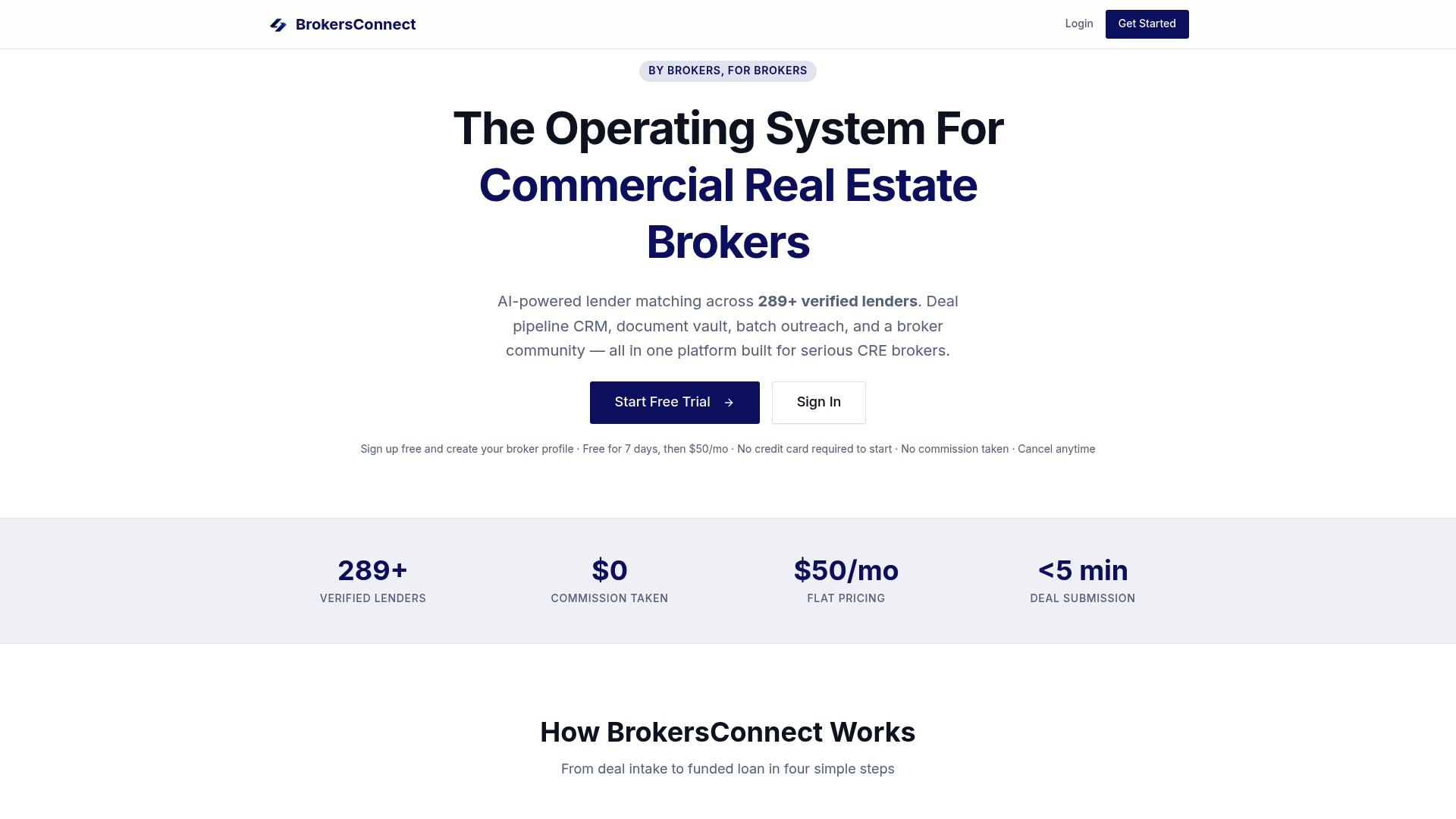
The platform matches your deal's property type, loan amount, leverage, and loan purpose against a database of hundreds of verified lenders, so your three-deal pilot starts with a filtered list instead of a cold spreadsheet. Once outreach goes out, replies and lender conversations track inside the same deal pipeline you're already managing, instead of living in a separate inbox. The platform is available at a flat monthly fee with no commission on closed deals, and offers a free trial to run your pilot before committing. Start your pilot at BrokersConnect with three real deals and see what your reply rate looks like inside two weeks.
Sources
The sequence structure and speed-to-lead benchmarks in this guide draw from SendStrike's broker outreach research, which covers multi-touch cadence design and authentication requirements in detail. For live data extraction and list hygiene practices, Scrap.io's lender list guide walks through filtering and sending-volume ramp-up. For signal-based targeting around lender capital events, see Tentt's commercial lender page. Public market context on lending sector players is available via PennyStockScout.
FAQ
How Much Does Lender Outreach Automation Software Cost?
Pricing varies widely depending on whether you're buying a standalone sequencer, a data provider, or an all-in-one platform. BrokersConnect runs at $50 per month with a free trial and no per-deal commission, covering lender matching and batch outreach in one subscription.
Is Buying Lender Email Lists Legal?
Buying business contact lists is generally legal under CAN-SPAM as long as your emails include accurate sender information, a working opt-out mechanism, and honest subject lines. Cold calling and texting fall under stricter TCPA rules, so verify consent requirements before adding those channels.
How Many Deals Should a Pilot Program Include?
Three deals is enough to test data quality, sequence performance, and reply routing without overcommitting resources. It gives you a real reply rate and time-to-first-reply benchmark before you decide whether to scale outreach to dozens of lenders.
How Long Should a Lender Outreach Sequence Run?
A 14 to 21 day sequence with six to eight touches across email, phone, and LinkedIn tends to produce the strongest results, since most replies come on the fourth through sixth touch rather than the first message.
What's the Minimum Setup Needed Before Sending at Scale?
Authenticate your sending domain with SPF, DKIM, and DMARC, then warm it up gradually starting around 20 to 30 sends per day. Skipping warm-up is the fastest way to get flagged as spam before your pilot even finishes.