
A co-brokering agreement must be written and signed before any joint submission or joint marketing happens, and it needs to nail down five things: how the fee splits and when it pays, who does what, how confidential deal data gets handled, who's liable if something goes wrong, and how you stay clean on compliance. Skip any one of those and you're negotiating after a dispute instead of before one. The fix is a short template with a managing broker signoff, not a lawyer on retainer for every deal.
TL;DR:
- Co-brokering agreements must clearly specify fee splits, payment timing, and confidentiality measures before any joint activity begins to prevent disputes.
- Fee structures typically include revenue shares, points on loan amounts, or flat fees, with actual dollar amounts and clawback triggers explicitly detailed in the contract.
- The agreement should define each broker's responsibilities, including client relationships, deal assembly, lender outreach, and documentation retention, to ensure unified communication.
- Confidentiality clauses must be mutual, specify duration, and include secure transmission practices to protect sensitive deal information and fee details.
- Use a digital platform to store signed contracts, fee worksheets, and lender data, which streamlines document management, minimizes errors, and speeds up co-brokered deal submissions.
Table of Contents
- What Should a Co-Brokering Agreement Include?
- How Do You Structure Fee Splits Without Ambiguity?
- Who Handles Which Parts of the Deal?
- What Confidentiality Terms Protect Both Brokers?
- How Do You Allocate Liability Between Co-Brokers?
- Does RESPA Apply to Commercial Co-Brokering Fees?
- What Should You Check Before Signing?
- Short Form or Full Agreement: When Each One Fits
- A Faster Way to Manage Co-Brokering Paperwork
- Sources
- FAQ
What Should a Co-Brokering Agreement Include?
A co-brokering agreement works when it removes every question a court or a lender's counsel might later ask. That's the whole point of the "meeting of the minds" standard: both brokers agreed to the same deal, in writing, before they lifted a finger. Ambiguous language is exactly what has led courts to deny fee claims outright when one broker couldn't prove what was actually promised.
Here's what belongs in the document itself:
- Parties, scope, and term. Name both brokerage entities (not just the individual brokers), define which transaction or transactions the agreement covers, and set an effective start and end date.
- Compensation clause. State the calculation method precisely, name which broker receives the funds first, and specify the payment window after closing or funding.
- Payment mechanics. Set remittance deadlines, note whether funds route through escrow or closing, and spell out remedies (interest, demand letters, arbitration) if payment doesn't arrive on time.
- Termination and survival. Either party can typically end the arrangement with notice, but success fees on deals already in process or already funded need to survive termination. Say so explicitly.
- Signatures and authority. Require the managing broker's signature, not just the originating agent's, and confirm both parties hold active licenses in the relevant jurisdiction.
Leave any of these vague and you've built a broker fee agreement that only works until someone disagrees with you.
How Do You Structure Fee Splits Without Ambiguity?
Three models dominate CRE co-brokering: revenue share, points on the funded amount, and flat fee. Revenue share (a percentage of whatever commission the originating broker collects) is common on deals where both brokers contribute meaningfully to sourcing or structuring. Points on the funded loan amount work better on debt placements where the referring broker's job ends at introduction. Flat fees show up on smaller deals where the math isn't worth negotiating.
Referral and co-broker splits in commercial finance commonly land in a 25% to 40% revenue-share range or 0.5 to 2 points on the funded amount, with payment due within 30 days of funding.
Put actual numbers in the agreement, not just percentages:
- Revenue share example: Broker A originates a $2 million loan, earns a 1% ($20,000) commission, and Broker B (the referring broker) receives 30% of that, or $6,000, paid within 15 business days of closing.
- Points example: Broker B refers a $5 million deal and receives 1 point (1% of the funded amount, or $50,000) regardless of what Broker A's commission ends up being.
- Clawback trigger: If the loan is paid off or the deal is unwound within 90 days due to borrower default on disclosed terms, the split reverses on a prorated basis tied to funds actually collected.
Pro Tip: Write the invoicing trigger as a specific event ("within 5 business days of the title company's disbursement") instead of "promptly." Promptly means nothing in a dispute.
For a numeric worksheet you can adapt directly, the broker fee calculation workflow walks through the same math with worked examples.
Who Handles Which Parts of the Deal?
Roles are where co-brokering deals actually fall apart, not fee math. Two brokers show up to the same borrower with slightly different stories, and the borrower loses confidence in both of them. The National Association of REALTORS® has flagged this directly: co-brokering works only when both sides present a unified front and define roles clearly enough to avoid client confusion.
Spell out, in the agreement itself:
- Which broker owns the borrower relationship and handles all client-facing communication.
- Who assembles the loan package: financials, rent rolls, sponsor bios, and property-level data.
- Who runs lender outreach and who compiles underwriting inputs like debt-service coverage or loan-to-value calculations.
- Timing for handoffs. If Broker A sources the deal and Broker B places it with a lender, when does that transfer happen and who confirms it in writing?
- Document retention. Keep the email trail. It's the evidence that proves each broker actually performed services, which matters far more than it sounds like it should.
If your firm often teams up because you're missing lender relationships rather than deal flow, this is also the moment to revisit how you're sourcing lenders in the first place.
What Confidentiality Terms Protect Both Brokers?
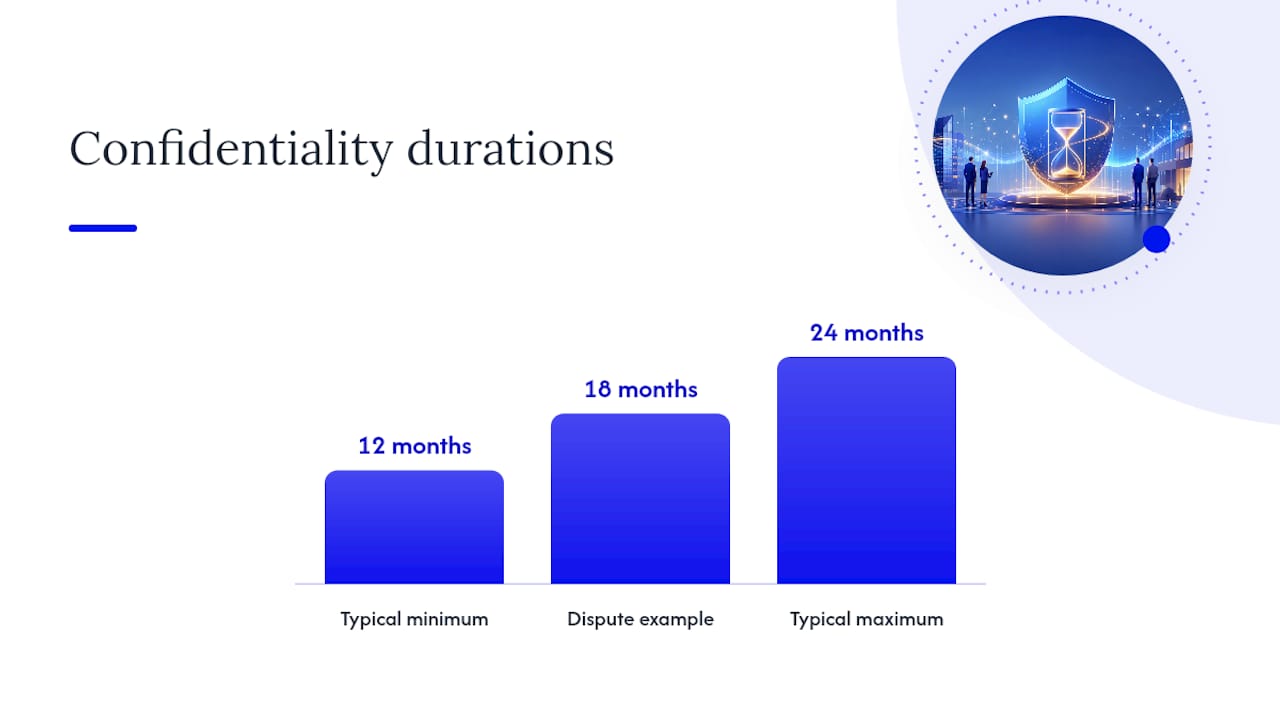
Borrower financials, rent rolls, and fee structures move between two firms in a co-brokering deal, and that's exposure neither broker wants sitting in an unsecured inbox. Mutual confidentiality language, not one-sided, protects both sides equally and should define what's covered, what's excluded (public information, independently developed data), and how long the obligation lasts after the deal closes or dies.
Cover these points directly in the clause:
- Mutual confidentiality obligations with named exceptions (public record, prior knowledge, compelled disclosure).
- A defined duration, typically 12 to 24 months past termination.
- A cap on disclosing fee-split terms to the borrower unless legally required.
- Secure transmission requirements: encrypted portals, access logs, no email attachments of sensitive underwriting files.
Pro Tip: Store executed agreements and shared deal documents in one secure vault rather than scattered across email threads. When a dispute surfaces eighteen months later, you want one place to pull records from, not three inboxes and a deleted folder.
How Do You Allocate Liability Between Co-Brokers?
Mutual indemnity is the standard structure: each broker agrees to cover the other for losses stemming from that broker's own errors, misrepresentations, or license violations. What breaks this down is when one broker tries to indemnify against the other's gross negligence or willful misconduct. Carve those out explicitly. No broker should sign away protection for the other side's intentional bad acts.
A workable liability section includes:
- Mutual indemnity language limited to each party's own conduct, with gross negligence and willful misconduct excluded from any liability cap.
- A stated cap, often tied to fees actually earned on the transaction rather than an open-ended dollar figure.
- A representation that both brokers carry active E&O insurance and hold valid licenses in the transaction's jurisdiction.
- Sample language: "Each party shall indemnify the other against third-party claims arising from that party's breach of this Agreement, misrepresentation, or violation of applicable law, excluding claims arising from the indemnified party's gross negligence or willful misconduct."
A risk-management lens is really the whole purpose of the written agreement: it protects fees and gives both sides a dispute path if things go sideways.
Does RESPA Apply to Commercial Co-Brokering Fees?
RESPA's anti-kickback provisions target settlement services on residential transactions, but the underlying principle, that payment must correspond to real services performed, shows up in how regulators and courts scrutinize commercial referral arrangements too. RESPA permits cooperative brokerage payments only in a narrow set of circumstances, and payments not tied to actual brokerage work risk being classified as prohibited kickbacks rather than earned compensation.
A recent case makes the exposure concrete: courts have found that equity arrangements and referral-driven perks funneled through brokerage relationships can trigger enforcement action, even when structured to look like ordinary business incentives.
Mitigate this with:
- Written documentation of the specific services each broker performed, not just a fee split percentage.
- Managing broker signoff confirming both parties are properly licensed for the jurisdiction involved.
- Written consent from the borrower where local rules require disclosure of dual representation or fee-sharing.
- A checklist of RESPA-safe clause language built specifically for U.S. CRE and mortgage co-brokering.
What Should You Check Before Signing?
Run this before either broker signs anything:
- Confirm both brokers hold active licenses in every jurisdiction the deal touches.
- Get the managing broker's signature, not just the deal originator's.
- Attach a one-page deal summary so both sides agree on scope before work starts.
- Confirm borrower consent is documented if dual representation applies.
Attach a fee worksheet, a target lender list, and a written scope of work to the signed agreement itself.
Useful clause snippets to adapt:
- Compensation: "Broker B shall receive [X]% of gross commission collected by Broker A, payable within [N] business days of fund receipt."
- Survival: "Compensation obligations for transactions in process at termination shall survive for [N] days."
- Payment timing: Tie disbursement language to a real event, such as title company release of funds, matching the closing mechanics that govern coordinated fundings.
After close: invoice immediately, log the payment date, and file the executed agreement where you can retrieve it in seconds, not weeks.
Short Form or Full Agreement: When Each One Fits
A one-page short form works fine for a single deal between brokers who've closed together before and trust the relationship. Reach for the full agreement the moment you're setting up a recurring referral pipeline, working with a broker you've never split fees with, or touching a deal size where a dispute would actually hurt. Most friction shows up over payment timing and clawback triggers, and the pragmatic fix is usually a fixed number of days, not a vague standard. Digital tools that centralize templates and signature tracking cut a lot of this coordination lag out entirely.
— Theron
A Faster Way to Manage Co-Brokering Paperwork
A commercial real estate financing platform can give you a place to build and store these agreements once instead of redrafting them from a blank page every time a new co-broker relationship comes together. That's the real cost most brokers underestimate: not the legal risk, but the hours lost chasing signatures and rebuilding lender lists deal after deal.
The platform's secure document vault holds executed agreements, fee worksheets, and lender correspondence in one searchable place, so you're not digging through email threads when a payment dispute surfaces months later. Deal templates and signature tracking speed up execution on the front end, and lender matching across a database of verified CRE lenders means co-brokered submissions move faster once the paperwork is done. Fewer loose ends means fewer disputes, and faster submissions means fewer deals that stall waiting on someone to find the right lender.
Start a free trial at Thecrebrokersconnect and pull a co-brokering template before your next joint submission goes out.
Sources
- Making Residential and Commercial Co-Brokering Work for You and Your Client
- The Devil Is in the Details - Scotsman Guide
- Co-Brokerage Agreements: Provisions, Compliance & Disputes - LegalClarity
- Court rules mortgage brokerages' equity arrangements may violate anti-kickback rules
FAQ
Does a Co-Brokering Agreement Have to Be in Writing?
Yes. Most states require real estate compensation agreements to be written and signed under the Statute of Frauds, and unclear or verbal terms have led courts to deny fee claims entirely.
Who Needs to Sign a Co-Brokering Agreement?
The managing broker of each firm should sign, not just the individual agent handling the deal, since brokerage entities, not individual licensees, typically hold contractual liability.
What Happens if a Co-Broker Isn't Paid on Time?
The agreement should specify remedies directly, commonly interest on late payment or a right to demand payment through arbitration, since standard practice has the listing broker collecting the full commission and remitting the cooperating broker's share per the signed terms.
Can Fee Splits Trigger RESPA Violations?
They can if the payment isn't tied to documented brokerage services performed. RESPA permits cooperative brokerage payments in narrow circumstances, and undocumented fee arrangements risk being treated as prohibited kickbacks.
Do Out-of-State Brokers Need a Separate Licensing Agreement?
State rules vary, but many jurisdictions require the in-state broker to handle any negotiation or contract execution occurring within that state, so co-brokering agreements should confirm each party's licensing scope before work begins.