
For most commercial real estate loan opportunities, run a targeted multi-shop to a few vetted lenders rather than granting exclusivity. Reserve an exclusive submission for the exceptions: a trusted lender with a fast track record, a tight closing deadline, a borrower who insists on discretion, or a fee arrangement already locked in with that lender. Whichever route you pick, the next move is the same: assemble a complete deal package and run it through a scoring checklist before you send anything.
TL;DR:
- Exclusivity is best reserved for deals with tight timelines, strong lender relationships, or complex asset profiles, while open shops suit price-sensitive deals.
- Limiting the number of lenders in a targeted shop prevents lender fatigue and preserves credibility while still fostering competition.
- Pre-submission packages must be complete and organized, including rent rolls, sponsor resumes, and third-party reports, to avoid delays and follow-ups.
- Short exclusivity windows with clear deadlines and scope balance speed with the benefits of competitive bidding, especially in urgent or sensitive transactions.
- Using a broker platform with verified lender data, batch outreach, and responsiveness tracking improves deal execution and saves time.
Table of Contents
- Exclusivity vs Open Listings: Weighing the Trade-Offs
- How Do You Decide Between Exclusive and Open Submissions?
- How Do You Execute an Exclusive or Open Submission?
- What Tools Help You Run Exclusive or Open Submissions?
- When Trusted Lenders and Competitive Shops Both Paid Off
- Run Your Next Submission Through a Commercial Real Estate Broker Platform
- Sources
Exclusivity vs Open Listings: Weighing the Trade-Offs
The exclusivity vs open listings decision in commercial mortgage brokering comes down to one trade: control versus competition. An exclusive submission gives one lender first (and sometimes only) crack at your whole of market broker deal. A targeted open shop, sometimes called a multi-shop, sends the same package to a curated number of lenders at once. Neither wins every time, and the wrong choice on the wrong deal costs you weeks.
Exclusive submissions work when speed and relationship trust outweigh price discovery.
- You skip the back-and-forth of managing multiple conversations, which matters on a bridge loan with a 10-day closing window.
- Negotiation gets simpler because you're not juggling competing term sheets that pull in different directions.
- Sensitive deals (a distressed sponsor, a confidential recapitalization) stay contained to one counterparty instead of circulating.
The downside is real: you lose your ability to test the market, your pricing leverage weakens, and if you grant exclusivity too often or too loosely, lenders start to wonder if you're just parking deals with whoever answers the phone fastest. That reputational cost is slow to build and hard to undo.
Targeted open submissions work when price and structure matter more than speed.
- Competing term sheets almost always beat a single quote on rate, leverage, or amortization.
- A backup lender is already warm if your first choice stalls in underwriting.
- Structure tends to sharpen. Lenders competing for a deal will stretch on terms they'd otherwise hold firm on.
The risk with open shopping isn't the concept, it's the execution. Blast a deal to fifteen lenders and you get lender fatigue, a flood of duplicate questions, and a sponsor who starts asking why so many people have their financials. Targeted submissions to a curated group of vetted lenders create competition without eroding your credibility — the volume of a mass blast does the opposite.
Pro Tip: If you're unsure how many lenders is too many, ask yourself whether you could personally track every conversation without a spreadsheet. If the answer is no, you've already shopped too wide.
How Do You Decide Between Exclusive and Open Submissions?
Score the deal before you touch your lender list. Six factors drive the decision every time:
- Timeline pressure. A 15-day close favors exclusivity with a lender you know will move; a 60-day close gives you room to shop.
- Existing relationship strength. A lender who has closed three prior deals for you in this asset class earns more trust than an unfamiliar name on a rate sheet.
- Asset complexity. Straightforward stabilized multifamily shops well. A ground-up construction deal with entitlement risk often needs a lender who already understands the story.
- Loan size. Larger loans usually justify the extra time a multi-shop takes, since the pricing spread between lenders widens with dollar volume.
- Recourse preference. If the sponsor has a hard line on non-recourse terms, narrow your shop to lenders you already know will offer it, rather than wasting time on ones who won't.
- Market conditions. In a tightening credit market, exclusivity with a lender who's still actively deploying capital can beat chasing five lenders who are all pulling back.
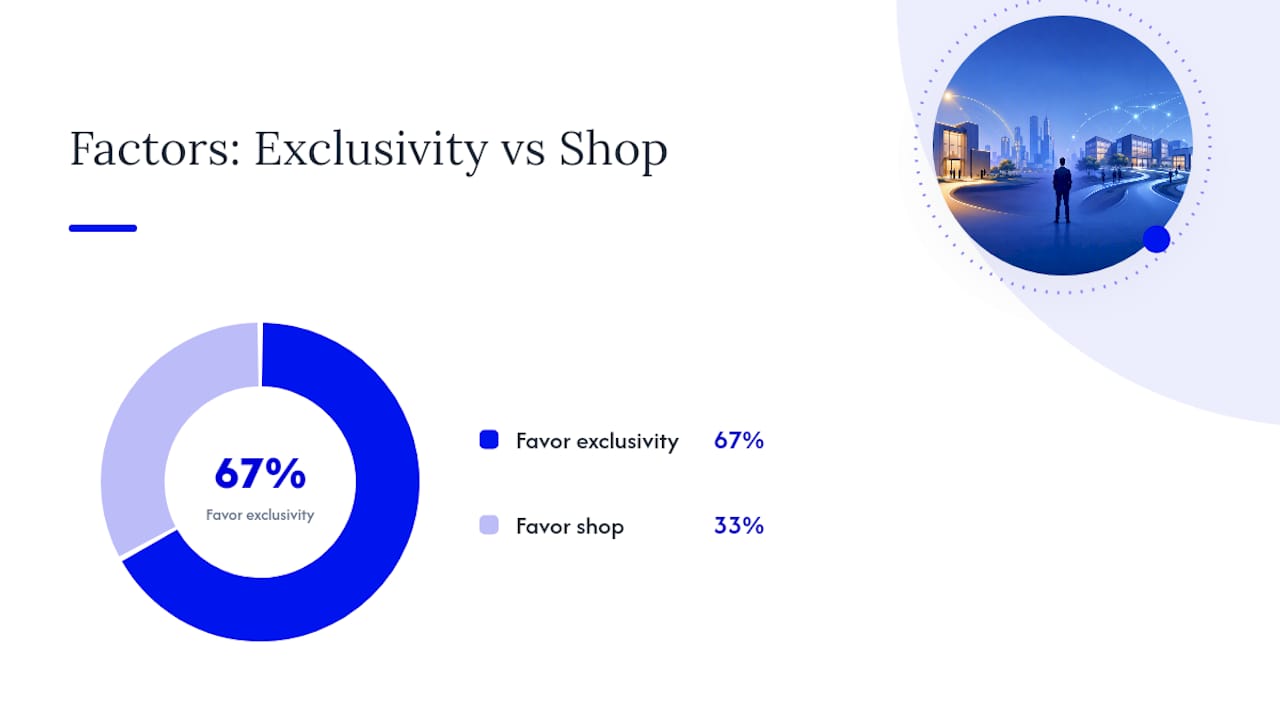
A rough rule of thumb: if three or more of these factors point toward speed and trust, go exclusive. If three or more point toward price sensitivity or complexity, run the targeted shop.
There's a middle path worth knowing. Offer a trusted lender a short exclusivity window, say five to seven business days, with a defined deliverable: a term sheet by a specific date. If that date passes without one, you're free to shop the deal broadly. This turns exclusivity into a scheduling tool with a built-in exit rather than an open-ended commitment.
Pro Tip: Put the exclusivity deadline in writing before you send the package, not after. A verbal "let's give them a week" becomes a verbal "let's give them two" the moment the lender asks for more time.
How Do You Execute an Exclusive or Open Submission?
Before you contact anyone, build the package. Lenders consistently name incomplete submissions as the top reason they don't respond, and that holds true whether you're sending to one lender or five.
Pre-submission checklist:
- Rent roll and trailing 12-month profit and loss statement
- Sponsor resume and transaction track record
- Recent comparable sales or lease comps
- Title and zoning notes, including any known issues
- Third-party reports already in hand (appraisal, environmental, engineering)
LenderAve's pre-submission checklist confirms the same core list: rent roll, lease abstracts, sponsor resume, transaction history, and references. Skip any of these and you'll spend your first week answering follow-up emails instead of collecting term sheets.
If you're granting exclusivity, put the following in writing: a fixed term length (often about a week or two for bridge deals, longer for permanent financing), the exact scope of the exclusivity (this deal only, not the sponsor's future business), a termination clause tied to a missed deliverable date, and clear fee disclosure so the borrower knows what the broker earns and when. Avoid open-ended exclusivity with no end date. That's the clause that damages relationships when a deal drags.
If you're running a targeted shop, limit your list to a small group of lenders matched to the deal's asset type, leverage point, and sponsor profile. Vet each one on recent closings in that asset class, not just a general reputation. Present the same complete package to all of them simultaneously. Staggered submissions invite lenders to compare notes and wonder why they got the file a week later.
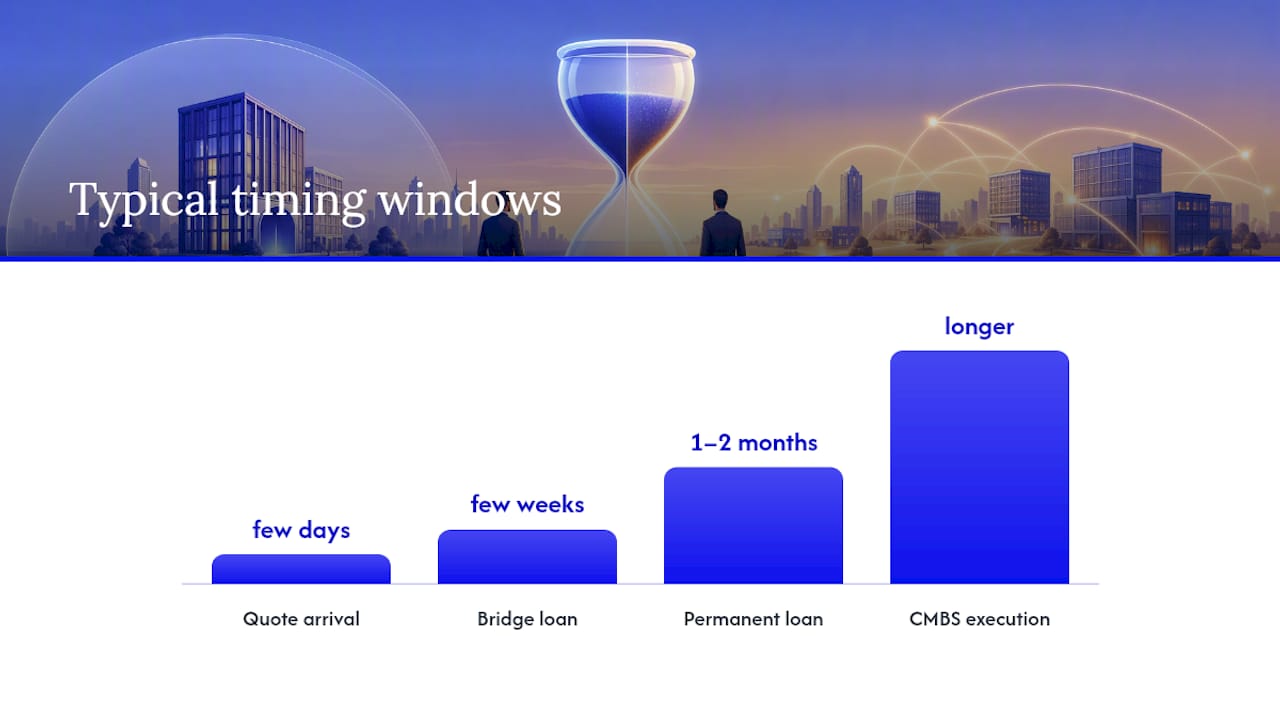
On timing, quotes typically arrive within a few days once a complete package lands on a lender's desk. Full closings vary by loan type: bridge loans can close in a few weeks, conventional permanent loans might take about one to two months, and CMBS executions generally take longer. Set borrower expectations around these windows early so nobody's asking for a closing date the process can't support.
Broker compensation, paid at closing and usually within a small range of the loan amount, should be spelled out in your fee agreement regardless of which route you choose. A broker fee agreement template with clear disclosure language protects you if a borrower or lender later questions how you got paid.
What Tools Help You Run Exclusive or Open Submissions?
Whichever approach you run, execution quality separates brokers who close from brokers who wait. A lender matching tool scores a deal scenario against a database of verified lenders by property type, loan amount, leverage, and structure, which shortens the vetting step whether you're picking one exclusive partner or building a five-lender shortlist.
A batch outreach feature sends a package to a curated group at once. This way, a targeted multi-shop doesn't turn into a dozen separate emails you have to track by hand. A document vault keeps the rent roll, sponsor resume, and third-party reports organized in one place, ready to send the moment you decide on a lender or a shortlist. A lender responsiveness leaderboard shows which lenders actually answer within that 48 to 72 hour window, which matters most when you're weighing whether a specific lender deserves exclusivity in the first place.
For deeper guidance on lender sourcing, Thecrebrokersconnect's guide to finding lenders that actually close covers vetting criteria in more depth.
When Trusted Lenders and Competitive Shops Both Paid Off
A broker with a $2.8 million bridge loan on a value-add retail center had 12 days to close before a rate lock expired. She'd closed four prior deals with the same private lender, who'd quoted within 24 hours every time. She gave that lender a 5-day exclusive with a firm term sheet deadline. It closed on schedule.
Contrast that with a $9 million value-add multifamily deal with unusual unit mix and a sponsor new to the market. The broker shopped it to four lenders who specialized in that asset type. Three responded with term sheets; the spread between the best and worst offer was over 75 basis points. The signal that mattered in each case wasn't the loan size. It was whether a lender's past responsiveness matched the deal's timeline pressure.
— Theron
Run Your Next Submission Through a Commercial Real Estate Broker Platform
Whether you're granting a short exclusive to a proven lender or building a targeted shop across several, the work is the same: match the deal to the right lenders, keep documents organized, and track who actually responds. Using a dedicated broker platform handles all three in one place instead of spreadsheets, email threads, and cold calls.
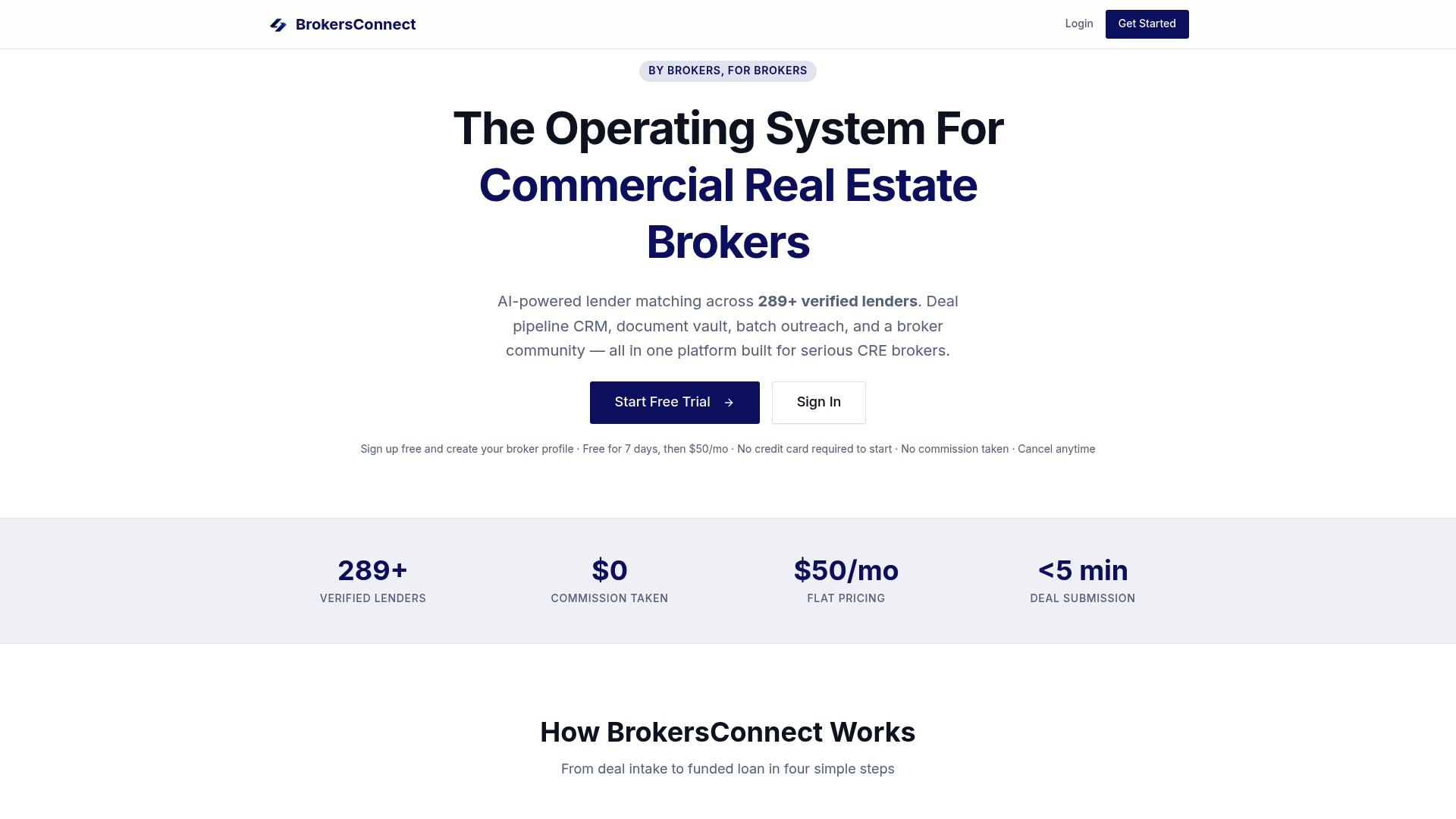
- Lender database of 289+ verified sources filtered by property type, loan amount, and structure
- Batch outreach to send a complete package to a curated shortlist at once
- Secure document vault for rent rolls, sponsor resumes, and third-party reports
- Responsiveness leaderboard showing which lenders quote fastest
If you're deciding whether a lender has earned exclusivity or belongs on a shortlist, that responsiveness data answers the question for you. Start a free trial on Thecrebrokersconnect and run your next submission with the shortlist already built.
Sources
- How Mortgage Brokers Close Commercial Loans: Process, Fees, and Timeline | Avana Capital
- Commercial Mortgage Broker vs Bank: Which Gets Better Rates? | RefiLoop
- What Documents Do Lenders Really Need? A Pre-Submission Checklist | LenderAve