
Closing timeline management means tracking every lender milestone, document deadline, and stakeholder handoff that moves a commercial real estate loan from submission to a funded closing. The first move for any broker is to centralize those milestones in one tracker and assign a single owner to each one. Two forces drive the schedule: OCC underwriting guidance that shapes lender conditions, and the quality of your loan package. A platform like BrokersConnect can hold both in one place.
TL;DR:
- A conventional bridge or permanent loan typically takes 45–60 days, with appraisal turnaround and title work most often delaying funding.
- Underwriting follow ups often stem from missing or inconsistent exhibits; submit a one page summary aligned with sources and uses, the rent roll, and the T-12.
- Date the rent roll within 30 days of submission, and assign each milestone one owner, a due date, proof of completion, and a clear status.
- Hold weekly underwriting syncs, increase to twice weekly after conditions precedent arrive, and escalate milestones at least two business days overdue to all parties.
Table of Contents
- What are the typical lender milestones from submission to funding?
- What loan package contents remove underwriting friction?
- How do you build a milestone tracker that actually holds up?
- How should brokers coordinate with lenders, sponsors, and title?
- How does a centralized platform support this process?
- What one habit shortens most CRE closing timelines?
- Put your closing timeline on one platform
- FAQ
- Sources
What are the typical lender milestones from submission to funding?
Every CRE loan moves through a recognizable sequence, even though timing varies by lender type and property. Knowing the sequence lets you flag the critical path before it stalls a closing.
- Submission and intake: the lender logs the deal and confirms it fits their box, typically within a few business days.
- Initial credit review: a credit officer screens sponsor strength, leverage, and property fundamentals.
- Underwriting: the lender verifies financials, orders third-party reports, and builds the credit memo.
- LOI or term sheet: terms get issued and negotiated, often the first real deadline pressure point.
- Appraisal and environmental review: third-party reports that frequently sit on the critical path because they depend on outside vendors.
- Due diligence: title, survey, zoning, and lease abstraction run in parallel with underwriting when possible.
- Conditions precedent: the lender's final list of items required before clear-to-close.
- Closing package assembly: loan documents, insurance binders, and title commitment come together.
- Signing and funding: execution, wire instructions, and disbursement.
A sample baseline for a conventional bridge or permanent loan runs 45 to 60 days from submission to funding, with appraisal turnaround and title work as the most common bottlenecks. Brokers who build a compressed version of this timeline into their own due diligence schedule tend to catch delays before they cascade.
What loan package contents remove underwriting friction?
A complete, internally consistent loan package moves faster through every stage of underwriting. According to H Equities' guide to CRE loan packages, missing pieces do not stop underwriting outright, but they generate follow-up questions that add days to the clock.
The executive summary carries significant weight. It should be concise, typically one page, stating the property, the loan request and intended use, current financials, the business plan, and the exit. It is best written last so every figure matches the exhibits behind it.
Required exhibits typically include:
- Sources and uses table that reconciles to the loan request.
- Rent roll dated within 30 days of submission.
- Trailing 12-month operating statement (T-12).
- Stabilized pro forma reflecting the business plan.
- Capital or renovation budget with line-item detail.
- Sponsor bio and track record.
- Supporting bids, contracts, or third-party reports as applicable.
Pro Tip: Before you submit, read the executive summary against the sources and uses, rent roll, and T-12 line by line. Inconsistencies between those four documents are the single most common trigger for underwriter follow-up questions.
A short cover letter mapping each attachment to its purpose, as outlined in our loan package cover letter template, gives the underwriter a fast reference point instead of making them hunt for context.

How do you build a milestone tracker that actually holds up?
A tracker only works if it is specific enough to assign accountability. Build it around a simple schema and apply it to every active deal.
- List the milestone: name it exactly as the lender or internal process defines it, such as "appraisal ordered" or "title commitment received."
- Assign an owner: one person, not a team, responsible for closing that line.
- Set a due date: tied to the lender's stated turnaround, not a guess.
- Name the required deliverable: the document or confirmation that proves the milestone is done, such as the appraisal report, title commitment, or insurance binder.
- Mark a status: open, in progress, blocked, or cleared, nothing more ambiguous than that.
- Log notes and changes: date-stamp any revised condition or lender commitment so the tracker stays the single source of truth.
Our loan document checklist is a useful starting point for the deliverables column, since it lists the evidence lenders typically require at each closing stage. When a lender verbally agrees to waive or modify a condition, write it into the tracker immediately with a date and the person who confirmed it. Verbal commitments that never get documented are a common source of last-minute disputes.
How should brokers coordinate with lenders, sponsors, and title?
Closing delays rarely come from one party failing outright. They come from gaps in communication between the broker, lender, sponsor, title company, and any third-party vendors involved. A fixed cadence closes those gaps before they widen.
- Weekly status syncs during underwriting, shifting to twice-weekly once conditions precedent are issued.
- Escalation triggers: any milestone two or more business days past due gets flagged to all parties, not just the owner.
- Status updates that name four things: the milestone, the evidence received, outstanding conditions, and the specific action requested from the recipient.
- A single point of contact on the sponsor side to avoid duplicate requests for the same document.
Document every verbal commitment the moment it happens and convert it into a tracked line item with a date and owner. A lender's verbal agreement to extend a deadline means nothing in the tracker until it is written down.
How does a centralized platform support this process?
Spreadsheets work until a broker runs more than a handful of deals at once. A platform built for this workflow consolidates the pieces instead of forcing you to reconcile them by hand.
BrokersConnect combines AI-driven lender matching, batch lender outreach, deal-level milestone tracking, a secure document vault, and a lender responsiveness leaderboard in one system. That combination cuts down on redundant follow-up emails, speeds up the time it takes to get a term sheet back, and makes conditions precedent easier to track since every document and deadline lives against the same deal record instead of scattered inboxes.
What one habit shortens most CRE closing timelines?

In my experience advising brokers on deal flow, the closings that run smoothest share one trait: the broker owns the executive summary and the milestone tracker from day one, instead of waiting for the lender to chase them. A clean, consistent one-pager prevents most of the back-and-forth that eats weeks off a closing.
Consistency beats speed. Brokers who proactively assign ownership of every open item close faster than brokers who simply push harder after a deadline slips.
— Theron
Put your closing timeline on one platform
Centralizing lender matching, milestone tracking, and document storage in one place removes the manual reconciliation that slows most closings down.
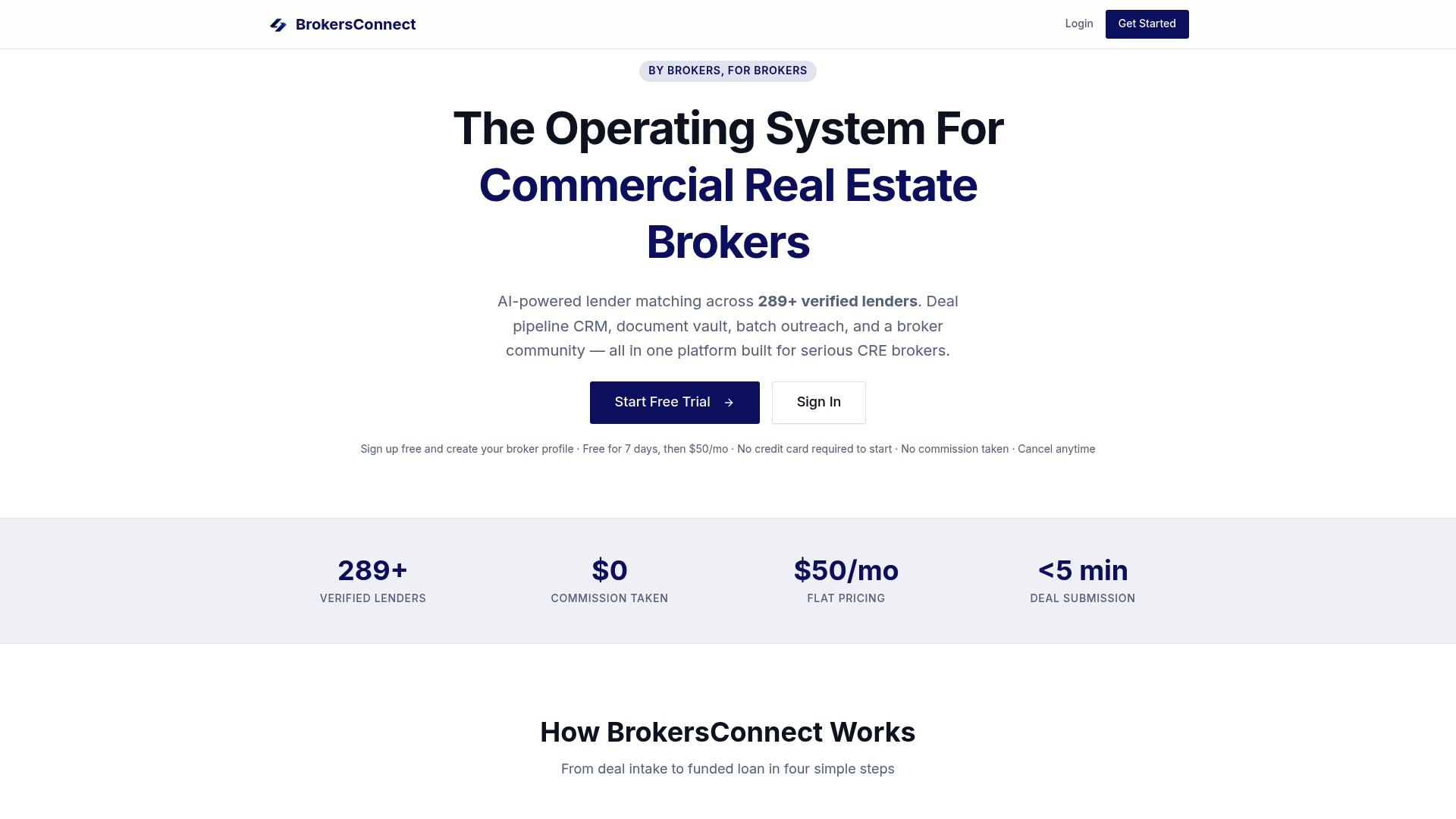
BrokersConnect brings together AI lender matching, batch outreach, a deal pipeline CRM, and a secure document vault for 50 USD per month, so your team can track every lender milestone without juggling spreadsheets and inboxes. If your deal involves a DSCR structure, it carries its own set of timeline drivers worth planning around early. Start a free trial and see your next deal's milestones organized from day one.
FAQ
What is closing timeline management in commercial real estate financing?
It is the practice of tracking lender milestones, document deadlines, and stakeholder coordination from loan submission through funded closing. The goal is to centralize every deadline in one tracker with a named owner per milestone, so nothing slips without being noticed.
How long does a typical CRE loan take to close?
A conventional bridge or permanent loan commonly runs 45 to 60 days from submission to funding, with appraisal and title work as the most frequent bottlenecks. Construction and value-add deals often run longer due to additional third-party reports and draw-schedule setup described in OCC guidance.
What documents prevent last-minute closing delays?
A complete package includes an executive summary, sources and uses, a rent roll dated within 30 days, a trailing 12-month statement, a pro forma, a budget, and a sponsor bio, according to H Equities. Keeping every figure consistent across those documents prevents most underwriter follow-up questions.
How do interest reserves affect construction loan timelines?
Lenders monitor interest reserves closely during construction and lease-up, and when reserves run low they often require additional cash, repackaging, or stricter disbursement conditions, per OCC guidance. Brokers should document draw schedules clearly up front to avoid administrative holds, as outlined in our construction lender requirements guide.
What does BrokersConnect cost?
BrokersConnect is available for 50 USD per month through the BrokersConnect landing page, with a free trial period for new brokers.
Sources
- How to Prepare a CRE Loan Request Package | H Equities
- Commercial real estate lending (Comptroller's Handbook) | OCC