Expect replies within minutes to a few days from automated lending channels, but commercial underwriting and closing commonly stretch into weeks or months. In most deals, the lender's own speed matters less than the third-party reports gating the file: appraisal, Phase I environmental site assessment, ALTA survey, and title work. Good preparation and the right lender channel shrink the wait considerably.
TL;DR:
- Application intake usually takes 3 to 14 days, while underwriting takes one to four weeks; incomplete financials, rent rolls, or applications cause avoidable delays.
- Order the appraisal, environmental assessment, and title commitment on day one; each can take two to four weeks, and the diligence target is 45 days.
- A Phase I environmental concern may trigger a Phase II study, adding two to four weeks and extending complex closings beyond 60 days.
- Use automated or alternative lenders for straightforward deals that need quick decisions, but choose relationship or institutional lenders when complex structures require human underwriting.
Table of Contents
- How fast do lenders respond at each stage of the deal?
- What third-party reports actually control your closing date?
- What speeds up lender response and keeps files moving?
- A sample 30 to 60 day timeline you can reuse
- How a lender matching platform shortens response cycles
- Setting the right expectations with clients and lenders
- Try BrokersConnect to cut down on lender outreach time
- FAQ
- Sources
How fast do lenders respond at each stage of the deal?
A commercial loan moves through distinct checkpoints, and the pace changes at each one. Knowing what the lender is actually doing behind the scenes helps you set expectations with clients instead of guessing.
At the initial inquiry stage, a same-day reply usually means the lender has digital intake or an automated screening tool that can match your deal against its criteria instantly. A multi-day wait at this point often signals a manual review queue or a lender who needs a loan committee member to weigh in before giving even a soft yes.
Application and document intake typically takes 3 to 14 days once a lender shows interest. The most common cause of delay here is not the lender at all: incomplete financials, a missing rent roll, or an unsigned application tend to stall this phase longer than anything the lender controls.
Underwriting is where timelines diverge the most. Credit review, property-level underwriting, and sponsor analysis can take anywhere from one to four weeks, depending on the lender's structure and how complex the deal is. A straightforward multifamily refinance with a strong borrower moves faster than a ground-up construction loan with multiple guarantors.
From commitment to closing, the lender is usually finalizing internal approval, clearing conditions, and coordinating with vendors on report delivery. This stage often runs in parallel with the third-party due diligence described in the next section.
Along the way, lenders typically signal where things stand through:
- A conditional approval letter listing outstanding items before final sign-off
- A written list of missing documents that need to come back before underwriting resumes
- A target closing date tied to when third-party reports are expected
Reading these signals correctly, rather than waiting for a generic update, is often the fastest way to keep a file moving.
What third-party reports actually control your closing date?
Lender response speed rarely sets the earliest possible closing date. The reports ordered from outside vendors do. Appraisals typically take two to four weeks, and the same window applies to Phase I environmental site assessments and ALTA surveys. A property condition assessment usually runs two to three weeks. If a Phase I ESA flags a concern, a Phase II environmental study adds significant time on top of that, sometimes pushing total due diligence to 60 to 90 days for higher-risk properties.

Rush delivery is available for most of these reports, usually for a premium, and can cut lead time from weeks to days. It is worth paying for when a closing deadline is tight, but it rarely helps on properties with genuine environmental or title complications since those issues need real investigation time, not just faster paperwork.
Order the appraisal, Phase I ESA, and title commitment on day one. These can run simultaneously and take the longest, so starting late on any one of them extends the whole file. The ALTA survey can often follow a day or two behind once a surveyor is confirmed. This sequencing is what makes a 30 to 60 day due diligence period realistic instead of aspirational, and 45 days is the most common target.
What speeds up lender response and keeps files moving?
Most of the delay in a commercial loan file is inside your control, not the lender's. A few habits consistently shorten the wait:
- Assemble a complete submission package before you approach any lender: financial statements, rent roll, leases, entity formation documents, rent comps, insurance certificates, and zoning confirmation.
- Order title, survey, and environmental work the same week you submit the loan, not after you get a term sheet.
- Call vendors ahead of time to confirm rush availability and pricing before you need it, so you are not negotiating under deadline pressure.
- Match the deal to the right lender channel: automated or alternative lenders for a fast yes or no on straightforward deals, relationship or institutional lenders when the structure is complex enough to need a human underwriter's judgment.
- Keep communication tight: one point of contact, written deadlines, and a tracked record of what was submitted and when.
For borrowers who need funding on a tighter timeline, non-bank and alternative lenders sometimes deliver faster decisions than traditional institutions, particularly on working capital or bridge needs where speed matters more than the lowest possible rate.
Pro Tip: Send your document checklist to every lender candidate before you pick one. Their response time to that simple request often predicts how the whole deal will go.
A sample 30 to 60 day timeline you can reuse
A realistic closing timeline gives both the borrower and the lender a shared reference point, and it keeps vendors accountable to specific dates instead of vague estimates.
- Week 1: Submit the complete application package and order the appraisal, Phase I ESA, and title commitment simultaneously.
- Week 2: Confirm the ALTA survey is underway and follow up with the appraiser and environmental consultant on progress.
- Weeks 3 to 4: Expect appraisal and Phase I ESA results; review any findings immediately and flag a possible Phase II need early rather than waiting.
- Weeks 4 to 5: Lender finalizes underwriting and issues a commitment letter with any remaining conditions.
- Weeks 5 to 6: Clear final conditions, confirm insurance, and schedule closing once title is clear.
If the Phase I ESA comes back with a recognized environmental condition, build in an extra two to four weeks for a Phase II study rather than hoping the original date holds. For properties with genuine complexity, flagging a longer diligence period with the lender up front is more useful than defending a 30 day window that was never realistic.
How a lender matching platform shortens response cycles
A big share of lost time in commercial lending comes from outreach that goes nowhere: calls and emails to lenders who were never going to say yes to that property type or loan size. Narrowing the list before you start cold outreach is one of the highest-leverage things a broker can do.
Lender matching tools focus outreach on lenders whose criteria actually fit the deal's property type, loan amount, leverage, and credit profile, so fewer submissions end in silence. A standardized submission template and a shared document vault also cut down on the back-and-forth that comes from lenders asking for the same missing item twice.
A workflow worth adopting on your next file:
- Submit the deal scenario to a shortlist of matched lenders instead of a broad cold-call list
- Track which lenders open, respond, or request more information
- Nudge non-responders on a set schedule rather than letting the file go quiet
- Escalate to a direct call only after written follow-up has gone unanswered
This kind of tracked outreach cadence consistently reduces idle time compared with ad-hoc messaging.
Setting the right expectations with clients and lenders
Speed is worth chasing when a borrower's deal is genuinely time-sensitive, a lease is expiring, a rate lock is ticking, or a seller needs certainty. It is not worth chasing when it means accepting worse terms on a deal that could close in 45 days just as easily as 20.
Lenders move faster for brokers who submit clean, complete files and answer questions the same day they arrive. That reputation compounds: the lenders who respond quickly once tend to prioritize you again on the next deal.
Before you pitch a lender, confirm your numbers, attach your rent roll, and lead with the one detail that makes the deal easy to say yes to.
— Theron
Try BrokersConnect to cut down on lender outreach time
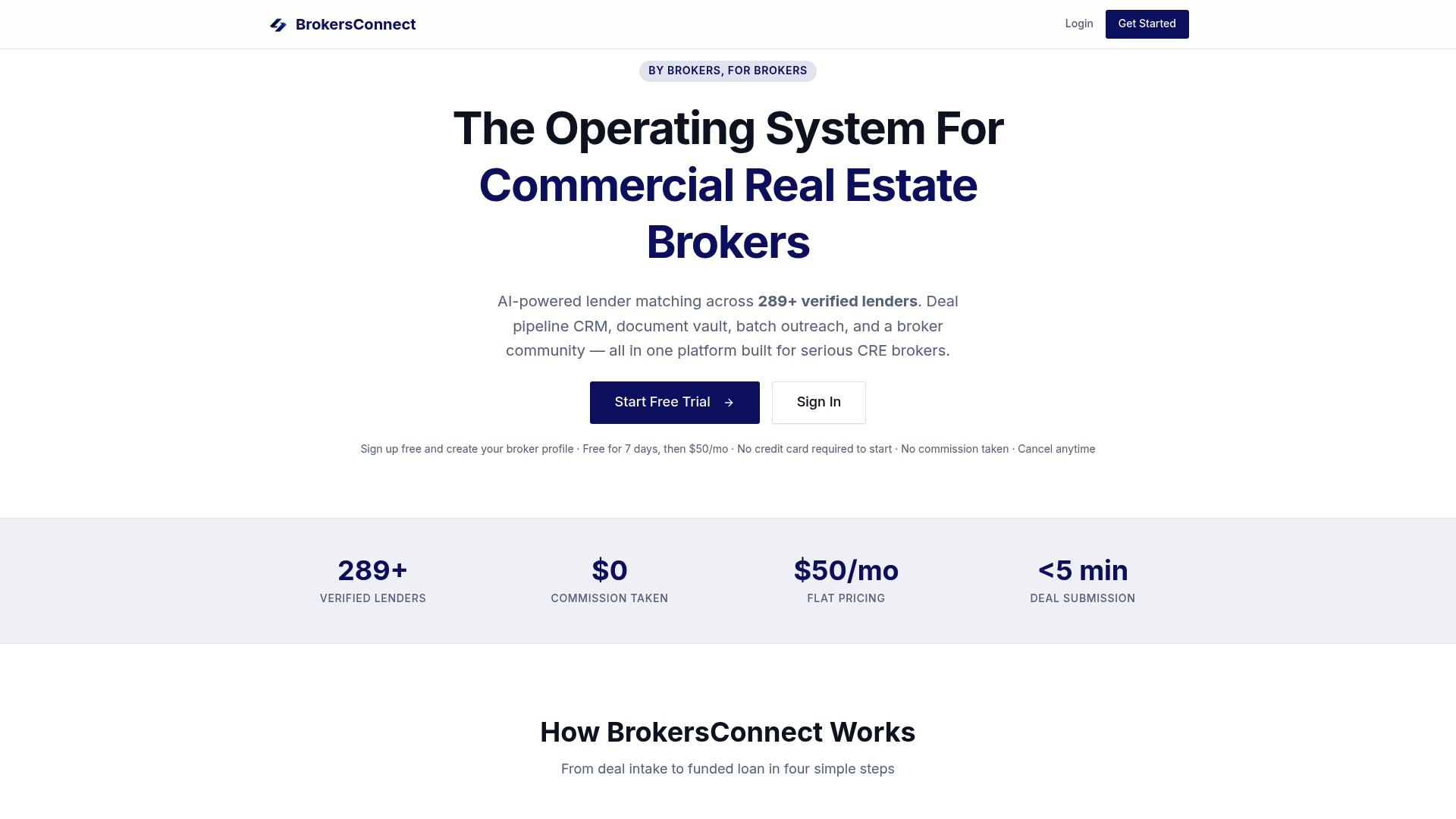
We built BrokersConnect to take the guesswork out of lender outreach. Our platform matches your deal scenario against a large database of verified lenders, stores your submission documents in one secure vault, and tracks every message so you know exactly who has responded and who needs a nudge. The lender responsiveness leaderboard helps you prioritize partners based on their responsiveness.
- AI-powered matching narrows your lender list to real fits, not cold-call guesses
- A document vault keeps financials, leases, and rent rolls ready for instant submission
- Batch outreach and tracked messaging show you who to follow up with first
Start a free trial and run one or two live deals through it to see the difference in how fast lenders get back to you. Visit BrokersConnect to get started.
This article is general information, not a substitute for advice from a qualified financial advisor. Consult a qualified financial professional about your own circumstances before acting on anything here.
FAQ
How long does it take to do a commercial loan?
A straightforward commercial loan can close in 30 to 60 days once the application, appraisal, Phase I ESA, and title work are all underway. More complex deals, or those requiring a Phase II environmental study, often take 60 to 90 days or longer.
What are red flags on a mortgage application?
Incomplete financial statements, inconsistent rent rolls, undisclosed liens, or gaps in the borrower's ownership history tend to slow underwriting and raise questions. Lenders also flag sponsors with limited experience in the property type or recent credit issues that were not disclosed upfront.
How much commission do loan officers make on a $500,000 loan?
Commission structures vary widely by lender, loan type, and whether the originator works in-house or as an independent broker, so there is no single published figure. Borrowers and brokers should ask any loan officer directly about their fee structure before submitting a deal.
How do you secure a business loan?
Securing a commercial loan starts with a complete package: financial statements, a clear use of funds, supporting property documentation, and a realistic ask that matches what lenders in that category actually fund. Matching the request to the right lender channel, automated for speed or relationship-based for complexity, meaningfully improves the odds of a fast yes.