
Which fix and flip loans lead the market right now?
The strongest fix and flip lenders in 2026 offer high loan-to-cost ratios, full rehab coverage, and closings in a fast timeframe. The table below covers every major lender worth knowing, compared across the dimensions that actually move a deal forward.
| Lender | Max LTC/LTV | Interest-Only | Loan Limits | Funding Speed | Prepayment Penalty | Best For |
|---|---|---|---|---|---|---|
| BrokersConnect | Varies by matched lender | Yes (via matched lenders) | $100K+ | Varies | Varies | Brokers sourcing multiple lender options fast |
| LendingOne | high LTC, full rehab | Yes, terms typically 6–24 months | Not publicly listed | fast funding speed | None | Investors needing high leverage and quick closings |
| LendSure | Not publicly listed | Yes | Not publicly listed | Not publicly listed | Not publicly listed | Experienced flippers seeking flexible terms |
| Kiavi | Not publicly listed | Yes | Not publicly listed | Fast | Not publicly listed | Investors needing full rehab funding |
| Anchor Loans | Not publicly listed | Yes | Not publicly listed | Not publicly listed | Not publicly listed | National private lending |
| Renovo Financial | Not publicly listed | Yes | Not publicly listed | Fast | None | Small to mid-sized rehab projects |
| Easy Street Capital | Not publicly listed | Yes | Not publicly listed | Not publicly listed | None | Affordable hard money with simple terms |
| Conventus | Not publicly listed | Yes | Not publicly listed | Not publicly listed | Not publicly listed | Repeat borrowers and experienced investors |
| Archwest | Not publicly listed | Yes | Not publicly listed | Fast | Not publicly listed | Fast funding across multiple states |
A few lenders stand out for specific reasons worth noting before you dig into the details:
- LendingOne covers 100% of rehab costs with no prepayment penalty, making it one of the most aggressive programs for active flippers.
- Kiavi releases renovation funds through escrowed draws after photo-verified inspections, which keeps accountability tight on the job site.
- Renovo Financial targets smaller rehab projects with fast closings and no income verification required.
- Easy Street Capital keeps closing costs low and offers no prepayment penalty options, useful for investors who exit early.
- Conventus rewards repeat clients with potential fee reductions, which adds up across a high-volume portfolio.
- Archwest covers multiple states with interest-only payments and flexible loan amounts.
- BrokersConnect is not a direct lender but gives brokers and investors access to 289+ verified lenders in one platform, which is a different kind of advantage covered in detail below.
Table of Contents
- What do fix and flip loan programs actually look like?
- How does the loan application and approval process work?
- How do you choose the right lender for your project?
- How BrokersConnect helps you source fix and flip financing faster
- Thecrebrokersconnect gives brokers a faster path to fix and flip capital
- Key Takeaways
What do fix and flip loan programs actually look like?
Most hard money fix and flip programs share a recognizable structure, but the details vary enough to matter.

Term length and payments. Standard terms run several months, often about a year. Nearly every lender structures these as interest-only loans, so you pay only on the outstanding balance each month rather than amortizing principal. That keeps monthly carrying costs low while you renovate.
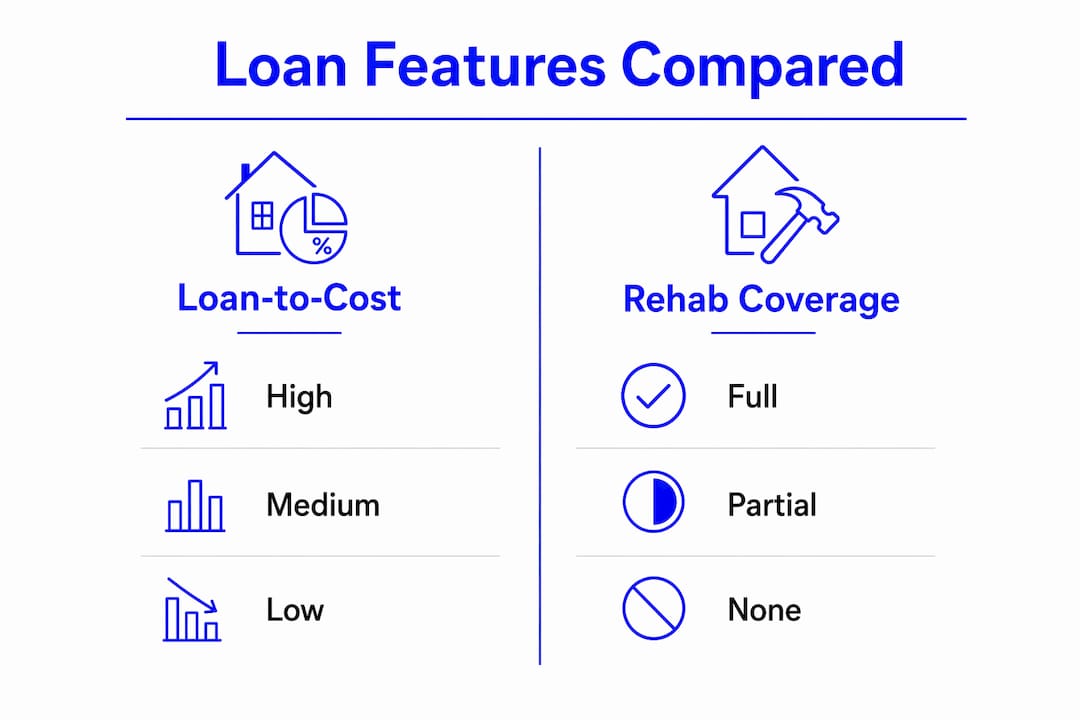
Leverage. Loan-to-cost (LTC) measures your loan against the total project cost, purchase plus rehab. Loan-to-value (LTV) measures it against the property's current or after-repair value (ARV). LendingOne's high LTC with full rehab coverage sits at the high end of the market. Most lenders cap LTC in a general range below that and base their maximum loan on the lower of LTC or a portion of ARV.
Rates and fees. Interest rates on hard money fix and flip loans run higher than conventional mortgages, reflecting the short term and asset-based underwriting. Origination fees typically range from low to moderate points. Closing costs add to that. No prepayment penalty terms are now common across private lenders because active flippers often exit well before the loan matures.
Borrower requirements. These loans are business-purpose and asset-based, meaning the property must be a non-owner-occupied investment property. Credit score matters, but lenders weight it differently than banks do. Experienced flippers get evaluated primarily on recent project volume and ARV analysis, not just their FICO. First-time flippers face tighter scrutiny and lower leverage.
Property eligibility. Most lenders finance single-family residences, 2–4 unit properties, and some small multifamily. The property needs to be in a condition where renovation is feasible within the loan term. Severely distressed properties or those with title or zoning complications may not qualify without resolution.
Key program features at a glance:
- Interest-only payments for the full loan term
- Loan terms typically 6–24 months
- Loan-to-cost up to 92.5%; rehab coverage up to 100%
- No prepayment penalties offered by most private lenders
- Renovation funds released in draws after inspection verification
- Non-owner-occupied investment properties only
- Underwriting based on ARV, project scope, and borrower experience
How does the loan application and approval process work?
Speed is the whole point of fix and flip financing. The process is designed to move fast, but you need to show up prepared.

Step 1: Pre-qualification. Most lenders offer online pre-qualification through a digital portal. You submit basic deal parameters: purchase price, estimated rehab budget, ARV, property address, and your experience level. This typically takes minutes and gives you a preliminary term sheet.
Step 2: Full application and document submission. Once you accept preliminary terms, you submit the full package. That includes the signed purchase contract, a detailed renovation budget with contractor bids, entity documents (LLC operating agreement, articles of organization), and proof of funds for your down payment and reserves.
Step 3: Underwriting. The lender orders an appraisal or broker price opinion to validate ARV. They review your renovation budget against comparable projects, assess your contractor's track record, and check title for any zoning or lien issues. Underwriting also evaluates your liquidity, reserves, and exit strategy to confirm the project is viable.
Step 4: Closing and funding. Most lenders close in 7–15 days from a complete application. The purchase funds are wired at closing. Rehab funds go into escrow.
Step 5: Draw disbursements. As renovation milestones are completed, you request draws. Kiavi and similar lenders release funds after photo-verified inspections confirm the work is done. Plan for a short lag between completing work and receiving reimbursement. That gap requires you to have capital reserves on hand.
Step 6: Exit. You sell the property and pay off the loan, or you refinance into a long-term product. DSCR rental loans are a common refinance destination for investors who decide to hold rather than sell, often with fee discounts if you stay with the same lender.
Pro Tip: Submit a complete package on day one. Incomplete applications are the single biggest cause of delays. Have your LLC docs, purchase contract, and contractor bids ready before you contact any lender.
How do you choose the right lender for your project?
Rate is not the first thing to optimize. Draw reliability and closing speed matter more on most deals, because a lender who funds slowly or misses a draw can cost you far more than a quarter-point difference in rate.
What to prioritize:
- Funding speed: Can they close in 10 days or fewer? Do they have a track record of hitting that timeline?
- Draw process: How many days does a draw take after inspection? Is the inspection third-party or photo-based?
- Geographic coverage: Some lenders are licensed in select states only. Confirm your target market is covered before investing time in an application.
- Leverage: Does the LTC or ARV cap work for your deal structure? High-leverage programs matter most on thin-equity acquisitions.
- Prepayment flexibility: If you sell in month four, are you paying a penalty? Most private lenders now offer no-penalty terms, but confirm it in writing.
- Support team: Do you get a dedicated loan officer or a rotating call center? On a complex rehab, you want someone who knows your file.
Red flags to watch for:
- Vague or inconsistent answers about draw timelines
- Prepayment penalties buried in term sheet footnotes
- No clear underwriting criteria published or explained
- Lenders who cannot confirm state licensing for your market
Pro Tip: Ask every lender for a reference from a borrower who had a draw dispute or a closing delay. How a lender handles problems tells you more than their marketing does.
How BrokersConnect helps you source fix and flip financing faster
BrokersConnect is not a lender. It is the platform that gets you to the right lender faster, with less wasted effort.
For commercial real estate brokers working fix and flip deals, the core problem is not finding lenders in general. It is finding the right lender for a specific deal: the right LTC, the right state, the right experience threshold, the right loan size. BrokersConnect matches deal scenarios against a database of 289+ verified lenders using AI-driven filters that account for property type, loan amount, location, leverage, credit profile, and transaction structure.
Instead of cold-calling a list and waiting days for responses, you submit the deal once and identify which lenders are actually likely to consider it. The platform also supports batch outreach, so you can contact multiple lenders simultaneously rather than sequentially.
Beyond matching, BrokersConnect includes a pipeline CRM to track where every deal stands, a secure document vault for organized submissions, and a lender responsiveness leaderboard that shows you which lenders actually reply. That last feature alone changes how you prioritize outreach.
Platform features relevant to fix and flip professionals:
- AI-powered lender matching based on deal-specific parameters
- Access to 289+ verified lenders covering fix and flip, bridge, DSCR, and construction
- Batch lender outreach to contact multiple sources at once
- Pipeline CRM to manage active loan scenarios
- Secure document vault for organized deal packaging
- Lender responsiveness leaderboard to prioritize active lenders
- Deal templates and fee calculator to prepare submissions faster
Pro Tip: Use BrokersConnect's lender responsiveness data before you submit. A lender who hasn't responded to similar deals in 30 days is not worth your time, regardless of how good their program looks on paper.
Thecrebrokersconnect gives brokers a faster path to fix and flip capital
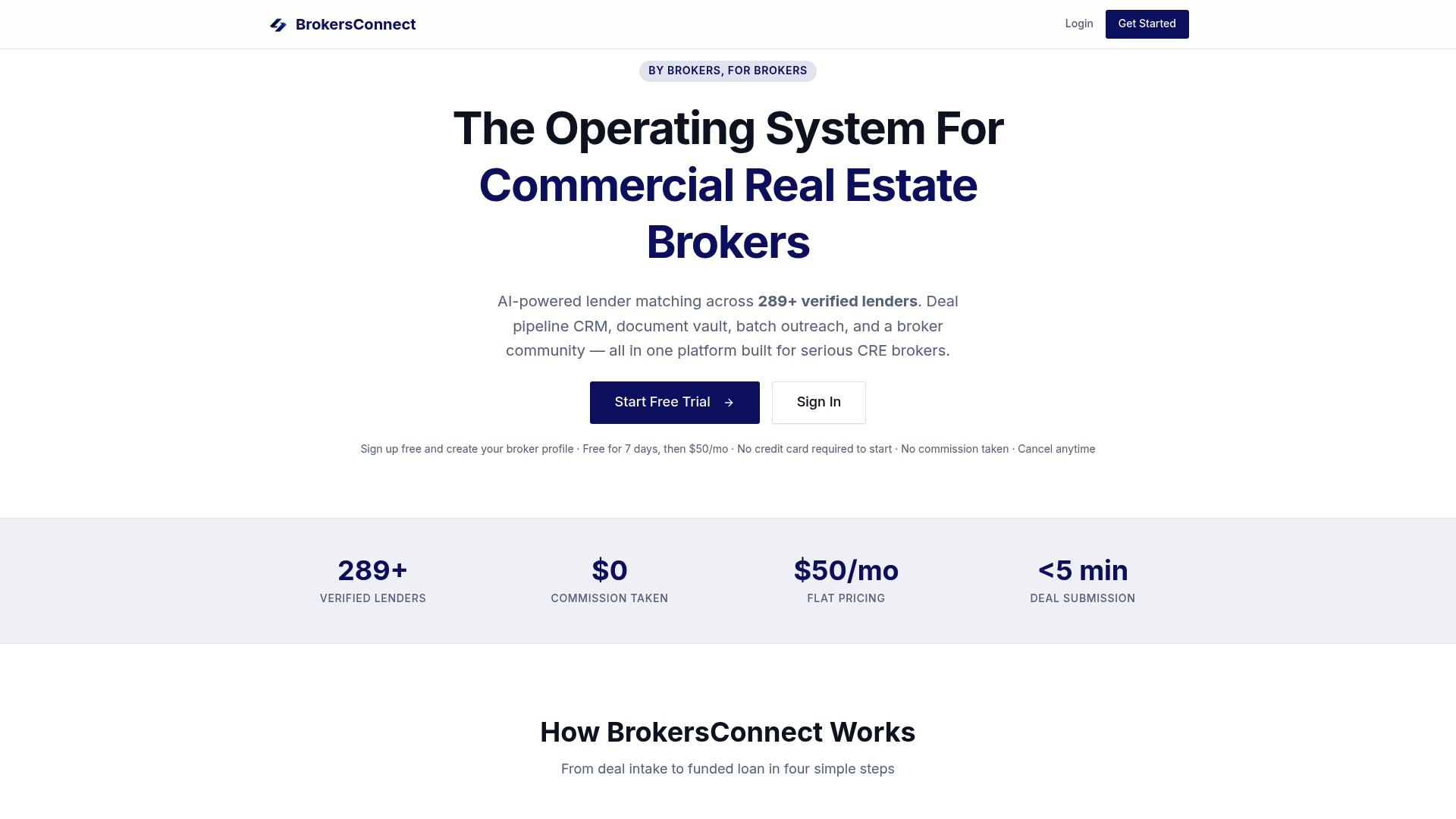
Every lender in this comparison requires you to find them, qualify them for your deal, and manage the conversation yourself. Thecrebrokersconnect removes that friction. Instead of spending hours on lender research and cold outreach, brokers submit a deal scenario once and get matched against 289+ verified lenders whose programs actually fit the parameters.
For fix and flip professionals running multiple deals at once, that difference compounds fast. The pipeline CRM keeps every loan scenario organized. The document vault keeps submissions clean. The responsiveness leaderboard tells you which lenders are worth contacting right now. No commission, no transaction fees, just a flat monthly subscription with a free trial to start.
If you are sourcing hard money fix and flip financing for clients or your own portfolio, start your free trial at Thecrebrokersconnect and see how many qualified lenders match your next deal.
Key Takeaways
The strongest fix and flip lenders combine high leverage, fast closings, and no prepayment penalties. Choosing the right one depends on your deal size, state, and renovation timeline.
| Point | Details |
|---|---|
| Leverage ceiling | LendingOne offers up to 92.5% LTC with 100% rehab coverage, among the highest in the market. |
| Draw process matters | Renovation funds are released after inspection verification, requiring investors to hold capital reserves for the gap. |
| No prepayment penalties | Most private lenders now offer no-penalty terms, giving flippers flexibility to exit early via sale or refinance. |
| Lender selection criteria | Prioritize draw reliability and closing speed over rate; a slow draw can cost more than a higher interest rate. |
| BrokersConnect advantage | Thecrebrokersconnect matches fix and flip deal scenarios to 289+ verified lenders, cutting sourcing time for brokers managing multiple deals. |